How to Grow Mexican Petunia
Ruellia simplex
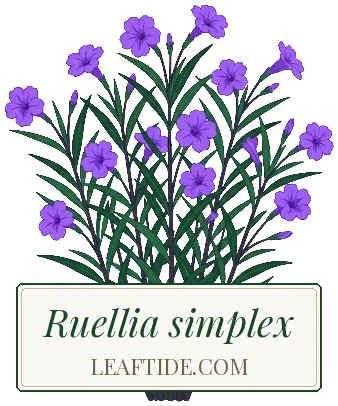
Mexican petunia is a fast, tough perennial with violet-blue trumpet flowers from early summer until autumn. Plant it in full sun or light shade, 45-60 cm (18-24 in) apart, and water weekly until it settles; after that it copes with heat, drought and wet ground. Cut the stems back to 10 cm (4 in) in late winter and mulch the roots in autumn where frost is likely. The seeding wild form is a listed invasive in Florida and spreads into wetlands in warm, humid places, so there choose a sterile cultivar or keep it contained, and never plant it near ponds, streams or ditches.
 In your Leaftide garden


- Height
- 1 m (3.5 ft)
- Spread
- 60 cm (24 in)
- Flowers
- June - November
- Light
- Full sun to part shade
- Water
- Moderate
- Feed
- Light feed in spring
Yearly Lifecycle
Care Essentials
Give a light feed of balanced slow-release fertiliser in spring as new shoots appear. It is not fussy and grows well in ordinary soil; too much feed makes it floppy and speeds up its spread.
Watch For
- Self-sown seedlings and creeping runners spreading beyond the bed
- Whitefly on the undersides of leaves
- Spider mites in hot, dry weather
- Leggy, floppy stems and few flowers in too much shade
Companions
Lantana, Turk's Cap, Esperanza, Mealy Cup Sage, Black-eyed Susan
Care Requirements
Light
Full sun to part shade
Flowers best with at least six hours of direct sun a day. It tolerates part shade, but in deeper shade the stems grow tall and floppy and flowering drops off.
Watering
Moderate; weekly until established, then tolerant of drought and wet soil
Water weekly through the first season and in long dry spells in summer. Established plants cope with drought and also with soggy, poorly drained soil. Container plants need watering whenever the top few centimetres of compost are dry.
Fertilizing
Light feed in spring
One light feed of balanced slow-release fertiliser in spring is plenty. Rich soil and extra nitrogen make the stems floppy and speed up its spread.
Pruning
Cut back to 10 cm (4 in) in late winter; no deadheading
Cut all stems down to about 10 cm (4 in) before new growth starts in late winter. Pinching the tips in early summer gives a bushier clump. The one-day flowers drop by themselves.
Spacing
45-60 cm (18-24 in) apart
Space plants 45-60 cm (18-24 in) apart. Clumps widen each year from creeping roots, so plant inside a root barrier about 30 cm (12 in) deep if you want it to stay put. Dwarf selections can go 30 cm (12 in) apart.
Support
No support needed
The upright stems stand on their own in sun. Plants in shade or rich soil can flop; a late-winter cut-back and an early-summer pinch keep them sturdy.
Growing Tips
In warm, humid climates, choose a sterile cultivar
The seeding wild form is a listed Category I invasive in Florida and has escaped into wetlands along the Gulf Coast, in Hawaii and in warm parts of Australia. In climates like these, buy a sterile, non-seeding cultivar (such as the Mayan series or 'Purple Showers') or keep the plant contained, and never plant it near ponds, streams, ditches or other water. Check your local weed rules before planting.
Keep it contained
Even sterile cultivars spread by creeping roots. Plant inside a root barrier sunk about 30 cm (12 in) deep or in a pot, and pull out runners and seedlings that come up outside the clump while they are small. Never put dug-up roots or seedlings in the compost or anywhere they can root.
Each flower lasts a day
New flowers open every morning and drop by evening, so the plant looks fresh without any deadheading. It flowers hardest in hot, sunny weather; in shade it grows tall and floppy with few blooms.
Frost only knocks it back
Frost blackens the stems, but the roots survive down to about -7 °C (19 °F) and send up new shoots once the weather warms in spring. Leave the dead stems until late winter, then cut them back to 10 cm (4 in).