How to Grow Mexican Bush Sage
Salvia leucantha
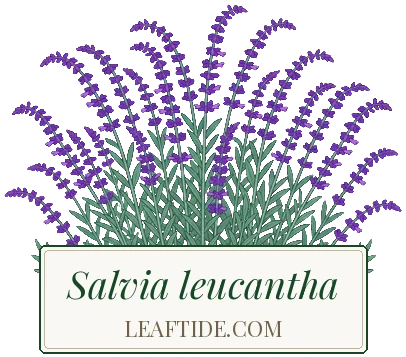
Mexican bush sage is a big, arching salvia with velvety purple flower spikes from late summer until frost. It is root-hardy to about -7 °C (19 °F) in well-drained soil and is grown as an annual, or kept in a pot under cover, where winters are colder. Plant it in full sun after the last frost, 90-120 cm (3-4 ft) apart, and water weekly in its first season; once settled it copes with heat and dry spells. Cut all the old stems down to 10-15 cm (4-6 in) in spring when new shoots appear, and pinch the tips in early summer for a sturdier plant.
 In your Leaftide garden


- Height
- 1.2 m (4 ft)
- Spread
- 1.2 m (4 ft)
- Flowers
- September - November
- Light
- Full sun
- Water
- Moderate
Yearly Lifecycle
Care Essentials
Once in spring, when new shoots appear, with a general balanced fertiliser or a layer of compost. It needs little more; rich feeding gives soft, floppy stems that fall open in rain.
Watch For
- Root rot in heavy soil that stays wet in winter
- Stems flopping open after rain or in rich soil
- Whitefly and aphids on plants grown under cover
- Frost cutting the flowers short where bloom starts late
Companions
Mealy Cup Sage, Lantana, Coneflower, Ornamental grasses, Dahlia
Pet Safety
Care Requirements
Light
Full sun
Needs at least six hours of direct sun a day, and more in cool-summer climates, to flower before frost. In shade it grows lanky, flops and flowers poorly.
Watering
Moderate; weekly in the first season, then drought tolerant
Water weekly in its first season and in long dry spells, and keep pots evenly moist in summer. Established plants in the ground cope with heat and drought. Never leave the soil waterlogged, especially in winter.
Fertilizing
One light feed in spring
A general balanced fertiliser or a layer of compost in spring is enough. Too much nitrogen gives soft, floppy stems and fewer flowers; potted plants can have a monthly liquid feed until flowering starts.
Pruning
Cut old stems to 10-15 cm (4-6 in) in spring; pinch in early summer
When new shoots show at the base in spring, cut all of last year's stems down to 10-15 cm (4-6 in). Pinch the tips or cut back by a third in early summer for a sturdier plant, stopping by midsummer so the flower spikes can form.
Spacing
90-120 cm (3-4 ft) apart
A mature clump spreads 1-1.5 m (3.5-5 ft), so space plants 90-120 cm (3-4 ft) apart, ideally in the middle or back of a border. Compact selections such as 'Santa Barbara' need only 60-75 cm (24-30 in).
Support
Usually none; pinch to prevent flopping
The arching stems can fall open after heavy rain or in rich soil. Early-summer pinching keeps the clump compact; in exposed spots, a ring of hoop supports set in place in spring holds it together.
Growing Tips
Patience for late flowers
It flowers as the days shorten, so the spikes appear from late summer onwards whatever the weather. In cool-summer gardens a warm, sunny wall or a pot moved under cover in autumn gives it time to bloom before frost.
Pinch early, then stop
Pinching the tips or cutting back by a third in early summer gives a bushier clump that stands up better in rain. Stop by midsummer, or you remove the shoots that would carry the flower spikes.
Drainage keeps it alive
Once established it handles heat and drought well. Losses usually come from cold, wet soil in winter, so on heavy clay plant on a slope or in a raised bed, or grow it in a pot.
Pests & Diseases
Pest Whitefly
Identification: Tiny white flies rise from the undersides of leaves when the plant is disturbed; leaves may yellow and become sticky
- Hang yellow sticky traps nearby
- Use the parasitic wasp Encarsia formosa under glass
- Insecticidal soap or horticultural oil on leaf undersides
Pest Aphids
Identification: Clusters of small green or black insects on shoot tips; sticky honeydew on leaves below
- Knock them off with a strong jet of water
- Encourage ladybirds and lacewings
- Insecticidal soap if an infestation is heavy
Disease Root Rot
Symptoms: Plant fails to regrow in spring or wilts in moist soil; the base is soft and dark and the roots are brown
Treatment: Remove dead plants; improve drainage before replanting
Prevention: Plant in free-draining soil, avoid overwatering, and keep pots on the dry side in winter
Disease Powdery Mildew
Symptoms: White powdery coating on leaves, mostly in late summer and autumn
Treatment: Remove the worst-affected leaves; it rarely harms the flowering
Prevention: Give plants room for air to move and water the soil, not the leaves