How to Grow Mealy Cup Sage
Salvia farinacea
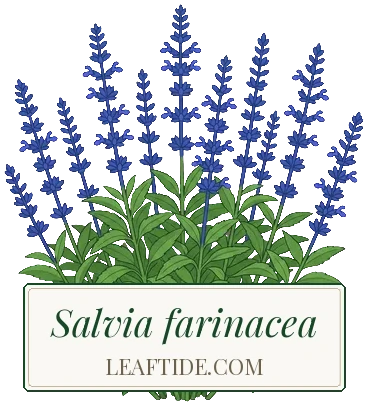
Mealy cup sage is a Texas native salvia with spikes of violet-blue flowers from late spring until frost. It is a perennial in zones 8-10 and is grown as an annual where winters are colder. Plant it in full sun and well-drained soil, 40-50 cm (16-20 in) apart, and water weekly until it settles in; after that it copes with heat and drought and needs water only in long dry spells. Cut it back by a third to a half in midsummer for a stronger autumn flush, then cut the frosted stems to the ground in late autumn and mulch the crown.
 In your Leaftide garden


- Height
- 75 cm (30 in)
- Spread
- 50 cm (20 in)
- Flowers
- May - September
- Light
- Full sun
- Water
- Moderate
- Prune
- Deadhead
Yearly Lifecycle
Care Essentials
Once in spring and again after the midsummer cut-back with a general balanced fertiliser. Skip it on fertile soil; too much feed gives soft, floppy stems.
Watch For
- Root rot in soil that stays wet
- Aphids and whitefly on soft new growth
- Powdery mildew in humid, still air
- Fewer flowers during the hottest weeks of summer
Companions
Lantana, Gaura, Coneflower, Black-eyed Susan, Zinnia
Pet Safety
Care Requirements
Light
Full sun
Needs at least six hours of direct sun a day for compact growth and plenty of flowers. It tolerates light afternoon shade in very hot climates, but in deeper shade it grows lanky and flowers poorly.
Watering
Moderate; weekly until established, then drought tolerant
Water weekly in the first season and during summer dry spells, roughly whenever a week passes with less than 2.5 cm (1 in) of rain. Established plants cope with heat and drought. Never leave the soil waterlogged, which causes root rot.
Fertilizing
Light feed in spring and after the midsummer cut-back
A general balanced fertiliser in spring and again in summer gives more flowers. On fertile soil it is not needed at all, and too much nitrogen makes the stems floppy.
Pruning
Deadhead; cut back by a third to a half in midsummer
Snip off faded spikes to keep new ones coming. In midsummer cut the whole plant back by a third to a half for a fuller autumn display. After frost, cut the stems to the ground.
Spacing
40-50 cm (16-20 in) apart
Space plants 40-50 cm (16-20 in) apart. Large selections such as 'Henry Duelberg' grow to about 90 cm (35 in) across and need 75-90 cm (30-35 in), ideally at the back of a bed.
Support
No support needed
The clumps stand on their own. Plants in rich soil or shade can flop, and a midsummer cut-back keeps them compact.
Growing Tips
Cut back in midsummer
Flowering slows in the hottest weeks. Cutting the whole plant back by a third to a half then gives bushier growth and a strong flush of flowers in autumn.
Drainage matters more than water
Once settled, it handles heat and drought well. Soil that stays wet, especially in winter, is the usual cause of losses, so plant on a slope or in a raised bed on heavy clay.
Keep a few seedlings
Established plants self-sow lightly. The seedlings move easily in spring and replace older plants, which tend to fade after a few years.
Pests & Diseases
Pest Aphids
Identification: Clusters of small green or black insects on shoot tips and flower stems; sticky honeydew on leaves below
- Knock them off with a strong jet of water
- Encourage ladybirds and lacewings
- Insecticidal soap if an infestation is heavy
Pest Whitefly
Identification: Tiny white flies rise from the undersides of leaves when the plant is disturbed; leaves may yellow
- Hang yellow sticky traps nearby
- Spray leaf undersides with water to disrupt them
- Insecticidal soap or horticultural oil on leaf undersides
Disease Root Rot
Symptoms: Plant wilts even though the soil is moist; stems blacken at the base and the roots are soft and brown
Treatment: Remove badly affected plants; improve drainage before replanting
Prevention: Plant in well-drained soil, avoid overwatering, and do not let mulch sit against the crown
Disease Powdery Mildew
Symptoms: White powdery coating on leaves and stems, mostly in late summer
Treatment: Cut out affected growth; the midsummer cut-back often removes most of it
Prevention: Give plants room for air to move and water the soil, not the leaves
Popular Varieties
Henry Duelberg
[object Object]