How to Grow Makrut Lime
Citrus hystrix
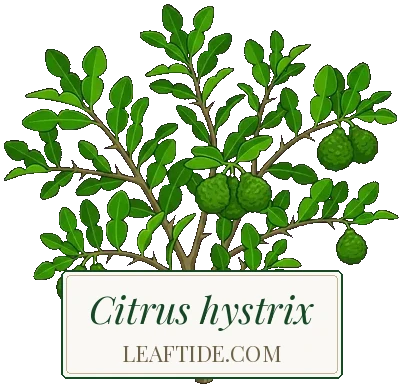
Makrut lime is grown primarily for its aromatic double leaves, prized in South-East Asian cooking, and for its bumpy, intensely fragrant rind. In the UK it is best kept in a large container so it can move outdoors in summer and come indoors before the first frost. Give it a bright, sunny windowsill or unheated conservatory in winter, full sun on a sheltered patio in summer, and water consistently but never let it sit in wet soil. Feed with a citrus fertiliser from spring to early autumn and re-pot every two years.
 In your Leaftide garden


- Height
- 4 m (13 ft)
- Spread
- 3 m (10 ft)
- Spacing
- 2 m (6.5 ft)
- Harvest
- September - November
- Light
- Full sun
- Water
- Moderate
Yearly Lifecycle
Care Essentials
Feed with a specialist citrus fertiliser every 4 weeks from early spring to early autumn. Switch to a low-nitrogen winter formula or stop feeding from mid-autumn to late winter.
Watch For
- Scale insects
- Spider mite
- Mealybug
- Root rot from overwatering
- Leaf drop from cold or dry air
Companions
Lemongrass, Thai basil, Ginger
Pet Safety
Care Requirements
Light
Full sun; the sunniest window or conservatory indoors
Needs at least 6 hours of direct sun daily. Outdoors in summer on a sheltered, sunny patio. Indoors in winter on the brightest, sunniest windowsill or in an unheated conservatory.
Watering
Regular in summer; very reduced in winter
Water thoroughly when the top 2-3 cm (¾-1 in) of compost feels dry in the growing season. Reduce significantly in autumn and winter; allow the top third of compost to dry out between waterings. Never let the pot stand in water.
Fertilizing
Citrus feed every 4 weeks spring to autumn
Use a specialist citrus or slow-release balanced fertiliser from early spring to early autumn. Switch to a low-nitrogen winter formula or stop feeding entirely from mid-autumn to late winter.
Pruning
Light spring shaping only
Prune lightly in spring to maintain a compact shape and remove dead or crossing branches. Avoid heavy cutting as it reduces the leaf harvest for cooking.
Spacing
30-40 cm (12-16 in) pot; 2 m (6.5 ft) between outdoor trees
Container growing is strongly recommended in temperate climates. Use a 30-40 cm (12-16 in) diameter pot with good drainage holes. If planting in a sheltered garden, allow at least 2 m (6.5 ft) between trees.
Support
Staking optional for young container plants
Young plants in windy spots benefit from a single stake until the trunk thickens. Established container specimens are self-supporting.
Growing Tips
Harvest leaves not fruit
The double leaves are the main crop. Pick individual leaflets as needed through the growing season; the tree will keep producing. Fruit develops slowly and is ready when dark green and firm.
Move outdoors after frosts
Once night temperatures stay above 10 °C (50 °F), move the pot to a sheltered, sunny patio. The extra light and warmth dramatically improves leaf production.
Bring in before first frost
Makrut lime has no frost tolerance. Move it inside before temperatures drop below 5 °C (41 °F), usually mid-autumn in the UK.
Water carefully in winter
Reduce watering significantly from mid-autumn to late winter. Allow the top third of compost to dry between waterings. Overwatering in cool conditions causes root rot.
Pests & Diseases
Pest Scale Insects
Identification: Small brown, flat or domed waxy bumps along the stems and leaf veins, mostly on leaf undersides. Sticky honeydew coats the leaves below and black sooty mould grows on it.
- Wipe or scrape off small colonies with a soft cloth or cotton bud.
- Spray with a plant oil or fatty acid insecticide, repeating as the label directs, to catch the mobile young.
Pest Mealybug
Identification: White, waxy, woodlouse-like insects in fluffy white clusters in leaf joints, along stems and around fruit stalks, with sticky honeydew and sooty mould nearby.
- Dab colonies off with a cotton bud dipped in soapy water.
- In a warm conservatory or greenhouse, release the mealybug ladybird Cryptolaemus montrouzieri in summer.
Pest Glasshouse Red Spider Mite
Identification: Fine pale mottling on the upper leaf surface, tiny mites and eggs on the undersides and fine webbing in bad attacks. Leaves turn dull and drop early. Worst in hot, dry indoor air.
- Raise the humidity by standing the pot on a tray of damp gravel and misting the leaves.
- Release the predatory mite Phytoseiulus persimilis in a greenhouse or conservatory.
Pest Citrus Leafminer
Identification: Silvery, winding tunnels with a thin dark line down the middle in young, soft leaves, which curl and distort. Hardened older leaves are not attacked. Found in warm citrus-growing areas such as southern Europe, rather than in cool climates.
- Leave damaged leaves on the tree: trees over about four years old tolerate the damage with little effect, and natural enemies build up and parasitise the larvae.
- Prune live branches no more than once a year and avoid heavy nitrogen feeding, since the moths lay on soft new flushes.
Disease Yellowing and Leaf Drop
Symptoms: Leaves turn yellow or fall, sometimes suddenly, most often in winter or soon after the tree is moved indoors or out. Flowers and young fruit may drop too.
Treatment: Find the cause before changing anything. Check whether the compost is waterlogged or bone dry, then look for cold draughts, a nearby radiator, too little light or missed feeds. Correct that and the tree usually releafs in spring.
Prevention: Keep it over winter in a bright spot at a steady temperature, away from radiators and cold draughts, water sparingly in winter, use summer and winter citrus feeds, and move the tree in and out gradually.
Disease Root Rot
Symptoms: Yellowing and falling leaves while the compost stays wet, a sour smell from the pot, and dark, soft roots instead of firm pale ones.
Treatment: Take the tree out of its pot, cut away rotten roots with some of the old compost and repot into a pot no larger than the remaining root ball, using gritty citrus compost. Water sparingly until new growth starts.
Prevention: Never leave the pot standing in water, let the surface dry before watering in winter, and do not pot on into a container much bigger than the root ball.
Spacing & Planting
| Plant spacing | 2 m (6.5 ft) |
| Row spacing | 2.5 m (8 ft) |
| Mature height | 4 m (13 ft) |
| Mature spread | 3 m (10 ft) |
Grow in a large container (30–40 cm, 12–16 in, pot) in the UK. Move outdoors in summer and bring inside before first frost. Allow 2 m (6.5 ft) between trees if planting in a sheltered garden.