How to Grow Maidenhair Fern
Adiantum raddianum
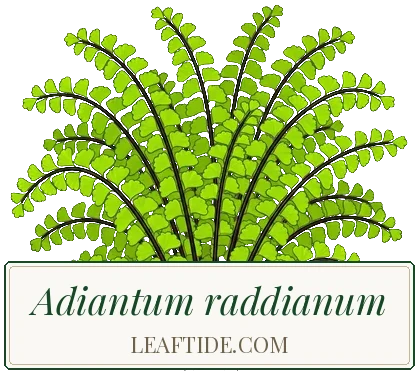
Maidenhair fern is a delicate beauty with fan-shaped leaflets on wiry black stems. It thrives in high humidity, consistent moisture, and no direct sun. Bathrooms and terrariums are ideal spots. It is unforgiving of neglect but rewards attentive care with lush, graceful fronds.
 In your Leaftide garden


- Height
- 40 cm (16 in)
- Spread
- 40 cm (16 in)
- Light
- Bright indirect light
- Water
- High
Yearly Lifecycle
Care Essentials
Feed monthly with a diluted balanced liquid fertiliser from spring through summer. Do not feed in autumn or winter.
Watch For
- Crispy brown fronds from low humidity or dry soil
- Scale insects on frond stems
- Root rot from waterlogged soil without drainage
Care Requirements
Light
Bright indirect, no direct sun
Needs bright indirect light but burns in direct sunlight. North or east-facing windows are ideal. Tolerates lower light but grows more slowly.
Watering
Consistently moist, never dry out
Keep soil evenly moist at all times. Never let the rootball dry out completely or sit in standing water. Water when the top centimetre feels slightly dry.
Fertilizing
Half-strength monthly, spring to summer
Feed with a half-strength balanced liquid fertiliser once a month during spring and summer only. Do not feed in autumn or winter.
Pruning
Remove dead fronds at the base
Cut dead or brown fronds off cleanly at the base. If the plant dies back completely, cut all fronds and maintain humidity; new growth often returns from the rhizome.
Growing Tips
Rehydrate a dried-out pot by standing it in water
If the pot feels light and the compost has shrunk from the sides, stand it in a bowl of tepid water for about 15 minutes until the surface is damp, then let it drain fully. Watering from above just runs down the gap at the edge.
Leave it where it is
Maidenhair ferns sulk when they are moved between rooms or put in a draught. Once you find a humid, bright spot out of direct sun, keep the plant there.
Feed lightly
The fine roots burn easily. Use a liquid feed at half strength, and only while the plant is growing, never on dry compost.
Pests & Diseases
Pest Scale Insects
Identification: Small, flat brown or tan bumps that do not move, sitting along the frond stems and under the fronds, often with sticky honeydew. Fronds yellow and growth stalls.
- Wipe the scales off with a soft cloth or cotton bud dipped in soapy water, taking care with the fragile fronds.
- Keep the plant apart from others and check again after a week, since young scales are easy to miss.
Disease Crisping Fronds
Symptoms: Fronds turn brown, crisp and papery from the edges, or the whole plant collapses after the compost has dried out, or in dry air or a draught.
Treatment: Cut all crisped fronds off at the base and water the plant evenly. New fronds often grow back from the rhizome within a few weeks.
Prevention: Keep it away from radiators, draughts and direct sun, never let the compost dry out, and raise humidity with a damp pebble tray or by grouping plants.
Disease Root Rot
Symptoms: Fronds yellow and wilt even though the compost is wet. The roots and rhizome are brown and mushy.
Treatment: Unpot, trim off rotten roots and repot in fresh, airy compost in a pot with drainage holes. Water more carefully afterwards.
Prevention: Use a pot with drainage holes and tip excess water out of the saucer after watering.