How to Grow Liriope
Liriope muscari
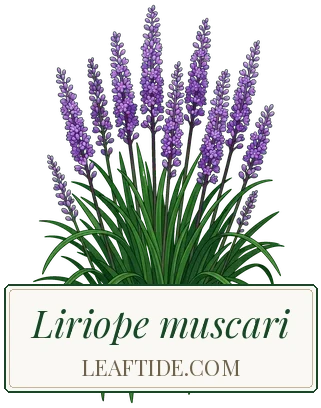
Liriope muscari is a tough, evergreen grass-like perennial that forms dense clumps of dark strap leaves topped with spikes of purple flowers in late summer. It thrives in sun or shade, tolerates drought once established, and is virtually maintenance-free. Plant 30 cm (12 in) apart as edging, groundcover, or in containers. Cut back old foliage in early spring before new growth emerges to keep it looking fresh.
 In your Leaftide garden


- Height
- 30 cm (12 in)
- Spread
- 30 cm (12 in)
- Flowers
- August - October
- Light
- Full sun to part shade
- Water
- Low
- Prune
- Cut back in late winter
Yearly Lifecycle
Care Essentials
Feed with a balanced slow-release fertilizer in spring as new growth begins. A light top-dressing of compost is sufficient for established plants.
Watch For
- Slugs and snails on emerging spring growth
- Vine weevil grubs in containers
- Leaf scorch in very exposed sunny positions
Companions
Hostas, Ferns, Heuchera, Ajuga
Pet Safety
Care Requirements
Light
Sun to deep shade
Liriope is one of the few plants that genuinely thrives in deep shade. It also grows well in full sun, though foliage may scorch in very hot, dry, exposed positions. Part shade gives the best leaf colour, but it flowers most freely in sun.
Watering
Low once established
Water new plantings regularly for the first season. Once established, liriope is drought-tolerant and rarely needs supplemental watering except during prolonged dry spells. Avoid waterlogged soil.
Fertilizing
Minimal: light spring feed
A balanced slow-release granular fertilizer or compost top-dressing in spring is all that is needed. Avoid high-nitrogen feeds which promote lush leaf growth at the expense of flowers.
Pruning
Cut back in late winter
Shear all foliage to 5 cm (2 in) in late winter or early spring before new growth begins. This is the single most important maintenance task: it removes tatty winter foliage and allows the fresh flush to emerge cleanly.
Mulching
Light mulch in spring
A thin layer of compost or bark mulch in spring helps retain moisture and suppress weeds. Avoid burying the crowns.
Growing Tips
Check which liriope you are buying
Liriope muscari grows in clumps and stays where you put it, which is why it makes a good path edging. Its relative Liriope spicata (creeping lilyturf) spreads fast by underground runners and can become invasive, so check the label before planting along a path or border edge.
Keep the crown at soil level
Plant with the crown level with the soil surface, not buried. Keep mulch and fertiliser granules off the base of the leaves: a buried or smothered crown in wet soil is the usual start of crown rot.
Ground cover where grass fails
Under trees where grass gives up, a block of liriope planted 30 cm (12 in) apart makes an evergreen ground cover. Keep it off paths: it does not stand being walked on.
Pests & Diseases
Pest Slugs and Snails
Identification: Ragged holes and chewed edges on the young leaves as they push up in spring, with slime trails nearby.
- Pick them off by torchlight on damp evenings.
- Set beer traps among the clumps, or scatter ferric phosphate slug pellets thinly.
Pest Liriope Scale
Identification: Tiny white to brownish scales on the leaves, mostly towards the base, with yellow or reddish spotting and patches of dead leaf.
- Cut the foliage back in late winter and clear away the clippings, which removes most of the scale.
- After cutting back, wet the clumps thoroughly with a plant-oil or horticultural oil spray labelled for scale insects.
Disease Anthracnose Colletotrichum spp.
Symptoms: Reddish-brown spots along the leaf edges and tips, followed by fast dieback of the foliage. Worse after frequent rain or overhead watering.
Treatment: Cut the old leaves back to about 5 cm (2 in) in late winter and remove as much of the debris as you can; the fungus overwinters in dead foliage. This alone often stops the disease.
Prevention: Water at the base, early in the day, and avoid overwatering.
Disease Leaf and Crown Rot Phytophthora palmivora
Symptoms: The inner leaves turn yellow first, then the leaf bases go brown and the browning spreads outwards. Dug-up roots are discoloured and their outer layer slips off. 'Evergreen Giant' is especially prone.
Treatment: Dig out affected plants straight away and dispose of them, not on the compost heap. Fungicides only slow this disease and do not cure it.
Prevention: Plant in well-drained soil with the crown at soil level, don't pile mulch against the plants and don't overfeed.