How to Grow Lilly Pilly
Syzygium smithii
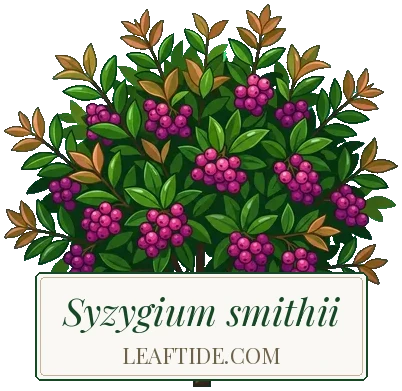
Lilly Pilly is an evergreen Australian native shrub or small tree with glossy leaves and clusters of pink to purple edible berries. Plant in well-drained soil in full sun to part shade. Water regularly when young; drought-tolerant once established. Prune to shape as a hedge or let it grow as a specimen. Berries are tart and excellent for jams and sauces.
 In your Leaftide garden


- Height
- 5 m (16 ft)
- Spread
- 3 m (10 ft)
- Harvest
- October - November
- Light
- Full sun to part shade
- Water
- Moderate
Yearly Lifecycle
Care Essentials
In spring and again in late summer with a balanced slow-release fertiliser. Avoid heavy feeding in winter.
Watch For
- Psyllid (pimply leaves; rarely attacks this species)
- Scale insects
- Sooty mould
- Myrtle rust
Care Requirements
Light
Full sun to part shade
Grows best in full sun but tolerates part shade. More fruit production in sunnier positions.
Watering
Regular when young, drought-tolerant later
Water regularly during the first two years. Once established, Lilly Pilly is quite drought-tolerant but fruits better with consistent moisture.
Fertilizing
Twice yearly, spring and late summer
Apply a balanced slow-release fertiliser in spring and again in late summer. Avoid heavy feeding in winter.
Pruning
Clip any time for hedging
Can be hedged at any time of year. For specimens, prune after fruiting or in late winter. Remove dead or crossing branches to maintain airflow.
Growing Tips
Psyllid rarely bothers this one
Many lilly pillies get pimply, distorted new leaves from the lilly pilly psyllid, but Syzygium smithii is rarely attacked. That makes it a reliable hedge where other lilly pillies struggle. If you do see pimpled leaves, check the plant label: it may be a different Syzygium.
Hard clipping costs you berries
The flowers form in clusters at the branch tips, so a hedge clipped tightly all summer flowers and fruits very little. If you want berries, trim lightly once the fruit has been picked, or leave part of the plant unclipped.
Keep it back from paving
Ripe berries drop in large numbers. On paths, patios and driveways they get squashed underfoot, stain light surfaces and can be slippery, so plant away from hard surfaces or be ready to sweep while it fruits.
Pests & Diseases
Pest Scale Insects
Identification: Small waxy or hard bumps, white, pink or brown, on stems and along the leaf veins. Leaves below turn sticky with honeydew and then black with sooty mould.
- Scrape off light infestations with a soft brush or a fingernail.
- Spray a plant-oil or fatty-acid insecticide while the young crawlers are active, covering stems and leaf undersides.
- Once the scale is under control, the sooty mould weathers away or can be wiped off with a damp cloth.
Disease Myrtle Rust Austropuccinia psidii
Symptoms: Bright yellow, powdery spore pustules on young leaves, shoots, flowers and fruit, often with purple-red edges. Badly infected new growth distorts, turns brown and dies back.
Treatment: There is no cure. Cut out infected shoots, bag them at once and put them in household waste, not the compost. Wash hands, tools and clothes afterwards so you don't carry spores to other myrtle-family plants.
Prevention: Buy plants with no yellow pustules and check each flush of new growth, as the rust mainly infects young tissue. Outside the areas where myrtle rust is established, report a suspected case to your plant health authority.