How to Grow Lilac Verbena
Verbena lilacina
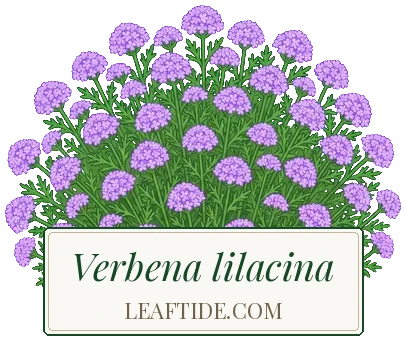
Lilac Verbena is an evergreen to semi-evergreen subshrub from Cedros Island off Baja California, forming a mound 60-90 cm (24-35 in) tall and up to 1.2 m (4 ft) wide of finely cut green leaves. From spring to autumn, most heavily in spring, it carries clusters of fragrant lilac to purple flowers that bees and butterflies love. Plant it in full sun in soil that drains freely; it copes with clay only if the soil never stays wet. Water every week or two in its first summer, then only a deep soak every three to four weeks in long dry spells, and do not feed. Shear off faded flower stems after the spring flush for a second wave, and cut the whole plant back by about a third in late winter. It survives about -7 °C (19 °F) in dry soil; where winters are colder or very wet, grow it in a pot you can move under cover.
 In your Leaftide garden


- Height
- 75 cm (30 in)
- Spread
- 1 m (3.5 ft)
- Flowers
- April - August
- Light
- Full sun
- Water
- Low
- Feed
- None needed
Yearly Lifecycle
Care Essentials
Rarely needed. It grows in poor soil; at most give a light general feed in early spring to plants in pots.
Watch For
- Root and crown rot in soil that stays wet in winter
- Frost damage below about -7 °C (19 °F)
- Woody, open centre when it is never cut back
- Powdery mildew in shade or crowded planting
Care Requirements
Light
Full sun
Flowers most and stays compact in full sun. In very hot inland gardens it accepts light afternoon shade, but deeper shade gives sparse, floppy growth and mildew.
Watering
Low; occasional deep soak once established
Water every week or two through the first summer until the roots settle. After that, a deep soak every three to four weeks in long dry spells keeps it lush and flowering; it survives longer droughts by resting. Never let the soil stay wet, especially in winter.
Fertilizing
None needed
Poor to average soil suits it. Fertiliser gives soft, sprawling growth with fewer flowers. Plants in pots can have a light balanced feed in early spring.
Pruning
Cut back by a third in late winter; shear after the spring flush
In late winter, once hard frosts are over, cut the whole mound back by about a third, keeping some leaves on each stem. After the spring flowers fade, shear off the spent flower stems to bring on a second wave.
Spacing
75-90 cm (30-35 in) apart
Plants grow 60-90 cm (24-35 in) tall and 90-120 cm (3-4 ft) wide. Give each one room so air moves around the crown; 'De La Mina' can go a little closer.
Support
None needed
Lilac verbena forms a self-supporting mound. If it flops open, it is usually getting too much water, rich soil or shade.
Growing Tips
Drainage before everything
Lilac verbena dies from wet roots in winter far more often than from cold. Plant it on a slope, a raised bed or a gravel bed, and mulch with gravel rather than bark or compost.
Shear for a second wave
When the big spring flush fades, shear off the spent flower stems and a few centimetres of leafy tips. Plants regrow fast and flower again into autumn. Avoid a hard cut in the hottest weeks of summer.
Lean and dry
Skip fertiliser and frequent watering. Rich, moist soil gives soft, sprawling growth that flowers less and rots more easily.
Keep a spare
Soft or semi-ripe cuttings root easily from late spring to late summer. Pot a few up and keep them frost-free over winter, in case a hard or wet winter takes the parent plant.
Pests & Diseases
Disease Root and Crown Rot
Symptoms: Shoots wilt and collapse although the soil is wet. The base of the stems turns dark and soft and the roots are brown and mushy. Most often follows a wet winter.
Treatment: A plant with a soft crown cannot be saved: dig it out and discard it. If you replant, choose a raised bed or a gravel slope.
Prevention: Plant in very free-draining soil, mulch with gravel rather than bark, and do not water in wet winter weather. Leave the old top growth on until late winter so the crown stays drier.
Disease Powdery Mildew
Symptoms: A white, powdery coating on the leaves and flower stems, most often where plants are shaded or crowded.
Treatment: Cut off affected stems and thin dense growth so air and sun reach the middle of the mound.
Prevention: Grow it in full sun with enough space around each plant, and water the soil rather than the leaves.
Popular Varieties
De La Mina
[object Object]