How to Grow Leucadendron
Leucadendron salignum
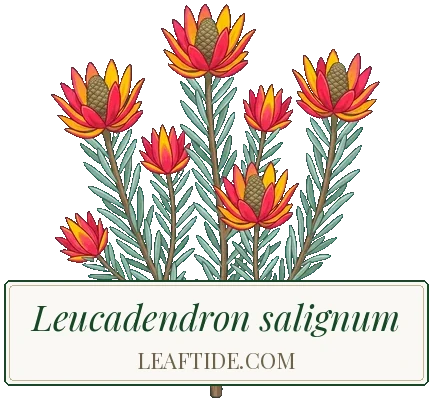
Leucadendron is a South African fynbos shrub prized for its dramatic coloured bracts in red, gold, and lime, and as a long-lasting cut flower. It demands specific conditions: acid, well-drained, nutrient-poor soil with absolutely no phosphorus fertiliser. In the UK it is tender and needs either a frost-free sheltered garden in the far south/west or container growing with winter protection. Prune by one third after flowering each year to keep it bushy and maximise bract colour.
 In your Leaftide garden


- Height
- 1.8 m (6 ft)
- Spread
- 1.2 m (4 ft)
- Flowers
- March - June
- Light
- Full sun
- Water
- Moderate
Yearly Lifecycle
Care Essentials
Do NOT feed with general fertilisers containing phosphorus: this is fatal to Leucadendron. If feeding is needed, use a specialist protea/fynbos fertiliser very sparingly in spring only.
Watch For
- Root rot in poorly drained or alkaline soils
- Phytophthora in wet conditions
- Botrytis in humid cool weather
Care Requirements
Light
Full sun
Requires full sun all day. Will not flower well in shade. In the UK, the sunniest spot is ideal.
Watering
Moderate, excellent drainage essential
Water moderately during the growing season. Excellent drainage is non-negotiable: waterlogged roots cause fatal root rot. In containers, never let the pot sit in water.
Pruning
One third after flowering
Cut back by about one third after flowering each year. Never cut into bare old wood. Regular pruning keeps the plant bushy and produces better bract colour.
Mulching
Light acid mulch only
A light mulch of pine bark or ericaceous compost is acceptable. Never use mushroom compost or lime-based mulches which raise soil pH.
Growing Tips
Buy a named cultivar
Leucadendrons are dioecious, with separate male and female plants. Seed-raised plants vary in colour and sex, so a named cultivar grown from cuttings gives predictable bract colour.
Keep it airy under glass
In winter under cover, keep the compost on the dry side and ventilate whenever the weather allows. Stuffy, damp air invites grey mould and root rot.
Pests & Diseases
Disease Phytophthora Root Rot Phytophthora cinnamomi
Symptoms: Leaves yellow, wilt and brown, usually branch by branch, while the soil is wet. The fine roots are brown and rotten, and the whole plant can collapse.
Treatment: There is no reliable cure once it is established. Remove and destroy the plant and the soil around its roots, and do not replant proteas or leucadendrons in that spot.
Prevention: Plant in very free-draining, acidic soil, ideally on a mound or slope. Water only when the soil has dried, and use clean pots and fresh mix for container plants.
Disease Phosphorus Toxicity
Symptoms: Leaves yellow or scorch at the tips and edges and new growth is stunted, usually after feeding with general fertiliser, bone meal, mushroom compost or rich compost.
Treatment: Stop all feeding. Flush the root zone with plenty of rainwater and, for a container plant, repot into a fresh, low-nutrient, acidic mix without compost or bone meal.
Prevention: Feed only with a phosphorus-free protea fertiliser at half strength, if at all.
Disease Lime-Induced Chlorosis
Symptoms: New leaves turn pale yellow while the veins stay green, and growth slows. Seen in alkaline soil or after watering with hard water.
Treatment: Water with rainwater, mulch with pine bark to acidify the surface, and apply a phosphorus-free chelated iron product made for acid-loving plants, following the label.
Prevention: Grow in acidic soil or an acidic container mix, and avoid lime and hard tap water.