How to Grow Lablab Bean
Lablab purpureus
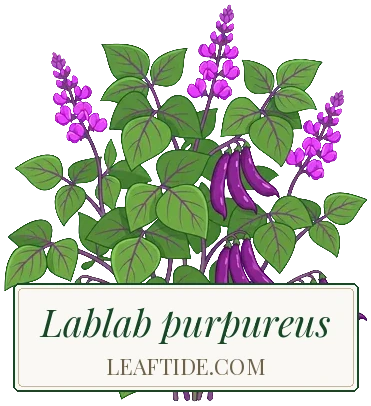
Lablab bean is a vigorous tropical climber with striking purple flowers and glossy dark pods. Sow seeds in warm soil after all frost risk has passed, or start indoors 4 weeks early. Provide sturdy support: plants can reach 3 m (10 ft). Harvest pods young for the table; leave some to dry for seed. As a legume it fixes nitrogen, so feed lightly. Frost kills it, so grow as an annual in temperate gardens.
 In your Leaftide garden
- Hardiness
- Tender
- Season
- Warm Season
- Harvest
- Continuous Harvest
- Spacing
- 30 cm (12 in)
- Height
- 3 m (10 ft)
- Sow depth
- 3 cm (1 in)
- Min. soil temperature
- 15 °C+ (59 °F+)
- Start from
- Seed
- Light
- Full sun
- Water
- Moderate
When to Start
Start seeds indoors 4 weeks before your last frost date. Transplant outdoors once night temperatures stay above 12 °C (54 °F) and soil has warmed to at least 15 °C (59 °F).
Don't know your frost date? Find it here →
Growth Stages
Approximate days from start
Care Essentials
- Light feed at planting. Avoid high nitrogen: as a legume it fixes its own. A balanced feed once pods begin forming is sufficient.
- A vigorous tropical climber producing ornamental purple flowers and glossy dark pods. Dual-purpose as both edible crop and garden ornamental. Needs a long warm season. Start under cover in cooler climates.
Growing Conditions
- Min. soil temperature
- 15 °C+ (59 °F+)
- Germination temperature
- 18–30 °C (64–86 °F)
- Sow indoors
- —
- Transplant out
- —
- First harvest
- —
Want your full season plan with reminders? Set up your garden free


Spacing & Planting
| Plant spacing | 30 cm (12 in) |
| Row spacing | 60 cm (24 in) |
| Sow depth | 3 cm (1 in) |
| Mature height | 3 m (10 ft) |
| Mature spread | 60 cm (24 in) |
Climbing vine: provide a trellis, wigwam, or fence. Space plants 30 cm (12 in) apart at the base.
Pests & Diseases
Pest Aphids
Identification: Clusters of small black or green aphids on shoot tips and flower stems, with distorted growth and sticky honeydew. They build up quickly in warm weather.
- Squash small colonies or wash them off with a jet of water, checking again every few days.
- Encourage ladybirds, lacewings and hoverflies, which eat large numbers: grow flowers nearby.
- Pinch out and bin badly infested tips. Do not spray, as you eat the pods and young leaves.
Pest Spider Mites
Identification: Fine yellow speckling on the leaves, which turn bronzed and dry, with fine webbing underneath, mostly in hot, dry weather or under glass.
- Hose the undersides of the leaves regularly, since mites dislike humidity.
- Water in dry spells so plants are not stressed, and remove badly speckled leaves.
- In a greenhouse, release the predatory mite Phytoseiulus persimilis. Do not spray, as you eat the pods and young leaves.
Disease Fungal Leaf Spot
Symptoms: Brown or grey spots, often with a yellow edge, on the leaves in warm, humid weather. Badly hit leaves yellow and drop.
Treatment: Pick off and bin affected leaves, and keep the foliage dry when watering. Do not compost the leaves.
Prevention: Space plants so air moves through, water the soil in the morning, and grow lablab in a different bed each year.
Disease Frost Damage
Symptoms: Leaves turn black and limp after a frost, and the vine usually dies. Lablab is a tender plant.
Treatment: A light touch of frost may leave the lower stems alive, so wait a few days before pulling the plant. A hard frost kills it, so remove it and clear it away.
Prevention: Sow and plant out only after the last frost, and cover plants with fleece if a late frost is forecast.
Growing Conditions
| Min. soil temperature | 15 °C (59 °F) |
| Germination temperature | 18–30 °C (64–86 °F) |
| Base growth temperature | 12 °C (54 °F) |
| Photoperiod sensitivity | short day |
Frequently Asked Questions
- How far apart should I plant Lablab bean?
- Plant Lablab bean 30 cm (12 in) apart, with 60 cm (24 in) between rows.
- When can I harvest Lablab bean?
- Lablab bean is ready to harvest approximately 65 days after transplanting.
- Is Lablab bean frost hardy?
- No, Lablab bean is tender.