How to Grow Kiwiberry
Actinidia arguta
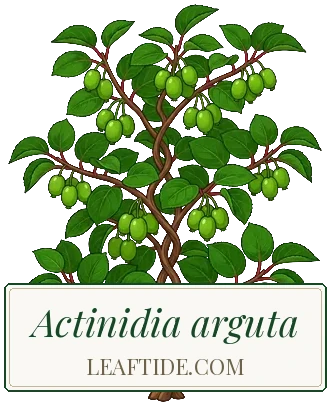
Kiwiberry (hardy kiwi) is a vigorous deciduous climber with grape-sized, smooth-skinned fruit you eat whole, skin and all. Dormant plants survive about -30C, but the new shoots and flower buds are killed by late spring frost, so plant it in a sunny, sheltered spot away from frost pockets. Most varieties need a male plant nearby for fruit; 'Issai' is self-fertile. Give it a strong pergola or wire system, prune in winter and pinch back shoots in summer. Expect the first fruit after three to four years, ripening from late summer into autumn.
 In your Leaftide garden


- Height
- 5 m (16 ft)
- Spread
- 4 m (13 ft)
- Spacing
- 3 m (10 ft)
- Harvest
- September - October
- Light
- Full sun
- Water
- Moderate
Yearly Lifecycle
Care Essentials
Early spring with a balanced fertiliser, then mulch with compost. Feed lightly: too much nitrogen gives masses of leafy shoots and fewer fruit.
Watch For
- Late spring frost on new shoots and flower buds
- Cats rolling on and chewing young plants
- Root rot in waterlogged soil
- Leaf scorch in hot, dry spells
Care Requirements
Light
Full sun, sheltered; tolerates light shade
Fruits best in full sun on a sheltered south- or west-facing wall, fence or pergola. It grows in light shade but crops less. Avoid frost pockets and east-facing spots where morning sun on frosted shoots does the most harm.
Watering
Regular watering; keep moist, never waterlogged
The roots are shallow and the large leaves lose water fast, so water regularly in dry spells, especially while fruit swells in summer. A thick mulch helps. The roots rot in waterlogged soil, so plant in free-draining ground.
Fertilizing
Light balanced feed in early spring
Apply a balanced fertiliser in early spring and mulch with compost. Too much nitrogen gives masses of leafy shoots at the expense of fruit. Prefers slightly acid soil; on chalky soil watch for yellowing leaves.
Pruning
Winter thin-out plus summer pinching
In winter, remove shoots that have fruited for two or three years and keep well-placed one-year-old shoots. In summer, pinch fruiting shoots to four to six leaves beyond the last fruit and cut out tangles. Do not prune in spring, when cuts bleed.
Spacing
About 3m (10 ft) apart; 2m (6.5 ft) for 'Issai'
Allow about 3m (10 ft) between plants along a pergola or wire system, 2m (6.5 ft) for the less vigorous 'Issai'. Plant one male within a few metres of every five to eight females.
Support
Sturdy pergola, T-bar or strong wires
A twining vine that can add 3-5m (10-16 ft) of growth a year and carries a heavy crop. Train it on a strong pergola, T-bar trellis or heavy wires about 1.8-2m (6-6.5 ft) high. Light trellis will be overwhelmed.
Growing Tips
Male and female plants
Most kiwiberries are either male or female, and only females fruit. Plant one male within a few metres for every five to eight females, choosing one that flowers at the same time. 'Issai' carries both on one vine and fruits alone, though a male nearby still raises its yield.
Late frost is the main danger
Kiwiberries leaf out early, and a night just below freezing can blacken the new shoots and the flower buds on them. Avoid frost pockets and keep fleece ready to drape over young vines on clear spring nights.
Prune twice a year
In summer, pinch fruiting shoots back to four to six leaves beyond the last fruit and cut away long tangled growth. In winter, remove shoots that have fruited for two or three years and keep well-placed one-year-old shoots, which bear next year's crop.
Picking and ripening
Fruit ripens unevenly from late summer. Pick berries when they give slightly to the touch and eat them skin and all. Firm berries picked a little early ripen in a few days at room temperature and keep for weeks in the fridge.
Pests & Diseases
Pest Cats
Identification: Flattened or snapped young shoots, chewed leaves and scratched stems, often with cats seen lying in the plant.
- Surround young plants with a chicken wire cage for the first two to three years
- Mature woody vines are rarely harmed
- No chemical treatment needed; physical protection works
Pest Late Frost Damage
Identification: New shoots and flower buds turn black and limp after a frosty night. Later shoots from secondary buds carry few or no flowers.
- Cover young or low vines with fleece when frost is forecast
- Plant away from frost pockets and east-facing walls
- No chemical control; physical protection only
Disease Phytophthora Root Rot Phytophthora spp.
Symptoms: Leaves yellow and wilt even though the soil is wet, growth stalls and the base of the stem darkens. Roots are brown and soft.
Treatment: No reliable cure once established. Improve drainage and remove badly affected plants.
Prevention: Plant in free-draining soil, on a slight mound on heavy ground, and never let water stand around the stem.
Popular Varieties
Issai
Self-fertile Japanese hardy kiwi that fruits without a male plant. Compact (about 3-4m, 10-13 ft) and quick to crop, often in its second or third year, with small, sweet, slightly pointed green fruit. A male nearby still raises the yield.
Weiki
Vigorous, very hardy German female selection with sweet green fruit ripening in early to mid-autumn. Needs a male pollinator.
Ken's Red
Female hybrid kiwiberry with red skin and red flesh and a sweet, berry-like flavour. Needs a male pollinator.
Spacing & Planting
| Plant spacing | 3 m (10 ft) |
| Row spacing | 4 m (13 ft) |
| Mature height | 5 m (16 ft) |
| Mature spread | 4 m (13 ft) |
Vigorous twining vine for a sturdy pergola, T-bar or wire system. Allow about 3m (10 ft) between plants ('Issai' 2m, 6.5 ft). Plant one male for every five to eight females, unless growing self-fertile 'Issai'.