How to Grow Yellow Waxbells
Kirengeshoma palmata
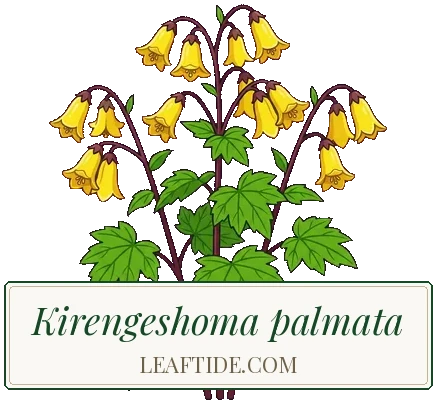
Kirengeshoma palmata thrives in moist, acidic, humus-rich soil in part to full shade: think woodland floor conditions. Plant in spring, mulch generously to retain moisture, and water consistently through summer. It's slow to establish but once settled forms elegant clumps of maple-like foliage topped with waxy yellow bells from late summer into mid-autumn. Cut back after frost. Protect from slugs in spring and avoid exposed, sunny sites.
 In your Leaftide garden


- Height
- 80 cm (31 in)
- Spread
- 60 cm (24 in)
- Flowers
- August - October
- Light
- Part to full shade
- Water
- High
Yearly Lifecycle
Care Essentials
Apply a balanced slow-release fertiliser in spring as new growth emerges. A light top-dressing of ericaceous compost helps maintain soil acidity.
Watch For
- Slugs and snails on young shoots
- Vine weevil larvae in containers
- Leaf scorch from too much sun
Companions
Hostas, Ferns, Astilbe, Anemone japonica
Care Requirements
Light
Part shade to full shade; avoid direct afternoon sun
Thrives in dappled woodland shade. Morning sun is tolerable but hot afternoon sun scorches the large leaves. Full shade is fine if soil moisture is adequate.
Watering
Consistent moisture essential; never let soil dry out
Water deeply and regularly, especially during summer dry spells. This plant is native to moist mountain forests and will not tolerate drought. Mulch heavily to conserve moisture.
Fertilizing
Light spring feed with ericaceous compost
Apply a balanced slow-release fertiliser in spring. Top-dress with ericaceous compost or leaf mould to maintain soil acidity. Avoid high-nitrogen feeds that promote leggy growth.
Pruning
Cut to ground after frost; no summer pruning needed
Cut all stems to ground level in late autumn after frost blackens the foliage. The plant dies back completely and regrows from the crown each spring.
Mulching
Thick annual mulch of leaf mould or acidic compost
Apply a generous layer of leaf mould, pine bark, or ericaceous compost in spring. This maintains soil acidity, conserves moisture, and suppresses weeds around the shallow root system.
Growing Tips
Moisture is non-negotiable
Kirengeshoma will not tolerate dry soil. Mulch thickly and water deeply during dry spells. If leaves wilt or scorch, the soil is too dry.
Patience with establishment
New plants may take 2-3 years to reach full size and flower freely. Do not move or divide during this period.
Late-season star
One of very few shade perennials flowering in early to mid-autumn. Position where the waxy yellow bells catch dappled light for best effect.
Pests & Diseases
Pest Slugs and Snails
Identification: Ragged holes in young leaves and shoots as they emerge in spring, with silvery slime trails. Soft new growth in a damp, shady spot is their favourite.
- Check at dusk and pick off by hand, especially around emerging shoots.
- Scatter ferric phosphate pellets thinly around the clump in spring, as the label directs.
- Keep the mulch a hand's width back from the shoots so it does not shelter them.
Pest Vine Weevil
Identification: In pots, plants wilt or collapse suddenly and the roots are eaten away, with fat white C-shaped grubs with brown heads in the compost. Adults leave notches along leaf edges.
- Water in parasitic nematodes (Steinernema kraussei) when the compost is moist and the weather is mild in late summer or early autumn.
- Tip out collapsed plants, pick out and destroy the grubs and repot in fresh compost.
- Look for adults after dark with a torch and remove them.
Disease Leaf Scorch
Symptoms: Brown, crisp leaf edges and tips, or bleached patches, when plants stand in strong sun or the soil dries out.
Treatment: Water deeply until the soil is evenly moist and cut off badly scorched leaves. Plants usually recover the next year.
Prevention: Plant in light to deep shade out of hot sun and wind, and mulch with leaf mould or compost to keep the soil moist.