How to Grow Jack-in-the-Pulpit
Arisaema triphyllum
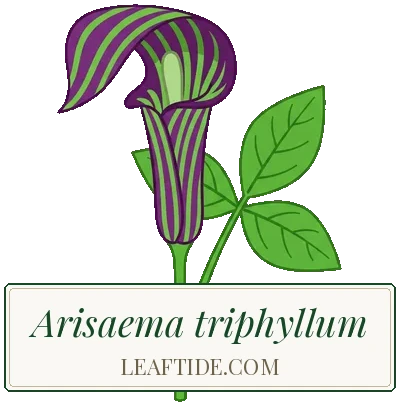
Jack-in-the-Pulpit is a hardy, long-lived woodland perennial grown for its unique hooded spring flowers and bright red autumn berries. Plant corms in autumn, 5-8 cm (2-3 in) deep, in moist, humus-rich, well-drained soil in part to full shade. Protect newly planted corms from squirrels with wire mesh. Do not disturb once established: patience is rewarded with a long-lived colony. Let all foliage die back naturally each summer; never cut it while green. All parts are toxic; handle with gloves and keep away from pets.
 In your Leaftide garden


- Hardiness
- Hardy
- Season
- Cool Season
- Spacing
- 20 cm (8 in)
- Height
- 55 cm (22 in)
- Start from
- Bulb/Tuber
- Light
- Part shade
- Water
- Moderate
When to Start
Plant directly outdoors once soil temperature reaches 10 °C (50 °F). No seed starting needed — grow from bulbs, tubers, or sets.
Don't know your frost date? Find it here →
Growth Stages
Approximate days from start
Care Essentials
- No regular feeding needed. Top-dress with leaf mould or compost in autumn to enrich the woodland soil.
- All parts of Jack-in-the-Pulpit contain calcium oxalate crystals and are toxic if eaten raw; handle with gloves. The plant is gender-switching; small corms produce male flowers, larger corms female. Established plants reliably produce striking clusters of bright red berries in autumn. Very long-lived once settled. Black walnut tolerant.
Growing Conditions
Pet Safety
Spacing & Planting
| Plant spacing | 20 cm (8 in) |
| Row spacing | 25 cm (10 in) |
| Mature height | 55 cm (22 in) |
| Mature spread | 35 cm (14 in) |
Plant 15-30 cm (6-12 in) apart in informal woodland drifts. Corms multiply slowly over years to form naturalistic groups.
Pests & Diseases
Pest Slugs and Snails
Identification: Ragged holes in the emerging leaves and chewed shoot tips in spring, with silvery slime trails nearby.
- Scatter ferric phosphate slug pellets thinly around the emerging shoots in spring.
- Go out at dusk with a torch and remove slugs and snails by hand.
- Water in the morning rather than the evening so the soil surface is drier at night.
Pest Squirrels and Chipmunks
Identification: Freshly dug holes where corms were planted, and missing or dug-up corms, often soon after planting in autumn.
- Pin galvanised wire mesh over the planting area at planting time, and take it off once the shoots start to push through.
- Firm the soil back and tidy any loose soil so there is no sign of fresh digging.
Disease Corm Rot
Symptoms: Plants fail to appear in spring, or the shoots are weak and yellow, and the corm is soft and mushy when dug up. It is caused by waterlogged soil, especially during winter dormancy.
Treatment: Dig up a plant that fails to emerge, wearing gloves, cut away the soft rot and replant a firm corm in better-drained soil. Discard it if nothing firm is left.
Prevention: Plant in moist but well-drained, humus-rich soil, add leaf mould or grit to heavy soil and avoid hollows where water collects in winter.
Growing Conditions
| Photoperiod sensitivity | day neutral |
Frequently Asked Questions
- How far apart should I plant jack-in-the-pulpit?
- Plant jack-in-the-pulpit 20 cm (8 in) apart, with 25 cm (10 in) between rows.
- Is jack-in-the-pulpit frost hardy?
- Yes, jack-in-the-pulpit is hardy.