How to Grow Louisiana Iris
Iris ser. Hexagonae
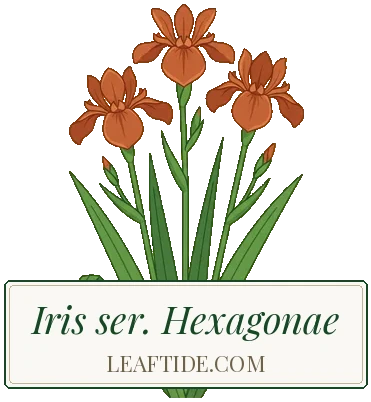
Louisiana irises are water-loving plants native to US Gulf Coast wetlands. Unlike bearded irises, they thrive in boggy soil or standing water up to 15cm (6 in) deep. Plant rhizomes horizontally just below the soil surface (2-3cm, ¾-1 in, deep) in rich, acidic to neutral soil. They are heavy feeders and need regular fertilising during the growing season. In the UK, grow as marginal pond plants or in consistently wet borders. Mulch heavily in cold areas as they are hardy to about -15C.
 In your Leaftide garden


- Height
- 1.2 m (4 ft)
- Spread
- 60 cm (24 in)
- Spacing
- 45 cm (18 in)
- Flowers
- May - June
- Light
- Full sun to part shade
- Water
- High
- Prune
- Remove spent stems
Yearly Lifecycle
Care Requirements
Light
Full sun to part shade; full sun best for flowering
Full sun to partial shade. Louisiana irises flower best in full sun but tolerate afternoon shade, especially in hot climates. In the UK, full sun is preferred to maximise flowering.
Watering
Constantly wet; standing water up to 15cm (6 in); never let dry out
Keep constantly wet. Louisiana irises are marginal aquatic plants that thrive in boggy soil or standing water up to 15cm (6 in) deep. They must never dry out. Ideal for pond margins, rain gardens, or permanently wet borders.
Fertilizing
Monthly balanced feed early spring to late summer; avoid lime
Heavy feeders. Apply a balanced fertiliser monthly during the growing season (early spring to late summer). In ponds, use aquatic plant fertiliser tablets. In borders, a general-purpose liquid feed works well. Avoid lime-based fertilisers as they prefer acidic to neutral soil.
Pruning
Remove spent stems; tidy foliage in autumn; divide every 3-4 years
Remove spent flower stems after blooming. Cut back tatty foliage in late autumn. In mild climates where foliage is evergreen, remove only dead or damaged leaves. Divide congested clumps every 3-4 years in late summer.
Growing Tips
Keep them wet
Louisiana irises are true water plants. They thrive in boggy soil or standing water up to 15cm (6 in) deep. Never let the soil dry out completely, especially during the growing season.
Plant rhizomes shallowly and flat
Unlike bearded irises whose rhizomes sit on the surface, Louisiana iris rhizomes should be planted horizontally just 2-3cm (¾-1 in) below the soil. Do not expose them to sun.
Feed heavily
Louisiana irises are greedy feeders. Apply a balanced fertiliser monthly during the growing season, or use aquatic plant fertiliser tablets pushed into the soil near the roots.
Mulch for winter protection
Hardy to about -15C but less tolerant of cold than Siberian irises. In cold areas, apply a thick mulch of straw or bark over the rhizomes in late autumn to insulate against hard frosts.
Pests & Diseases
Pest Slugs and Snails
Identification: Ragged holes and chewed edges on new leaves and flower buds, with silvery slime trails, especially on fresh spring growth.
- Check plants at dusk and collect the slugs and snails by hand.
- Use ferric phosphate pellets (approved for organic growing) or a beer trap, and keep the base of the clump clear of dead leaves.
Disease Iris Leaf Spot Mycosphaerella macrospora
Symptoms: Oval brown spots with a yellow halo on the leaves, which join up and make the foliage look scorched from late in the growing season.
Treatment: Cut off and bin affected leaves, and clear all old leaf debris from the clump when the plant is dormant.
Prevention: Do not crowd the clumps, divide them when they get congested, and keep foliage as dry as possible by watering the soil rather than the leaves.
Spacing & Planting
| Plant spacing | 45 cm (18 in) |
| Row spacing | 60 cm (24 in) |
| Mature height | 1.2 m (4 ft) |
| Mature spread | 60 cm (24 in) |
Space 45-60cm (18-24 in) apart. Louisiana irises spread by rhizomes and form dense colonies in wet soil. Allow room for expansion or plant closer for faster coverage in pond margins.