How to Grow Hummingbird Sage
Salvia spathacea
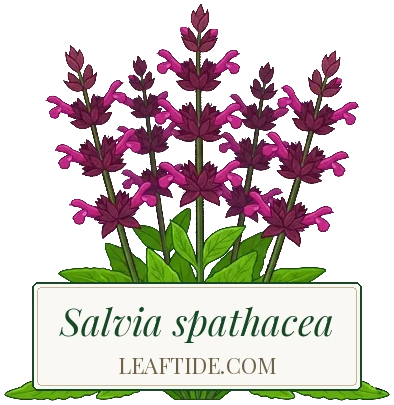
Hummingbird sage is a California native salvia that spreads by rhizomes into a low patch of large, fragrant, slightly sticky leaves. In spring it sends up stalks of magenta flowers set in purplish bracts, loved by hummingbirds and bees. It is one of the few salvias that thrives in dry shade, such as under oaks, and in cool, cloudy climates it also takes sun. Plant it in well-drained soil and water it through its first summer; after that it needs little or no summer water. Where summers are dry the leaves turn ragged and brown by midsummer as the plant rests, and fresh leaves return with the autumn rains. Cut the old flower stalks and tatty leaves to the base in late summer and mulch with leaf litter.
 In your Leaftide garden


- Height
- 60 cm (24 in)
- Spread
- 90 cm (35 in)
- Flowers
- April - July
- Light
- Part shade
- Water
- Low
- Feed
- No feeding needed
Yearly Lifecycle
Care Essentials
No feeding needed. A yearly mulch of leaf litter or compost in autumn is all it wants.
Watch For
- Root and crown rot in heavy, waterlogged soil
- Powdery mildew on leaves in still, humid air
- Leaves browning in summer drought (normal rest, not disease)
Companions
Heuchera, Hellebores, Pacific Coast Iris, Ferns, Epimedium
Pet Safety
Care Requirements
Light
Part shade, or sun in cool climates
In the wild it grows in dappled shade under oaks and shrubs, and it is one of the best salvias for dry shade. In hot, sunny climates give it at least afternoon shade. In cool, cloudy climates such as the UK it takes full sun and flowers more freely there.
Watering
Little or no summer water once established
Water regularly through the first summer while the roots settle. After that it lives on winter and spring rain and needs no summer water; an occasional deep soak in a dry summer keeps the leaves greener. Normal summer rain is fine as long as the soil drains well.
Fertilizing
No feeding needed
It is adapted to lean woodland soil and gets what it needs from a mulch of leaf litter or compost. Fertiliser gives soft, floppy growth.
Pruning
Cut back old stalks in late summer
The dry flower stalks and bracts look good for weeks, so there is no hurry to remove them. In late summer cut the old stalks and any ragged leaves to the base; fresh leaves follow with the autumn rains.
Spacing
60-90 cm (24-35 in) apart
Each plant spreads slowly by rhizomes to about 90 cm (35 in) across. Plant 60-90 cm (24-35 in) apart for a groundcover that knits together in a few years.
Support
No support needed
The leaves form a low clump and the flower stalks stand on their own.
Growing Tips
A salvia for dry shade
Unlike most salvias it grows happily in part shade, even in the dry, rooty ground under trees. In hot climates give it shade for at least part of the day; in cool, cloudy climates more sun gives more flowers.
The summer rest is normal
In a dry summer the leaves go ragged and brown and the plant looks half dead. This is its natural rest, not a problem. An occasional deep watering keeps it greener, and fresh leaves return when autumn rain arrives.
Keep an eye on the spread
The rhizomes slowly push the patch outwards. Lift any runners that stray where you don't want them in autumn, when the soil is moist, and replant them elsewhere or give them away.