How to Grow Holy Basil
Ocimum tenuiflorum
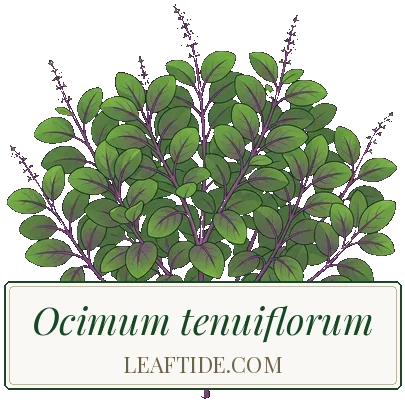
Holy basil (Tulsi) needs warmth, full sun, and well-drained soil. Sow indoors in late spring at 20-30 °C (68-86 °F) and plant out only after all frost risk has passed. More heat-tolerant and vigorous than sweet basil, reaching 30-60cm (12-24 in) with purple-tinged stems. Pinch tips for bushy growth but flowers can be left for their medicinal value. Harvest leaves regularly for a stronger, more peppery-clove flavour than sweet basil. Perennial in the tropics but treat as a frost-tender annual in the UK. Excellent in Thai and Indian cuisine.
 In your Leaftide garden
- Hardiness
- Tender
- Season
- Warm Season
- Harvest
- Continuous Harvest
- Spacing
- 30 cm (12 in)
- Height
- 60 cm (24 in)
- Min. soil temperature
- 20 °C+ (68 °F+)
- Start from
- Seed
- Light
- Full sun
- Water
- Moderate
When to Start
Start seeds indoors 4 weeks before your last frost date. Transplant outdoors once night temperatures stay above 12 °C (54 °F) and soil has warmed to at least 20 °C (68 °F).
Don't know your frost date? Find it here →
Growth Stages
Approximate days from start
Care Essentials
- Light liquid feed every 2-3 weeks during active growth. Less demanding than sweet basil.
- Sacred plant in Hinduism (Tulsi). Perennial in tropics but grown as annual in cool climates. More heat-tolerant than sweet basil. Purple-tinged stems and flowers.
Growing Conditions
- Min. soil temperature
- 20 °C+ (68 °F+)
- Germination temperature
- 20–30 °C (68–86 °F)
Pet Safety
- Sow indoors
- —
- Transplant out
- —
- First harvest
- —
Want your full season plan with reminders? Set up your garden free


Spacing & Planting
| Plant spacing | 30 cm (12 in) |
| Row spacing | 40 cm (16 in) |
| Sow depth | On the surface |
| Mature height | 60 cm (24 in) |
| Mature spread | 40 cm (16 in) |
Larger and more vigorous than sweet basil. Needs good air circulation around stems to prevent fungal issues in humid conditions.
Pests & Diseases
Pest Aphids
Identification: Clusters of small green or black insects on the shoot tips and under young leaves, with sticky honeydew. Infested leaves may curl.
- Wash colonies off with a jet of water, or pinch out the worst tips (you would harvest them anyway).
- Spray with insecticidal soap, covering the undersides of the leaves.
Pest Leafhoppers
Identification: Small, wedge-shaped, pale green insects that jump or fly off when the plant is disturbed. They leave pale mottling on the upper side of the leaves.
- Tolerate light mottling: the damage is mostly cosmetic and the leaves are still fine to use.
- On a heavy attack, spray insecticidal soap on the undersides of the leaves, where the young nymphs feed.
Pest Japanese Beetle
Identification: Metallic green beetles about 1 cm (½ in) long with coppery wing cases, feeding in groups in summer and skeletonising the leaves down to the veins.
- Pick beetles off by hand in the morning and drop them into a bucket of soapy water.
- Cover plants with insect mesh while the adults are flying.
Disease Basil Downy Mildew Peronospora belbahrii
Symptoms: Yellowing between the veins on the upper side of the leaves, with grey to purplish fuzz underneath in humid weather; the leaves then brown and drop. Holy basil is one of the least susceptible basils, so attacks are usually milder than on sweet basil.
Treatment: Remove affected leaves, or whole plants if badly hit, and put them in the bin, not the compost. Infected leaves cannot be cured.
Prevention: Space plants so air moves between them, water the soil rather than the leaves and do it early in the day, and buy seed and plants from reliable suppliers.
Disease Powdery Mildew
Symptoms: White powdery patches on the leaves and stems, usually late in the season or under cover in dry air.
Treatment: Pick off affected leaves and give the plants more space. Clear badly affected plants at the end of the season.
Prevention: Don't crowd plants, especially in a greenhouse, and keep the soil from drying out completely.
Disease Cold Damage
Symptoms: Dark brown to black patches on the leaves and soft, blackened shoot tips after nights below about 10 °C (50 °F), even without frost.
Treatment: Move pots somewhere warm. Once new growth starts, cut off the damaged leaves.
Prevention: Plant out only when nights stay above 10 °C (50 °F), and bring plants in before autumn nights turn cold.
Growing Conditions
| Min. soil temperature | 20 °C (68 °F) |
| Germination temperature | 20–30 °C (68–86 °F) |
| Base growth temperature | 12 °C (54 °F) |
| Min. daylength to start | 11 h |
| Photoperiod sensitivity | day neutral |
Frequently Asked Questions
- How far apart should I plant holy basil?
- Plant holy basil 30 cm (12 in) apart, with 40 cm (16 in) between rows.
- When can I harvest holy basil?
- Holy basil is ready to harvest approximately 45 days after transplanting.
- Is holy basil frost hardy?
- No, holy basil is tender.