How to Grow Christmas Rose
Helleborus niger
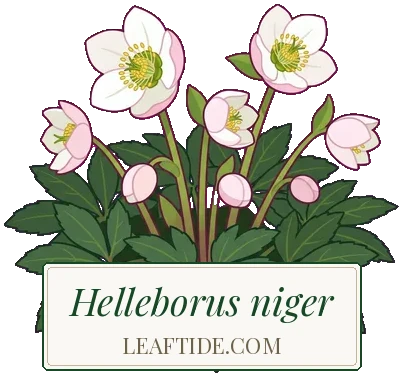
The Christmas Rose (Helleborus niger) flowers right through winter, producing pure white blooms that age to pink. Much fussier than the common Lenten Rose (H. orientalis) - it demands perfect drainage, prefers alkaline or limy soil, and resents disturbance. Plant in partial shade in humus-rich, well-drained soil with added grit on heavy ground. Shorter (30cm, 12 in) and more compact than orientalis. Evergreen. Cloche individual plants in early winter to keep flowers pristine and mud-free.
 In your Leaftide garden


- Height
- 30 cm (12 in)
- Spread
- 40 cm (16 in)
- Flowers
- December - January
- Light
- Part shade
- Water
- Moderate
Yearly Lifecycle
Care Requirements
Light
Partial shade; dappled light under deciduous trees
Partial shade is ideal. Dappled light under deciduous trees works well. Avoid full sun on dry soil and deep dense shade.
Watering
Moist but perfectly drained; water in dry spells
Keep soil moist but never waterlogged. Christmas Rose is less drought-tolerant than Lenten Rose. Water during dry spells but ensure drainage is excellent.
Fertilizing
Autumn leaf mould mulch; bone meal in spring
Mulch with leaf mould in autumn. Apply bone meal in spring. Prefers alkaline conditions so avoid ericaceous feeds.
Pruning
Remove only damaged or diseased leaves, before flowering
Remove only damaged or diseased leaves, before the flowers open; healthy leaves keep feeding the plant, so do not cut all the old foliage away. Cut flower stems after blooming if seed is not wanted.
Mulching
Autumn leaf mould; keep clear of crown
Mulch with leaf mould or garden compost in autumn. On alkaline soils a light dressing of garden lime can be added. Keep mulch away from the crown.
Growing Tips
Perfect drainage is essential
Christmas Rose will not tolerate waterlogged soil. On heavy clay, add generous amounts of grit and plant on a slight mound. In containers, use John Innes No. 2 with extra perlite.
Prefers alkaline soil
Unlike most hellebores, H. niger prefers alkaline to neutral soil. Add garden lime or crushed limestone to acid soils. A handful of bone meal at planting helps.
Cloche for pristine flowers
Place a glass or plastic cloche over individual plants in early winter. This keeps the white flowers clean from rain splash and mud, and advances flowering slightly.
Do not disturb
Christmas Rose is slower to establish and more resentful of disturbance than Lenten Rose. Choose the planting spot carefully and leave undisturbed for years.
Pests & Diseases
Pest Aphids
Identification: Green aphids clustered on flower stems, buds and the backs of young leaves from late winter into spring; sticky honeydew and distorted new growth.
- Squash small colonies by hand or wash them off with a strong jet of water.
- Leave ladybirds, lacewings and hoverfly larvae to work; they usually catch up by late spring.
- Check plants regularly from late winter, as aphids are the suspected carrier of hellebore black death.
Pest Slugs and Snails
Identification: Ragged holes in the white petals and in the buds as they push through the soil; silvery slime trails. The low winter flowers are within easy reach, especially in mild, wet spells.
- Pick them off by torchlight on mild, damp evenings.
- Keep the crown clear of dead leaves and debris where they hide.
- Nematodes (Phasmarhabditis) only work in soil above 5 °C (41 °F), so they help in spring rather than midwinter.
- Ferric phosphate slug pellets, scattered thinly, following the label.
Disease Hellebore Leaf Spot Microsphaeropsis hellebori
Symptoms: Round brown to black dead patches on leaves and stalks that later fall out, leaving ragged holes; dark spots on the flowers; affected stems can collapse. Christmas rose is one of the worst affected hellebores, with attacks from late winter into summer.
Treatment: Pick off spotted leaves as soon as you see them and bin them, not on the compost. Healthy leaves keep feeding the plant, so before and during flowering remove only the diseased ones rather than cutting all the old foliage away.
Prevention: Clear fallen dead leaves from around the crown, since the fungus survives on them. Spores spread in rain splash, so mulch around the plant and water at the base.
Disease Hellebore Black Death Helleborus net necrosis virus
Symptoms: Stunted, twisted new growth from mid-spring with black streaks and net patterns along the leaf veins, sometimes as rings; the streaks can spread to stems and flowers. It is seen mostly on Lenten roses, but similar symptoms turn up on other hellebores. Do not confuse it with the round spots of leaf spot.
Treatment: There is no cure. Dig up and destroy affected plants promptly, and do not compost them.
Prevention: Buy from a careful nursery and check new plants, especially Lenten roses planted nearby. Spraying aphids does not stop the virus arriving, so removing infected plants early is what protects the rest. Seed-raised plants are one way to start clean, as many viruses do not pass through seed.