How to Grow Hardenbergia
Hardenbergia violacea
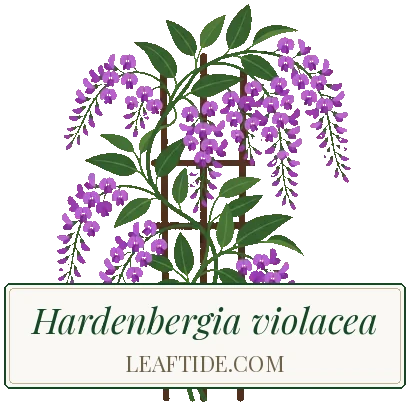
Hardenbergia is a vigorous Australian native climber or groundcover that smothers itself in cascading sprays of purple pea-shaped flowers in late winter and spring. It thrives in full sun to part shade and free-draining soil, tolerating drought once established. Train on a trellis, fence, or let it scramble as groundcover. Light pruning after flowering keeps it tidy. Frost-tolerant to about -5 C and largely pest-free.
 In your Leaftide garden


- Height
- 2 m (6.5 ft)
- Spread
- 2.5 m (8 ft)
- Flowers
- February - April
- Light
- Full sun to part shade
- Water
- Low
- Prune
- Cut back after flowering
Yearly Lifecycle
Care Essentials
Spring only, with a light application of balanced slow-release fertiliser. Hardenbergia fixes nitrogen so heavy feeding is unnecessary and can reduce flowering.
Watch For
- Scale insects
- Mealybugs on young growth
- Leaf miners (cosmetic only)
- Root rot in waterlogged soil
Companions
Grevillea, Westringia, Correa, Dianella, Lomandra
Care Requirements
Light
Full sun to part shade
Flowers most prolifically in full sun but tolerates partial shade. In very hot climates, some afternoon shade prevents leaf scorch. Good on east or west-facing fences.
Watering
Drought tolerant once established
Water regularly in the first year to establish. Once settled, hardenbergia is very drought-tolerant and needs watering only during extended dry spells. Avoid waterlogged soil.
Fertilizing
Light balanced feed in spring only
Apply a light dressing of balanced slow-release fertiliser in spring. Hardenbergia fixes its own nitrogen, so heavy feeding is unnecessary and can reduce flowering.
Pruning
Cut back after flowering
Prune by up to one-third immediately after flowering finishes in spring. This controls size and encourages dense bushy regrowth. Can be hard-pruned to rejuvenate if leggy.
Support
Trellis or fence for climbing
Provide a trellis, fence, or wires for climbing. Hardenbergia twines naturally but benefits from initial guidance to cover gaps evenly. Also works as a groundcover without support.
Growing Tips
Prune straight after flowering
Hardenbergia flowers on the previous season's growth, so any pruning later than just after the flowers fade cuts off next year's buds.
Treat the seed before sowing
The seed has a hard coat. Nick it lightly or soak it in just-boiled water and leave it to cool overnight, then sow the swollen seeds.
Give it something to twine up, or let it sprawl
It twines up a fence, trellis or wire, but without support it spreads across the ground as a cover. Decide which you want before planting.
Pests & Diseases
Pest Scale Insects
Identification: Small brown or tan waxy bumps on stems and the undersides of leaves that do not move, with sticky honeydew and sometimes black sooty mould.
- Rub them off with a soft brush or cotton bud dipped in soapy water.
- Spray with a fatty acid or plant oil product when the pale young crawlers are present.
- Prune out badly infested stems after flowering.
Pest Mealybugs
Identification: White, cottony clumps on young growth and in leaf joints, often with sticky honeydew.
- Wipe or brush them off with a soft brush or cotton bud, checking again every few days.
- Spray with a fatty acid or plant oil product, repeating as the label directs.
Disease Root Rot
Symptoms: Leaves yellow and wilt even though the soil is wet, and the roots are dark and mushy. Caused by waterlogged soil.
Treatment: Water less and let the soil dry out. A plant that has collapsed rarely recovers, so remove it and do not replant in the same wet spot.
Prevention: Plant in free-draining soil, on a slope or mound if the ground is heavy, and keep pots draining freely.
Disease Few or No Flowers
Symptoms: A healthy, leafy plant that flowers poorly or not at all.
Treatment: Check the usual causes: pruning too late, which cuts off the buds, deep shade, or too much feeding. Fix the cause and expect flowers the following year.
Prevention: Prune only just after flowering, give it a sunny to lightly shaded spot and feed lightly.