How to Grow Ginseng Ficus
Ficus microcarpa
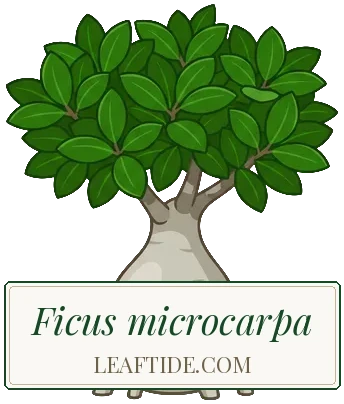
Ginseng ficus is a small-leaved fig sold with thick, swollen roots that look like ginseng, and it is one of the easiest bonsai-style plants to grow indoors. Give it a bright spot with a little gentle direct sun, water when the top 2-3 cm (¾-1 in) of compost is dry, and feed monthly from spring to late summer. Keep it away from cold draughts and radiators, because sudden changes make it drop leaves, and trim new shoots back to two or three leaves to keep it compact. In frost-free climates the same species grows outdoors into a huge banyan tree with curtains of aerial roots.
 In your Leaftide garden


- Height
- 60 cm (24 in)
- Spread
- 50 cm (20 in)
- Light
- Bright indirect light
- Water
- Moderate
Yearly Lifecycle
Care Essentials
Feed monthly from spring to late summer with a balanced liquid houseplant or bonsai fertiliser at half strength. Stop feeding in autumn and winter, when growth slows in the lower light.
Watch For
- Leaf drop after a move, a cold draught or a sudden change in light
- Rolled, purple-spotted leaves from leaf-rolling thrips
- Scale insects and sticky honeydew on stems
- Spider mites in dry, heated rooms
- Soft or wrinkled roots from overwatering
Pet Safety
Care Requirements
Light
Bright indirect light with some gentle direct sun
A bright windowsill with morning or late-afternoon sun is ideal. Shade it from strong midday sun through glass, which can scorch the leaves, and avoid dim corners, where it grows leggy and sheds leaves.
Watering
Water when the top 2-3 cm (¾-1 in) of compost is dry
Water thoroughly, let the excess drain away and empty the saucer. In spring and summer this is often about once a week; in winter it may be every one to two weeks. The swollen roots store little water, so do not let the compost dry out completely.
Fertilizing
Monthly half-strength feed from spring to late summer
Use a balanced liquid houseplant or bonsai fertiliser at half strength once a month while the plant is growing. Stop in autumn and winter, when growth slows and unused fertiliser can build up in the compost.
Pruning
Trim shoots back to 2-3 leaves after they make 6-8
Trim through spring and summer to keep a dense, compact crown, cutting just above a leaf with clean scissors. Remove any shoots growing from the swollen roots below a graft. Wear gloves, as the milky sap irritates skin.
Spacing
One specimen per pot, with room around the crown
Grow it as a single plant in a shallow, wide pot just larger than the root base. Leave space around the crown for light and airflow, which also helps keep pests down.
Support
No support needed
The thick roots and short trunk are self-supporting. Pot it firmly in free-draining compost so the base does not rock, but do not cover the swollen roots.
Growing Tips
Keep the roots on show
The swollen roots are the plant's main feature. When you repot, keep their tops above the compost and never bury them. Healthy roots are firm and woody; soft or wrinkled ones point to overwatering.
Bright and steady
A bright windowsill with morning or evening sun suits it, but harsh midday sun through glass can scorch the leaves. Once it has settled, try not to move it: changes in light or temperature cause leaf drop, although new leaves usually follow within a few weeks.
Trim to keep it compact
Let a shoot grow six to eight leaves, then cut it back to two or three. Repeating this through spring and summer builds a dense, tree-like crown. The milky sap irritates skin, so wear gloves.
Summer outdoors, winter inside
It can spend summer outside in a sheltered, lightly shaded spot once nights stay above about 15 °C (59 °F). Bring it in before nights drop below 10 °C (50 °F). Planted out in frost-free regions it becomes a large spreading tree whose roots can lift paving.
Pests & Diseases
Pest Leaf-rolling Thrips
Identification: Young leaves fold or roll lengthways into pods and develop purplish-red spots and silvery patches. Small black adults and pale larvae hide inside the rolled leaves.
- Pick off and bin rolled leaves, since the insects are protected inside them.
- Spray the whole plant with insecticidal soap or neem oil every 5-7 days for three to four rounds.
- Hang blue sticky traps near the plant to catch adults and monitor numbers.
- For heavy infestations use a systemic houseplant insecticide labelled for thrips, following the label.
Pest Scale Insects
Identification: Small brown, dome-shaped bumps fixed along stems and under leaves, often with sticky honeydew and black sooty mould on the leaves below.
- Wipe or scrape scales off with a cotton bud dipped in rubbing alcohol.
- Spray with insecticidal soap or neem oil every 7-10 days for at least three applications.
- Use a systemic houseplant insecticide containing acetamiprid, following the label.
Pest Spider Mites
Identification: Fine pale speckling on the leaves and faint webbing underneath, most common in warm, dry, heated rooms. Leaves dull, yellow and fall.
- Raise humidity and rinse the foliage under a lukewarm shower.
- Spray with insecticidal soap or neem oil every 5-7 days for three to four rounds.
- Apply a miticide labelled for houseplants to both sides of the leaves.
Disease Root Rot Pythium and Phytophthora spp.
Symptoms: Leaves yellow and drop while the compost stays wet, and the swollen roots turn soft, wrinkled or smell sour.
Treatment: Lift the plant, cut away soft roots with clean scissors, and repot into fresh, free-draining bonsai or cactus compost. Water sparingly until new growth appears.
Prevention: Use a pot with drainage holes, water only when the top 2-3 cm (¾-1 in) of compost is dry, and empty the saucer after watering.