How to Grow Geraldton Wax
Chamelaucium uncinatum
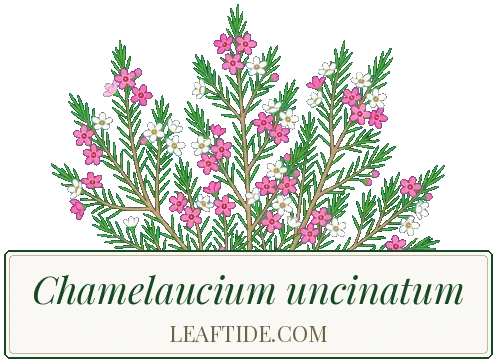
Geraldton Wax is a Western Australian shrub bearing masses of waxy, star-shaped flowers in pink, white, or purple from late winter through spring. Prized as a long-lasting cut flower. It demands full sun and excellent drainage in sandy, slightly acidic soil. Drought-tolerant once established but intolerant of humidity and wet feet. Prune after flowering to maintain a compact shape. Best in Mediterranean and dry-summer climates.
 In your Leaftide garden


- Height
- 2 m (6.5 ft)
- Spread
- 2 m (6.5 ft)
- Flowers
- February - April
- Light
- Full sun
- Water
- Low
Yearly Lifecycle
Care Essentials
Lightly in spring with a low-phosphorus native plant fertiliser. Avoid standard garden fertilisers which may contain too much phosphorus for this Australian native.
Watch For
- Root rot (overwatering or poor drainage)
- Phytophthora dieback
- Botrytis (grey mould) in humid conditions
- Scale insects
Companions
Grevillea, Westringia, Correa, Kangaroo Paw, Lavender
Care Requirements
Light
Full sun essential
Demands full sun for prolific flowering. Will not tolerate shade or damp, overcast positions. In cooler climates, plant against a warm sheltered wall.
Watering
Drought tolerant, avoid overwatering
Extremely drought-tolerant once established. Water sparingly in summer and not at all in wet periods. Root rot from overwatering is the primary killer of this plant.
Fertilizing
Light low-phosphorus feed in spring
Apply a light dose of low-phosphorus native plant fertiliser in spring only. Sensitive to phosphorus, so avoid standard garden fertilisers. One application per year suffices.
Pruning
Cut back after flowering, never into old wood
Prune by one-third to one-half immediately after flowering. Always cut into green leafy wood. Never cut into bare old wood as it rarely regenerates.
Growing Tips
Prune lightly and never into bare wood
Trim the flowered shoots by about a third straight after flowering to keep the plant bushy. Do not cut back into leafless old wood: Geraldton wax rarely shoots again from it, and a hard prune can kill the plant.
Grow it in a pot where winters are cold
It is frost tender and hates cold, wet soil. Where frosts are hard, grow it in a pot of gritty compost in full sun and move it under cover for winter.
Open sun and airy spot against grey mould
The flowers and fine foliage rot when they stay damp. Give it full sun, a spot with good air movement, space around it, and water at the base rather than over the plant.
Pests & Diseases
Disease Root Rot (Phytophthora)
Symptoms: Leaves yellow and drop, branches die back and the plant can collapse suddenly, especially in wet, heavy or badly drained soil. Geraldton wax is very sensitive to wet roots.
Treatment: There is no cure once the roots are rotting. Cut back watering and improve drainage if the plant is only starting to decline; replace a collapsed plant in a better-drained spot or a pot of gritty compost.
Prevention: Plant in sharply drained soil or a raised mound, use a gritty mix in pots, and never leave pots standing in water.
Disease Grey Mould (Botrytis) Botrytis cinerea
Symptoms: Flowers and buds turn brown and soft, then become covered in grey, fuzzy mould, especially in cool, damp, still weather. Fine twigs may also die back.
Treatment: Cut off affected flowers and shoots into healthy growth and bin them. Do not compost them.
Prevention: Plant in full sun with good air movement, avoid wetting the flowers when you water, and do not crowd the plant.