How to Grow Garlic Mustard
Alliaria petiolata
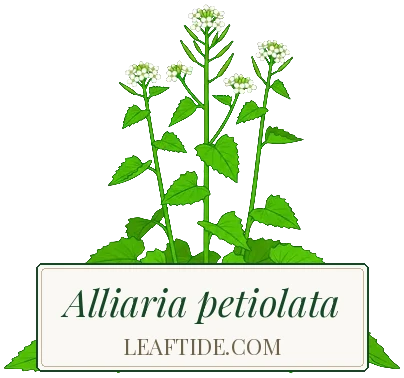
Garlic mustard is a hardy biennial wild herb whose leaves taste of garlic with a mustard bite. In North America it is a highly invasive, regulated or prohibited weed in many US states and Canadian provinces: do not plant it there, forage wild plants instead and pull them before they set seed. In its native range (Europe, western Asia and North Africa) it is easy to grow in partial shade and moist soil under a hedge or at a woodland edge. Sow fresh seed outdoors in autumn; it sprouts the following spring and forms a leafy rosette for picking from autumn through early spring. In its second spring it sends up white-flowered stems: eat the young shoots and flowers, then cut the stems before the seed pods ripen if you don't want it spreading.
 In your Leaftide garden
- Hardiness
- Hardy
- Season
- Cool Season
- Harvest
- Continuous Harvest
- Spacing
- 20 cm (8 in)
- Height
- 90 cm (35 in)
- Sow depth
- 0.5 cm (¼ in)
- Min. soil temperature
- 4 °C+ (39 °F+)
- Start from
- Seed
- Light
- Part shade
- Water
- Moderate
When to Start
Direct sow outdoors as soon as soil reaches 4 °C (39 °F) — typically early to mid spring. Can also be started indoors 5 weeks earlier for a head start.
Don't know your frost date? Find it here →
Growth Stages
Approximate days from start
Care Essentials
- No feeding needed. Garlic mustard grows wild in hedge bottoms and woodland edges and does well in ordinary soil with some leaf litter or compost.
- A native European hedgerow biennial with heart-shaped leaves that smell of garlic when crushed and small white four-petalled flowers in its second spring. It is the food plant of the orange-tip butterfly in its native range. In North America it is one of the most damaging woodland invaders and is regulated or banned in many US states and Canadian provinces, so there you should forage wild plants rather than grow it.
Growing Conditions
- Min. soil temperature
- 4 °C+ (39 °F+)
- Germination temperature
- 4–18 °C (39–64 °F)
- Sow indoors
- —
- Transplant out
- —
- First harvest
- —
Want your full season plan with reminders? Set up your garden free


Spacing & Planting
| Plant spacing | 20 cm (8 in) |
| Row spacing | 30 cm (12 in) |
| Sow depth | 0.5 cm (¼ in) |
| Mature height | 90 cm (35 in) |
| Mature spread | 30 cm (12 in) |
Biennial. A low leafy rosette in the first year, then flowering stems up to about 1 m (3.5 ft) in the second spring before it sets seed and dies. Cut flower stems before the pods ripen to stop it spreading.
Pests & Diseases
Pest Flea Beetle
Identification: Small round holes peppering young leaves; tiny dark beetles jump when disturbed
- Keep soil moist
- Cover young plants with fleece
- Rarely justified on a wild herb
Disease White Blister Rust Albugo candida
Symptoms: Raised white, chalky pustules on the undersides of leaves, sometimes with distorted shoots
Treatment: Pick off and bin affected leaves. Do not eat badly affected leaves.
Prevention: Give plants space for air flow and avoid crowding with other brassicas.
Growing Conditions
| Min. soil temperature | 4 °C (39 °F) |
| Germination temperature | 4–18 °C (39–64 °F) |
| Base growth temperature | 3 °C (37 °F) |
| Min. daylength to start | 8.5 h |
| Photoperiod sensitivity | day neutral |
Frequently Asked Questions
- How far apart should I plant garlic mustard?
- Plant garlic mustard 20 cm (8 in) apart, with 30 cm (12 in) between rows.
- When can I harvest garlic mustard?
- Garlic mustard is ready to harvest approximately 40 days after transplanting.
- Is garlic mustard frost hardy?
- Yes, garlic mustard is hardy.