How to Grow Snowdrop
Galanthus nivalis
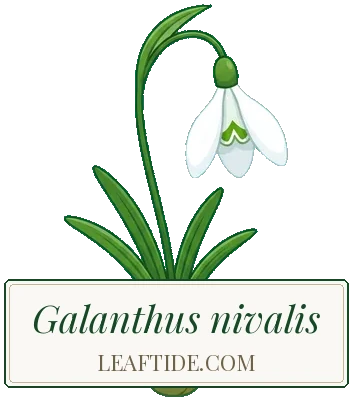
Snowdrops are among the earliest spring flowers, pushing through frozen ground from midwinter to early spring with elegant nodding white bells. Hardy bulbs that naturalise freely under deciduous trees and in shaded borders. Plant dry bulbs in autumn 5-8 cm (2-3 in) deep, or divide established clumps 'in the green' just after flowering for better results. Virtually no care needed once established: leave foliage to die back naturally to replenish the bulb.
 In your Leaftide garden


- Height
- 12 cm (5 in)
- Spread
- 6 cm (2.5 in)
- Spacing
- 8 cm (3 in)
- Flowers
- February - March
- Light
- Full sun to part shade
- Water
- Moderate
- Feed
- Rarely needed
Yearly Lifecycle
Care Essentials
Snowdrops rarely need feeding. A light dressing of bone meal or balanced fertiliser applied when planting, or a scatter of general-purpose granules in early autumn, is sufficient. Avoid high-nitrogen feeds which promote leaf growth at the expense of flowers.
Watch For
- Narcissus bulb fly
- Slugs on emerging shoots in midwinter
- Grey mould in wet winters
Companions
Winter Aconite, Hellebore, Cyclamen coum, Ferns
Pet Safety
Care Requirements
Light
Partial shade to full sun
Thrives in dappled shade under deciduous trees, where they receive winter sun and summer shade. Tolerates full sun if the soil stays moist. Avoid deep year-round shade.
Watering
Moderate: moist in growth, dry in summer
Needs consistently moist, humus-rich soil during the growing season (midwinter to late spring). Goes dormant in summer and prefers drier conditions then. Never waterlogged.
Fertilizing
Rarely needed
A light dressing of bone meal at planting or a scatter of general fertiliser in early autumn is all that's required. High-nitrogen feeds should be avoided.
Pruning
Do not cut back after flowering
Leave all foliage to die back completely and naturally after flowering. Cutting back prematurely weakens the bulb and reduces flowering in subsequent years.
Spacing
5-8 cm (2-3 in) apart, 5-8 cm (2-3 in) deep
Plant bulbs 5-8 cm (2-3 in) apart and 5-8 cm (2-3 in) deep. For best visual effect plant in drifts of 20 or more. Naturalised clumps can be divided every 3-5 years after flowering.
Support
No support needed
Snowdrops are low-growing and self-supporting. No staking or support required.
Growing Tips
Plant dry bulbs the day you get them
Snowdrop bulbs dry out very easily, and dried-out bulbs often fail to grow. If dry bulbs are your only option, buy them as soon as they reach the shops in early autumn and plant them straight away.
Hold off mowing snowdrops in grass
Where snowdrops are naturalised in a lawn, leave that patch unmown until the leaves have matured, about six weeks after flowering. Mowing earlier starves the bulbs of the food the leaves are making.
Buy nursery-grown bulbs
All snowdrop species are listed under CITES because wild populations have been dug up for the bulb trade. Buy from suppliers who state their bulbs are cultivated, and never dig snowdrops from the wild.
Pests & Diseases
Pest Narcissus Bulb Fly
Identification: Bulbs produce only a few grassy leaves and no flowers, or fail to appear. Inside, the centre of the bulb is eaten out and filled with muddy excrement, usually with a single plump creamy-white maggot up to 18 mm long. The adults are bumblebee-like hoverflies that lay eggs at the bulb neck in late spring and early summer.
- Dig up and dispose of bulbs that show signs of attack in spring, before the maggots leave to pupate in the soil.
- Once the foliage has died down, firm the soil around the clumps so females cannot reach the bulb necks to lay eggs.
- Plant in shaded, open spots: the adult flies prefer warm, sheltered places.
Pest Squirrels
Identification: Freshly planted dry bulbs dug up and scattered, with small holes in the soil, usually in autumn soon after planting.
- Plant snowdrops in the green after flowering instead of as dry bulbs.
- Lay chicken wire over newly planted bulbs until the shoots come through, then remove it.
Disease Snowdrop Grey Mould Botrytis galanthina
Symptoms: From midwinter, emerging leaves and flowers collapse and are covered in fuzzy grey mould in wet weather. The bulbs can rot, with small black seed-like bodies (sclerotia) on their surface and on the lower shoots. Worst in mild winters and most severe on Galanthus nivalis.
Treatment: Dig up and destroy affected bulbs promptly. There are no chemicals available to gardeners that control it.
Prevention: Do not replant snowdrops where the disease has occurred, as the sclerotia survive in the soil. Check new bulbs and avoid any carrying black sclerotia. The RHS notes that Galanthus nivalis Scharlockii Group and G. plicatus show some resistance.
Spacing & Planting
| Plant spacing | 8 cm (3 in) |
| Row spacing | 10 cm (4 in) |
| Mature height | 12 cm (5 in) |
| Mature spread | 6 cm (2.5 in) |
Plant bulbs 5-8 cm (2-3 in) apart and 5-8 cm (2-3 in) deep. Best planted in drifts of 20 or more under deciduous trees or in shaded borders. Divide every 3-5 years immediately after flowering while still in leaf ('in the green') for best results.