How to Grow French Lavender
Lavandula stoechas
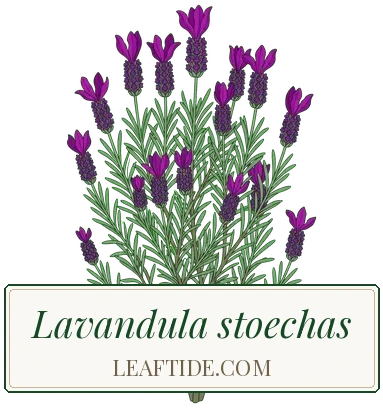
French Lavender (L. stoechas) is a compact, showy shrub with distinctive "rabbit ear" bracts above each flower head. It flowers much longer than English lavender (late spring to early autumn, often reblooming) and is hardy to between -5C and -10C (RHS H4) if the soil drains well. It prefers neutral to slightly acid, sharply drained soil, but also grows on chalk if drainage is good. Plant in full sun, sheltered from cold winds. Prune lightly after the first flush to encourage reblooming. Shorter-lived than English lavender (3-5 years); take cuttings regularly as insurance.
 In your Leaftide garden


- Height
- 50 cm (20 in)
- Spread
- 50 cm (20 in)
- Spacing
- 45 cm (18 in)
- Flowers
- May - July
- Light
- Full sun
- Water
- Low
- Feed
- Rarely needed
Yearly Lifecycle
Care Requirements
Light
Full sun essential; sheltered, sunny position ideal
Full sun is essential: at least six hours of direct sunlight daily. French Lavender becomes leggy and flowers poorly in shade. A sunny, sheltered position is ideal to protect from cold winds.
Watering
Drought-tolerant; overwatering and wet winter soil are fatal
Drought-tolerant once established. Water sparingly and only in prolonged dry spells. Overwatering and wet soil cause root rot. Ensure sharp drainage, especially in winter when wet roots combined with cold are fatal.
Fertilizing
Rarely needed; avoid rich feeds
Rarely needed. A light sprinkling of sulphate of potash in spring may encourage flowering. Avoid rich feeds, which give soft, leggy growth.
Pruning
Light prune after first flush for reblooming; never cut old wood
Prune lightly after the first flush of flowers in early summer to encourage a second flowering. Trim again lightly in early autumn. Never cut into old bare wood: it will not regrow. Replace plants every three to five years as they become woody.
Growing Tips
Drainage matters more than pH
French Lavender prefers neutral to slightly acid soil, but it also grows on chalk (RHS) as long as drainage is sharp. Heavy soil that stays wet in winter is what kills it.
Deadhead for repeat flowering
Snip off spent flower heads as they fade to encourage continuous blooming from late spring through early autumn. This is the key advantage over English lavender.
Winter protection essential
Hardy to between -5C and -10C (RHS H4), less in wet soil. In cold areas, grow in pots and move to a sheltered spot or cold greenhouse over winter. In milder areas, plant against a warm, sunny wall with good drainage.
Pests & Diseases
Pest Rosemary Beetle
Identification: Shiny beetles 6-7 mm long, striped metallic green and purple, and their soft greyish larvae eat the leaves and flowers, mainly from late summer through to spring.
- Pick off beetles and larvae by hand, or shake the stems over a sheet of newspaper and dispose of what falls.
- Tolerate light feeding: established plants usually grow through it.
Pest Cuckoo Spit (Froghoppers)
Identification: Blobs of white froth on the stems in late spring and early summer, each hiding a small, pale froghopper nymph that sucks sap.
- Where Xylella is not present they do little harm, so no treatment is needed; wipe or hose off the froth if you dislike the look.
- Where Xylella is present, froghoppers spread it: follow your regional plant health service's rules on controlling them.
Disease Grey Mould Botrytis cinerea
Symptoms: Flower heads and shoot tips turn brown and collapse under a fuzzy grey mould, mostly in damp, still weather and where plants are crowded.
Treatment: Cut affected shoots back to healthy growth and put them in the bin.
Prevention: Give plants full sun and room for air to move, water at the base and avoid wetting the foliage.
Disease Xylella Xylella fastidiosa
Symptoms: Leaves scorch and brown from the tips and edges, and shoots die back until the whole plant dies. Lavenders are high-risk hosts. The disease is present in parts of southern Europe, including Italy, Spain, France and Portugal.
Treatment: There is no cure. Xylella is a notifiable disease: if you suspect it, don't move or compost the plant, and report it to your national plant health authority.
Prevention: Buy plants with a plant passport from a nursery outside the areas where Xylella is present, and never bring plants home from trips abroad.
Spacing & Planting
| Plant spacing | 45 cm (18 in) |
| Row spacing | 60 cm (24 in) |
| Mature height | 50 cm (20 in) |
| Mature spread | 50 cm (20 in) |
Compact shrub; 45-60 cm (18-24 in) between plants for a full display. Allow 60 cm (24 in) rows for air circulation to prevent grey mould.