How to Grow Flame Acanthus
Anisacanthus quadrifidus var. wrightii
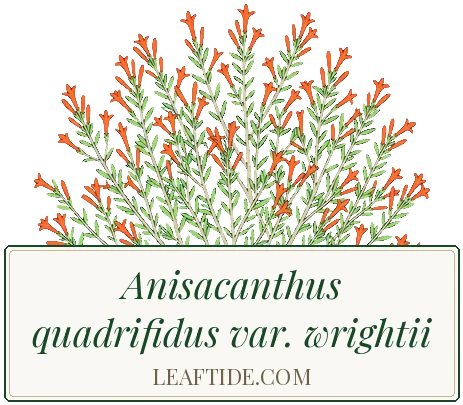
Flame Acanthus is a tough, small Texas native shrub that covers itself in red-orange tubular flowers from midsummer until frost, a favourite with hummingbirds. Plant it in full sun in well-drained soil, even poor, rocky or clay ground, and water weekly through the first summer; after that it copes with heat and drought. It needs little or no feeding. Cut it back hard in late winter to keep it bushy and full of flowers. In cold winters the stems die back, but the roots survive to about USDA zone 7 and regrow in late spring.
 In your Leaftide garden


- Height
- 1.2 m (4 ft)
- Spread
- 1 m (3.5 ft)
- Flowers
- June - July
- Light
- Full sun
- Water
- Low
- Feed
- Little or none
Yearly Lifecycle
Care Essentials
Rarely needs feeding. In very poor or sandy soil, or in a pot, give a light balanced slow-release fertiliser in spring as new shoots appear. Rich feeding gives soft, floppy growth and fewer flowers.
Watch For
- Root rot in heavy, waterlogged soil
- Leggy growth and few flowers in shade
- Self-sown seedlings around the plant
Companions
Turk's Cap, Autumn Sage, Esperanza, Lantana
Care Requirements
Light
Full sun; tolerates light shade
Flowers most heavily with at least 6 hours of direct sun a day. It tolerates light or afternoon shade, but in deeper shade it grows thin and floppy and flowers little.
Watering
Low; drought tolerant once established
Water weekly through the first growing season while the roots establish. After that it needs watering only in long dry spells, though a deep soak every week or two in hot, dry weather keeps it flowering. Never let it sit in waterlogged soil.
Fertilizing
Little or none
Garden soil, even poor or rocky ground, usually gives it all it needs. In very poor soil or a pot, give a light balanced slow-release fertiliser in spring. Too much feed gives soft, floppy growth and fewer flowers.
Pruning
Cut back hard in late winter
It flowers on the new season's shoots, so prune before new growth starts. Cut frost-killed stems to 10-15 cm (4-6 in), or shorten surviving stems by a third to a half. This keeps the shrub compact and bushy.
Spacing
90-120 cm (3-4 ft) apart
Allow about 100 cm (3.5 ft) between plants. It usually stays 90-150 cm (3-5 ft) tall and 90-120 cm (3-4 ft) wide with an annual cut back.
Support
None needed
Flame Acanthus is a self-supporting shrub. Stems that flop in shade or rich soil are best shortened in late winter rather than staked.
Growing Tips
Be patient in spring
Flame Acanthus is one of the last shrubs to leaf out, often waiting until the weather is properly warm. Scratch a stem near the base; if it is green underneath, or new shoots rise from the ground later, the plant is fine.
Give it sun and drainage
It flowers best in full sun and tolerates poor, rocky and clay soils, but not standing water. In shade it grows thin and floppy with few flowers, and in wet ground the roots can rot over winter.
A drink brings more flowers
Established plants survive drought, but they slow down or pause flowering in long dry spells. A deep soak every week or two in hot, dry weather keeps the flowers coming until frost.
Not the acanthus you may know
Despite the name, this is not Bear's Breeches (Acanthus mollis), the big-leaved border perennial. Flame Acanthus is a fine-leaved shrub with thin red-orange tubular flowers, grown for heat, drought and hummingbirds.
Pests & Diseases
Disease Root Rot
Symptoms: Leaves yellow and wilt even though the soil is wet, and the roots are dark and mushy. Heavy, waterlogged soil is the cause.
Treatment: Dig up the plant, cut away rotten roots and replant in gritty, free-draining soil, or on a mound. Bin plants that are rotten right through.
Prevention: Plant in free-draining soil, add grit to heavy clay or plant on a raised mound, and avoid watering once established.
Disease Winter Dieback
Symptoms: Stems die back in hard cold, and the shrub is one of the last to leaf out in spring, so it can look dead for a long time.
Treatment: Wait until it is properly warm and new shoots appear from the base or along the stems, then cut away only the wood that stays dead.
Prevention: Mulch the base in autumn in cold areas and leave the old stems on over winter to shelter the crown.
Disease Leggy Growth and Few Flowers
Symptoms: Long, thin stems with few of the orange-red flowers, when the plant stands in shade.
Treatment: Move it to full sun in the dormant season, and cut back leggy stems by about a third in spring to make it bushier.
Prevention: Plant it where it gets full sun for most of the day, and do not overfeed or overwater.