How to Grow Field Peas
Pisum sativum var. arvense
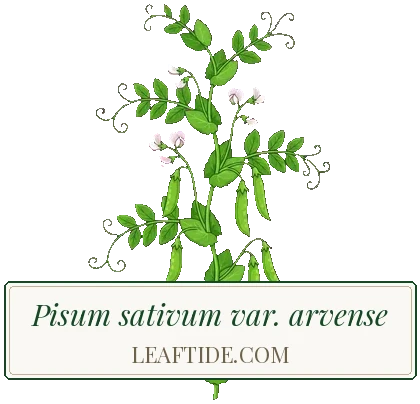
Field peas are hardy, cool-season legumes grown to full maturity and dried for split peas, soups, and animal feed. Direct sow in early spring as soon as soil can be worked. They tolerate frost and fix their own nitrogen, needing little fertilizer. Sow densely in rows 15-30 cm (6-12 in) apart at 5 cm (2 in) depth. Provide short supports or let plants scramble together. Harvest when pods are fully dry and brown on the plant. Also excellent as a cover crop and green manure.
 In your Leaftide garden


- Hardiness
- Hardy
- Season
- Cool Season
- Harvest
- Single Harvest
- Spacing
- 8 cm (3 in)
- Height
- 80 cm (31 in)
- Sow depth
- 5 cm (2 in)
- Min. soil temperature
- 4 °C+ (39 °F+)
- Start from
- Seed
- Light
- Full sun
- Water
- Moderate
When to Start
Direct sow outdoors as soon as soil reaches 4 °C (39 °F) — typically early to mid spring. Hardy enough to tolerate light frosts.
Don't know your frost date? Find it here →
Growth Stages
Approximate days from start
Care Essentials
- Rarely needed. Field peas fix their own nitrogen. Apply a light phosphorus feed at sowing if soil is poor.
- Field peas are grown to full maturity and dried, unlike garden peas eaten fresh. Excellent as a cover crop and green manure. Tolerates light frost and prefers cool growing conditions.
Growing Conditions
- Min. soil temperature
- 4 °C+ (39 °F+)
- Germination temperature
- 4–18 °C (39–64 °F)
Spacing & Planting
| Plant spacing | 8 cm (3 in) |
| Row spacing | 20 cm (8 in) |
| Sow depth | 5 cm (2 in) |
| Mature height | 80 cm (31 in) |
| Mature spread | 20 cm (8 in) |
Sow seeds 5-8 cm (2-3 in) apart in rows 15-30 cm (6-12 in) apart. Field peas are typically direct-sown in dense stands. Plants support each other as they grow.
Pests & Diseases
Pest Pea Aphid
Identification: Clusters of large, pale green aphids on shoot tips, flowers and pods. Heavy colonies stunt growth and spread virus.
- Wash colonies off with a strong jet of water, or pinch out badly infested shoot tips.
- Encourage ladybirds, lacewings and hoverflies by leaving flowering margins near the crop.
- Spray insecticidal soap on heavy infestations at flowering.
Pest Pea Moth
Identification: Small cream caterpillars with dark heads feeding inside the pods on the developing peas, usually only found when the pods are opened. Moths lay eggs on the crop as it flowers.
- Cover the crop with fine insect mesh from the start of flowering so the moths cannot lay eggs.
- Sow early or late so that flowering misses the main flight of the moths.
- Discard infested pods and clear plant debris after harvest.
Pest Pea and Bean Weevil
Identification: Neat, U-shaped notches around the edges of young leaves, made by small grey-brown weevils that drop when disturbed. The grubs feed on the root nodules.
- Protect seedlings with fine insect mesh until they are growing strongly.
- Sow into warm soil so seedlings grow away quickly; established plants shrug off the damage.
- Keep the area free of plant debris where adults overwinter.
Disease Ascochyta Blight Ascochyta pisi, Didymella pinodes
Symptoms: Purple-brown spots on leaves, stems and pods, and dark lesions at the stem base that can girdle and kill the plant. It spreads in wet weather and is carried on seed and crop residue.
Treatment: There is no cure. Pull and bin badly affected plants and do not save seed from the crop.
Prevention: Use healthy, clean seed and leave several years between pea crops on the same ground. Clear crop residue after harvest and sow into well-drained soil, and avoid dense, damp stands.
Disease Root Rot
Symptoms: Stunted, yellowing plants that wilt in the sun, with brown to black, rotten roots and a soft stem base. It builds up in wet, cold or compacted soil and persists for years.
Treatment: There is no cure. Pull affected plants with the surrounding soil and bin them, and do not replant peas in the same spot.
Prevention: Sow into well-drained, warm soil and avoid waterlogged ground. Leave peas and other legumes off the plot for several years after an outbreak.
Growing Conditions
| Min. soil temperature | 4 °C (39 °F) |
| Germination temperature | 4–18 °C (39–64 °F) |
| Base growth temperature | 4 °C (39 °F) |
| Min. daylength to start | 8.5 h |
| Photoperiod sensitivity | day neutral |
Frequently Asked Questions
- How far apart should I plant field peas?
- Plant field peas 8 cm (3 in) apart, with 20 cm (8 in) between rows.
- Is field peas frost hardy?
- Yes, field peas is hardy.