How to Grow Leopard Plant
Farfugium japonicum
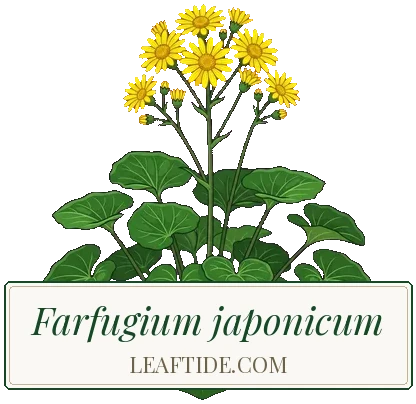
Farfugium japonicum thrives in shade or dappled light with consistently moist, humus-rich soil; the darker the spot, the better it performs compared to most plants. Its large, glossy, kidney-shaped leaves are the main attraction, lasting year-round. Yellow daisy-like flowers appear on tall stems in autumn. Plant in a sheltered position, mulch annually to retain moisture, and water freely in dry spells. Hardy to around -10 °C (14 °F) in well-drained soil; protect crowns with mulch in cold winters.
 In your Leaftide garden


- Height
- 55 cm (22 in)
- Spread
- 75 cm (30 in)
- Flowers
- October - November
- Light
- Part to full shade
- Water
- High
Yearly Lifecycle
Care Essentials
Feed with a balanced fertiliser in spring as new growth emerges. A second light feed in early summer supports continued leaf production.
Watch For
- Slugs and snails on new shoots
- Vine weevil larvae in containers
- Root rot in waterlogged soil
Companions
Hostas, Ferns, Hellebores, Astilbe
Care Requirements
Light
Shade to dappled light; avoid direct afternoon sun
Farfugium thrives in full shade or dappled light under trees. Direct afternoon sun scorches the leaves. A north- or east-facing position is ideal. It outperforms most plants in deep shade.
Watering
Keep consistently moist; water deeply in dry spells
Moist soil is essential. Water deeply and regularly during dry weather, especially in the first year and in containers. Mulch helps retain moisture. Never let the soil dry out completely.
Fertilizing
Balanced feed in spring; light top-up in early summer
Apply a balanced general fertiliser in spring as new growth starts. A second light feed in early summer supports continued vigorous leaf growth. Avoid high-nitrogen feeds that may promote soft growth at the expense of foliage quality.
Mulching
Annual spring mulch to retain moisture and protect crowns
Mulch generously with compost, leaf mould, or bark each spring. This retains soil moisture, keeps roots cool, suppresses weeds, and provides some frost protection for the crown in colder winters.
Growing Tips
Shade is its superpower
Farfugium tolerates deep shade that defeats most ornamentals. It actually prefers cool, shaded conditions and will scorch in direct afternoon sun. Perfect under trees or on a shady wall.
Keep the soil moist
Moist, humus-rich soil is essential. Dry soil causes leaf edges to brown and curl. Mulch generously each spring and water deeply during dry spells, especially in containers.
Autumn flowers are a bonus
The bright yellow daisy flowers on tall stems in mid to late autumn are a late-season highlight. Leave the flower stems until spring to add winter structure.
Pests & Diseases
Pest Slugs and Snails
Identification: Ragged holes and slime trails on the big leaves, worst on new shoots in spring. The large, soft leaves are a favourite.
- Go out after dark or after rain and pick them off by hand.
- Scatter ferric phosphate slug pellets thinly around the clump, following the label, or water on slug nematodes in warm, damp soil.
- Stand pots on feet and clear away fallen leaves where they hide by day.
Disease Scorched or Wilting Leaves
Symptoms: Leaf edges turn brown and crisp, or the big leaves flop and wilt in the heat. The cause is dry soil or direct sun on the leaves, especially in pots.
Treatment: Water deeply and move the plant into shade. Cut off badly scorched leaves; new ones follow.
Prevention: Plant in cool, shaded, humus-rich soil, mulch each year and keep pots well watered in hot weather.
Disease Frost Damage
Symptoms: Leaves turn dark, limp and mushy after a hard frost.
Treatment: Leave the damaged leaves on until the worst cold is over, as they protect the crown, then cut them off. The plant normally reshoots from the crown.
Prevention: Mulch the crown thickly in autumn and move pots under cover when hard frost is forecast.