How to Grow Eastern Redbud
Cercis canadensis
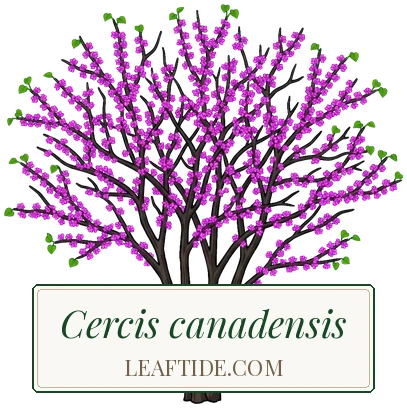
Eastern redbud is a small North American tree, 6-9 m (20-30 ft) tall with a wide, often multi-stemmed crown, grown for the magenta-pink flowers that cover its bare branches in early spring. Plant a young tree in full sun or light shade in well-drained soil, and choose the spot for good, as older trees dislike being moved. Water it through dry spells for the first two or three summers and mulch the root zone each spring. Prune only lightly, right after flowering, and cut out any branch that wilts or shows sunken, cracked bark.
 In your Leaftide garden


- Height
- 7.5 m (25 ft)
- Spread
- 8 m (26 ft)
- Flowers
- April
- Light
- Full sun to part shade
- Water
- Moderate
- Feed
- Mulch in spring
Yearly Lifecycle
Care Essentials
Usually no feeding is needed. Mulch the root zone with compost or leafmould each spring while the tree is young. Avoid high-nitrogen fertilisers, which push soft leafy growth that is prone to canker.
Watch For
- Botryosphaeria canker (Botryosphaeria dothidea)
- Verticillium wilt
- Redbud leafroller caterpillars
- Scale insects
Companions
Serviceberry, Flowering Dogwood, Virginia Bluebells, Daffodils
Care Requirements
Light
Full sun to partial shade
Flowers most heavily in full sun, but as a woodland-edge tree it is happy in light or dappled shade. In hot, dry summers afternoon shade keeps the leaves from scorching.
Watering
Moderate; water young trees in dry spells
Likes evenly moist, well-drained soil and never waterlogged roots. Water newly planted trees deeply every 7-10 days in dry weather for the first two or three summers; established trees cope with short droughts but stay healthier with a soak in long dry spells.
Fertilizing
Mulch in spring; little or no feeding
Spread compost or leafmould over the root zone each spring while the tree is young. Trees in reasonable soil need no fertiliser, and high-nitrogen feeds give soft growth that canker attacks.
Pruning
Light, just after flowering only
Prune right after flowering, removing dead, crossing or cankered branches and correcting weak forks on young trees. It flowers on old wood and the trunk, so avoid heavy or winter pruning.
Spacing
6-7 m (20-23 ft) from other trees, 4 m (13 ft) from buildings
A mature tree reaches 6-9 m (20-30 ft) with a crown 7-9 m (23-30 ft) wide, often on several stems. Give it room to spread, as it resents being moved once established.
Support
Usually none; a short stake on windy sites
Small container-grown trees need no support. On an exposed site, a short stake for the first year steadies the roots; remove it once the tree has rooted in.
Growing Tips
Plant it young and leave it there
Redbud grows a deep taproot early and resents being dug up. Plant a small container-grown or young tree in its final position; older, larger trees often struggle for years after moving.
Flowers come before the leaves
The magenta-pink flowers open on bare twigs, older branches and even the trunk, a week or two before the leaves unfold. Because the buds form on old wood, light pruning after flowering is the only pruning it needs.
Watch for canker on wilting branches
A branch whose leaves wilt and turn brown in summer, with sunken, darkened and cracked bark below, usually has Botryosphaeria canker. Cut it off well below the damage in dry weather, and keep the tree watered in drought, as stressed trees are hit hardest.
Give it some shelter in hot summers
In its native range redbud grows at woodland edges. In hot, dry regions it does best with afternoon shade and a mulched root zone; in cooler gardens, full sun gives the most flowers.
Pests & Diseases
Pest Redbud Leafroller
Identification: Leaves folded or rolled together and tied with silk, with small green-and-black or whitish caterpillars feeding inside; the folded leaves skeletonise and turn brown
- Pick off and destroy folded leaves on small trees
- Encourage birds and predatory insects; damage is mostly cosmetic on established trees
- Spray a Bacillus thuringiensis (Bt) product on young caterpillars before the leaves are tightly folded
Pest Scale Insects
Identification: Small brown, grey or white bumps on twigs and branches, often with sticky honeydew and black sooty mould on the leaves below
- Rub off small colonies with a soft brush and soapy water
- Apply a horticultural oil to the bare branches while the tree is dormant
- Spray a systemic insecticide when the young crawlers are active, if infestations are heavy
Disease Botryosphaeria Canker Botryosphaeria dothidea
Symptoms: Leaves on one branch wilt and turn brown in summer; below them the bark is sunken, darkened and cracked where it meets healthy bark, and the canker slowly girdles the branch
Treatment: Cut affected branches off at least 15 cm (6 in) below the canker in dry weather and clean tools between cuts. There is no chemical cure
Prevention: Keep the tree watered in drought, avoid wounding the bark with mowers and strimmers, and prune only lightly after flowering
Disease Verticillium Wilt Verticillium dahliae
Symptoms: Sudden wilting, yellowing and dieback of single branches or one side of the crown; cut wood shows brown or olive streaks
Treatment: Remove affected branches well below the discoloured wood. Feed and water the tree to help it outgrow mild attacks; badly affected trees decline
Prevention: Do not plant where wilt-prone plants such as maples or tomatoes have died of wilt