How to Grow Dierama
Dierama pulcherrimum
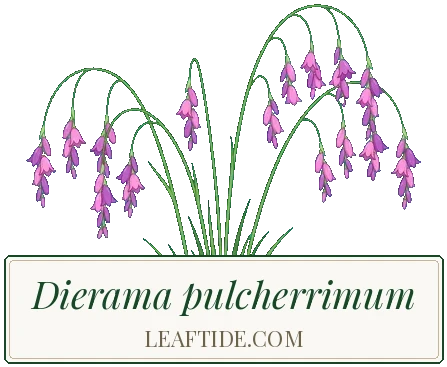
Dierama is an elegant South African perennial growing from a corm, producing graceful arching wand-like stems hung with bell-shaped flowers in pink and purple during midsummer. It demands full sun and well-drained soil, and resents disturbance once established. Plant corms 8 cm (3 in) deep in spring, 45 cm (18 in) apart, in a sheltered spot. Leave the evergreen grassy foliage intact over winter to protect the corm. May take two to three seasons to settle and flower well. Mulch in autumn in colder areas.
 In your Leaftide garden


- Height
- 1.5 m (5 ft)
- Spread
- 60 cm (24 in)
- Flowers
- June - August
- Light
- Full sun
- Water
- Moderate
Yearly Lifecycle
Care Essentials
Apply a balanced granular feed in spring as growth resumes. Avoid high-nitrogen feeds which produce lush leaves at the expense of flowers.
Watch For
- Root rot in waterlogged soil
- Red spider mite under glass
- Frost damage to emerging growth
Companions
Grasses, Agapanthus, Crocosmia, Kniphofia
Care Requirements
Light
Full sun, sheltered from wind
Needs full sun for best flowering. Choose a sheltered spot as the arching wand-like stems can be damaged by strong winds.
Watering
Moist but well-drained
Keep soil consistently moist during the growing season but never waterlogged. Good drainage is essential as the corm rots in wet winter soil.
Fertilizing
Balanced feed in spring
Apply a balanced granular fertiliser in spring as growth resumes. Avoid high-nitrogen feeds which produce lush leaves at the expense of flowers.
Pruning
Remove spent stems, keep foliage
Cut spent flower stems after blooming. Do not cut back the evergreen foliage in winter as it protects the corm. Remove only dead leaves in spring.
Growing Tips
Plant it where it can arch over water
Dierama likes soil that stays moist in summer but drains freely in winter, and its slender flower wands look best bowing over a pond or stream edge. Keep it out of soil that is wet all year.
Tidy the leaves by hand
The grassy leaves are evergreen and the tips brown over time. In spring, pull out dead leaves by hand or comb through the clump with gloved fingers rather than cutting the whole thing back.
Give the wands space
Flower wands arch to as much as 1.5 m (5 ft) and sway in the slightest breeze. Plant it near the front of a border, against a plain background such as a dark hedge or still water, so the wands show up.
Pests & Diseases
Disease Corm and Root Rot
Symptoms: Leaves yellow and collapse from the base, and the corm and roots are soft, brown and smelly when you lift the plant. Common after a wet winter on heavy soil.
Treatment: Lift the clump, cut away soft or brown tissue back to firm, white flesh and replant in free-draining soil. Bin plants that are mostly mush.
Prevention: Plant in gritty, free-draining soil with the corm about 5 cm (2 in) deep, and add grit to heavy ground so winter wet drains away.
Disease Slow to Flower After Moving
Symptoms: A divided or newly planted clump makes leaves but no flower stems for a year or two, and may look sulky.
Treatment: Be patient and keep it moist through the growing season; do not dig it up again. It usually flowers once the roots have re-established.
Prevention: Plant it where it can stay for good, and divide only when the clump clearly needs it, in spring just as growth starts.