How to Grow Desert Willow
Chilopsis linearis
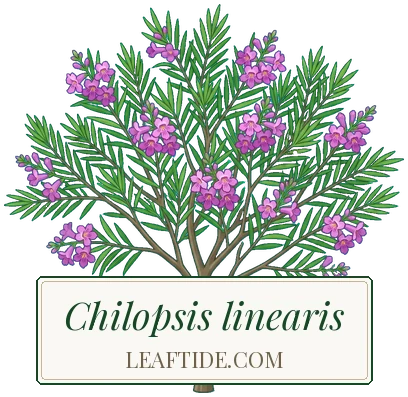
Desert willow is a graceful deciduous small tree native to the US Southwest, producing orchid-like tubular flowers in shades of pink, purple, burgundy, and white from late spring through autumn. It attracts hummingbirds and tolerates extreme heat and drought once established. Plant in full sun with well-drained soil. It is one of the last trees to leaf out in spring and among the first to drop leaves in autumn. Minimal water needed once established; overwatering shortens its lifespan.
 In your Leaftide garden


- Height
- 7 m (23 ft)
- Spread
- 5 m (16 ft)
- Flowers
- May - October
- Light
- Full sun
- Water
- Low
- Feed
- Rarely needed
Yearly Lifecycle
Care Essentials
Desert willow rarely needs fertiliser. In very poor soils, a light application of balanced fertiliser in spring during the first two years is sufficient. Established trees need no feeding.
Watch For
- Root rot from overwatering
- Aphids on new growth in spring
- Catalpa sphinx moth caterpillars
Care Requirements
Light
Full sun, hot position
Requires maximum sunlight for best flowering. Tolerates extreme heat. One of the last trees to leaf out in spring, needing warmth to break dormancy.
Watering
Minimal once established
Deep water every two weeks during the first year. After establishment, reduce to monthly or stop entirely where rain occurs. Overwatering shortens lifespan.
Fertilizing
Rarely needed
Desert willow thrives in poor soils without feeding. In very depleted soils, a light balanced fertiliser in spring during the first two years is sufficient.
Pruning
Shape while dormant in late winter
Prune in late winter to remove crossing branches and shape the canopy. Can be trained as single-trunk or multi-trunk. Responds well to pruning.
Growing Tips
New growth carries the flowers
Flower clusters form at the tips of the current season's shoots, so a late-winter prune does not cost you blooms. Cutting last year's long shoots back by up to a third gives a bushier tree with more flowering tips.
Late leafing is normal
Desert willow leafs out very late and can stand bare until the soil is properly warm. Scratch a twig with a fingernail: green beneath means it is alive, so wait before cutting anything out.
Wet roots hurt more than cold
In a cool, damp climate give it the hottest, driest spot you have, in free-draining soil or on a raised mound. Cold, wet soil around the roots, more than frost alone, is what usually kills it.
Pests & Diseases
Pest Aphids
Identification: Clusters of small green or black insects on soft new shoots and flower buds, often with sticky honeydew and ants.
- Wash them off with a strong jet of water.
- Spray insecticidal soap on the colonies, or leave them: ladybirds and hoverflies usually clear them within a few weeks.
- Tolerate light infestations, since a healthy established tree outgrows the damage.
Disease Root Rot
Symptoms: Yellowing and wilting leaves, early leaf drop and branch dieback even though the soil is wet. Roots are dark, soft and smell sour.
Treatment: Stop watering and let the soil dry out. Improve drainage if you can. Badly affected trees rarely recover, so replace them in a better-drained spot.
Prevention: Plant in free-draining soil, on a raised mound in heavy ground. Once established, water deeply and rarely, and keep sprinklers off the trunk.