How to Grow Never Never Plant
Ctenanthe burle-marxii
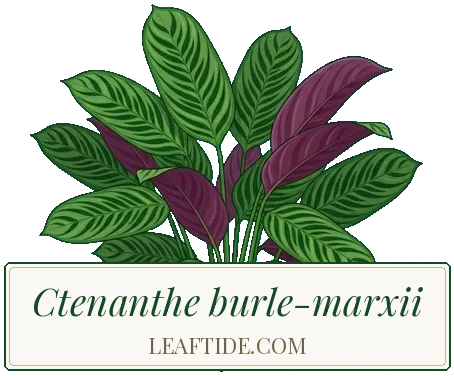
Never Never Plant is a striking foliage houseplant from the Marantaceae family, grown for its herringbone-patterned leaves that fold upward at night. It needs bright indirect light (direct sun bleaches the markings) and high humidity; use rainwater or filtered water to prevent brown leaf edges from tap water fluoride. Keep above 15 °C (59 °F), water when the top of the soil is just moist, and wipe leaves occasionally to keep them glossy. Non-toxic to cats and dogs.
 In your Leaftide garden


- Height
- 50 cm (20 in)
- Spread
- 40 cm (16 in)
- Light
- Bright indirect light
- Water
- Moderate
Yearly Lifecycle
Care Essentials
Feed every 4 weeks from spring to early autumn with a half-strength balanced liquid fertiliser. Do not feed in winter when growth slows.
Watch For
- Spider mites in dry conditions
- Mealybugs at leaf bases and stems
- Brown leaf edges from low humidity or fluoride in tap water
- Leaf curl from cold draughts or cold water
- Root rot from waterlogging
Pet Safety
Care Requirements
Light
Bright indirect light
Keep out of direct sun, which bleaches the fishbone leaf markings. A position near an east-facing window, or a bright one out of direct sun, is ideal. It tolerates medium light but growth slows noticeably.
Watering
Keep moist but not waterlogged
Water when the top 2 cm (¾ in) of soil feels just moist. Use rainwater or filtered water at room temperature: fluoride in tap water is the most common cause of brown leaf edges.
Fertilizing
Monthly in spring and summer
Apply a half-strength balanced liquid fertiliser once a month from spring to early autumn. Stop feeding entirely in winter when growth slows.
Humidity
High humidity: 50% or above
Low humidity causes brown leaf edges and tips. Place on a pebble tray with water, mist the foliage, or group with other plants to raise the local humidity.
Growing Tips
Read the leaves
Folding up at night is normal. Leaves that stay curled or folded through the day usually mean dry air or dry compost, so check both before changing anything else.
Cut badly scorched leaves at the base
Brown edges never turn green again. Remove a badly marked leaf at the base of its stalk to make room for new ones, rather than leaving it to spoil the pattern.
Choose a wide, shallow pot
The roots stay near the surface and spread sideways from a clump. A wide, shallow pot suits it better than a deep one, and a spring repot is the moment to divide a crowded clump.
Pests & Diseases
Pest Spider Mites
Identification: Fine pale speckling on the upper leaf surface, a dull silvery look, and fine webbing on the undersides and where the leaf meets the stalk. Worst in warm, dry, centrally heated rooms.
- Isolate the plant and wash the undersides of the leaves with lukewarm water, then wipe both sides with a damp cloth.
- Raise the humidity around the plant, for example with a humidifier or a tray of damp pebbles, so mites are less comfortable.
- Repeat the wash weekly for several weeks, or spray with insecticidal soap covering the undersides (test one leaf first).