How to Grow Coral Honeysuckle
Lonicera sempervirens
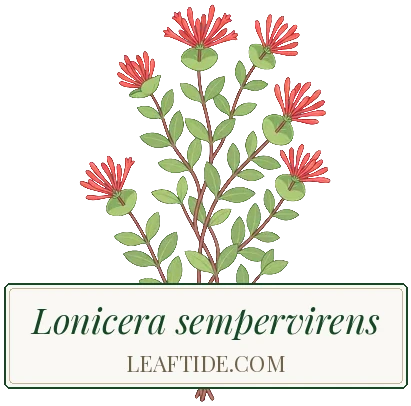
Coral honeysuckle is a twining climber native to the eastern United States, with clusters of coral-red trumpet flowers mainly in spring and smaller flushes into autumn, a magnet for hummingbirds. It has little or no scent, stays evergreen in mild winters and, unlike Japanese honeysuckle, does not run wild. Plant it in full sun or part shade in moist, well-drained soil next to a trellis, fence or arch, and guide the young stems onto it. Water weekly through the first summer and mulch with compost each spring. Prune lightly right after the main spring flush to keep it tidy.
 In your Leaftide garden


- Height
- 4.5 m (15 ft)
- Spread
- 1.5 m (5 ft)
- Flowers
- April - August
- Light
- Full sun to part shade
- Water
- Moderate
- Feed
- Compost in spring
Yearly Lifecycle
Care Essentials
Little feeding is needed. Spread a layer of compost over the root zone in early spring; on poor, sandy soil add a light balanced slow-release fertiliser at the same time. Rich feeding gives lots of leafy shoots and fewer flowers.
Watch For
- Aphids curling the shoot tips and flower buds
- Powdery mildew in dry soil or still, crowded spots
- Leaf spot in wet seasons
- A bare, woody base on old, unpruned plants
Companions
Clematis, Purple Coneflower, Bee Balm, Butterfly Weed, Climbing Rose
Care Requirements
Light
Full sun to part shade
Flowers best with at least 6 hours of direct sun a day. It grows in part shade, especially afternoon shade in hot climates, but flowers less there and is more prone to powdery mildew.
Watering
Moderate; keep moist the first year
Water weekly through the first growing season while the roots establish. After that it copes with short dry spells, but a deep soak every week or two in long dry, hot weather keeps it flowering and less prone to mildew. Plants in pots need water whenever the top few centimetres of compost are dry.
Fertilizing
Compost in spring; little else
Spread compost over the root zone in early spring. On poor or sandy soil add a light balanced slow-release fertiliser at the same time. Avoid high-nitrogen feeds, which give leafy growth and fewer flowers.
Pruning
Light trim after the main spring flush
Straight after the big spring display, remove dead or tangled stems and shorten shoots that have outgrown the support. Renew an old plant with a bare base by cutting a few of the oldest stems near the ground in late winter, which costs some of that spring's flowers.
Spacing
120-180 cm (4-6 ft) apart
Allow about 150 cm (5 ft) between plants along a fence or trellis, or one plant per arch, pillar or obelisk. It grows 3-6 m (10-20 ft) tall but only about 1-2 m (3.5-6.5 ft) wide.
Support
Needs a support to twine around
It climbs by twining, so give it wires, trellis, netting, an arch or an obelisk with thin uprights. A flat wall needs wires fixed to it. Guide young stems onto the support; once they catch, they wind up on their own.
Growing Tips
The native alternative to Japanese honeysuckle
Japanese honeysuckle (Lonicera japonica) smothers woodland across much of North America. Coral honeysuckle gives you a long-flowering vine for hummingbirds and bees without that risk, and it stays where you plant it.
Flowers, not fragrance
Do not expect the sweet evening scent of the European honeysuckles. Coral honeysuckle trades scent for colour and a much longer season, with a big spring show and fresh flushes into autumn.
Give it something to twine around
It climbs by wrapping its stems around thin supports, so wires, trellis, netting or an arch work well, while a flat wall or thick post does not. Guide young stems onto the support in spring.
Sun and air keep it healthy
It flowers most in full sun and suffers less from powdery mildew where air can move around it. Water during long dry spells, because drought-stressed plants are the ones mildew and aphids hit hardest.
Pests & Diseases
Pest Aphids
Identification: Clusters of small green, grey or blackish insects on soft shoot tips and flower buds, causing curled, stunted growth and sticky honeydew on the leaves below. Honeysuckles are among the favourite hosts.
- Wash colonies off with a strong jet of water, repeating every few days.
- Squash small colonies by hand and encourage ladybirds and lacewings, and avoid nitrogen-rich feeds that push soft growth.
Disease Powdery Mildew
Symptoms: White powdery coating on the leaves and shoot tips, with leaves yellowing and dropping. It is most common in late summer and autumn on plants in dry soil or in crowded, still air.
Treatment: Cut out badly coated shoots and bin them. Water at the base and mulch the roots through dry spells.
Prevention: Thin tangled stems after the main flowering so air can move through the plant, and keep the roots evenly moist.