How to Grow Copperleaf
Acalypha wilkesiana
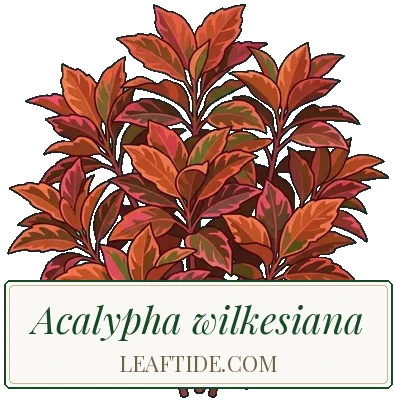
Copperleaf thrives in full sun with well-drained, fertile soil. It is a fast-growing tropical foliage shrub grown for its spectacular copper, red, and bronze mottled leaves. In frost-free climates (zones 10-11) it grows as a permanent evergreen shrub; elsewhere treat as a summer annual or container plant and bring indoors before frost. Water regularly but avoid waterlogging, feed monthly during the growing season, and prune hard in spring to keep the plant bushy and vivid.
 In your Leaftide garden


- Height
- 1.8 m (6 ft)
- Spread
- 1.2 m (4 ft)
- Light
- Full sun
- Water
- Moderate
- Prune
- Hard prune in spring
Yearly Lifecycle
Care Essentials
Feed monthly during the growing season (spring through summer) with a balanced liquid fertiliser. Reduce or stop feeding in autumn and winter.
Watch For
- Spider mites (especially in dry indoor conditions)
- Mealybugs
- Whitefly
- Root rot from overwatering or poor drainage
Pet Safety
Care Requirements
Light
Full sun for best leaf colour
Thrives in full sun (6+ hours direct light daily). Partial shade is tolerated but leaf colour becomes duller and greener. In very hot climates, light afternoon shade prevents scorch.
Watering
Regular watering; avoid waterlogging
Water regularly to keep soil evenly moist, especially during hot weather. Allow the top few centimetres to dry slightly between waterings. Never let the plant sit in standing water: root rot is the primary risk.
Fertilizing
Monthly balanced feed during growing season
Apply a balanced liquid fertiliser monthly from spring through summer. Reduce feeding in autumn and stop entirely in winter when growth slows.
Pruning
Hard prune in spring; pinch tips regularly
Cut back hard (up to half) in spring to encourage a compact, bushy habit and vivid new growth. Pinch out growing tips throughout the season to maintain fullness and remove insignificant flower spikes as they appear.
Spacing
90-120 cm (3-4 ft) apart
Space plants 90-120 cm (3-4 ft) apart for good air circulation. Container plants can be kept more compact with regular tip-pruning.
Growing Tips
Maximise leaf colour with full sun
Leaf colour is most intense in full sun. Partial shade is tolerated but produces greener, less vivid foliage. In very hot climates, light afternoon shade prevents leaf scorch.
Pinch out flower spikes
Copperleaf produces small catkin-like flower spikes that are ornamentally insignificant. Pinching them out as they appear redirects energy into producing the colourful foliage.
Hard prune in spring
Cut back hard by up to half in spring to keep the plant compact and stimulate fresh, vividly coloured new growth. Without pruning, plants become leggy over time.
Bring indoors before frost
Copperleaf is frost-tender. In temperate climates, move container plants indoors when night temperatures drop below 10 °C (50 °F). Overwinter in a bright, warm position.
Pests & Diseases
Pest Spider Mites
Identification: Fine pale speckling on the leaves that fades the colour, with fine webbing between the leaves and stems. Worst on plants kept in warm, dry indoor air.
- Raise humidity by misting regularly and wash the leaves with a strong jet of water, repeating every few days.
- Spray with a fatty acid (soft soap) product, covering the undersides of the leaves, and repeat as the label directs.
- In a warm greenhouse or conservatory, release the predatory mite Phytoseiulus persimilis, which feeds only on spider mites.
Pest Mealybugs
Identification: White, cottony clumps in the leaf joints and under the leaves, often with sticky honeydew that turns black with sooty mould.
- Dab each cluster with a cotton bud dipped in dilute rubbing alcohol or soapy water, checking again every few days.
- In a warm greenhouse or conservatory, release the mealybug ladybird Cryptolaemus montrouzieri.
Pest Whitefly
Identification: Tiny white winged insects that fly up in a cloud when the plant is shaken, with sticky honeydew and pale scale-like nymphs under the leaves.
- Hang yellow sticky traps near the plant to catch the adults.
- Spray with a fatty acid (soft soap) product, covering the undersides of the leaves, and repeat as the label directs.
- In a warm greenhouse or conservatory, release the parasitic wasp Encarsia formosa, which targets glasshouse whitefly.
Disease Root Rot
Symptoms: Leaves wilt, yellow and drop even though the compost is wet, and the base of the stems may turn soft and dark. The roots are brown and mushy.
Treatment: Tip the plant out, cut away soft, dark roots and repot into fresh, free-draining compost in a pot with drainage holes. Water only when the top of the compost has dried.
Prevention: Use a free-draining mix, never leave the pot standing in water and cut back watering in cool weather.