How to Grow Cobaea
Cobaea scandens
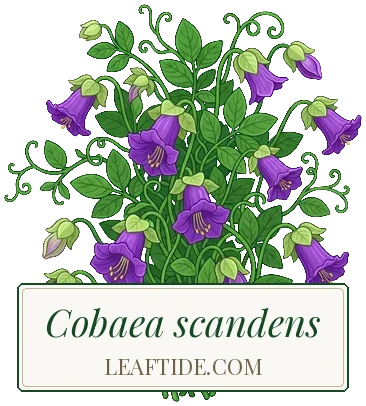
Cobaea is a vigorous half-hardy annual climber producing large bell-shaped flowers that open green and age to deep violet-purple, borne on long stalks from midsummer to frost. Sow seeds on edge indoors in late winter with bottom heat. Pot on and harden off after the last frost, then plant out against a warm wall or sturdy trellis. Provide strong support as the vine can reach 3-4 metres (10-13 ft). Feed regularly and tie in stems as they grow. An impressive flowering screen for a single season.
 In your Leaftide garden
- Hardiness
- Half Hardy
- Season
- Warm Season
- Spacing
- 60 cm (24 in)
- Height
- 4 m (13 ft)
- Sow depth
- 1 cm (½ in)
- Min. soil temperature
- 15 °C+ (59 °F+)
- Start from
- Seed
- Light
- Full sun
- Water
- Moderate
When to Start
Sow indoors 6 weeks before last frost, or direct sow outdoors after frost risk has passed and soil reaches 15 °C (59 °F).
Don't know your frost date? Find it here →
Growth Stages
Approximate days from start
Care Essentials
- Feed fortnightly with a balanced liquid fertilizer once established and growing strongly. Switch to high-potash feed when buds form.
- A vigorous half-hardy annual climber reaching 3-4 metres (10-13 ft) in a single season. Flowers open green and age to deep purple. Needs a warm sheltered spot and sturdy support. Sow early indoors as it needs a long season to flower well.
Growing Conditions
- Min. soil temperature
- 15 °C+ (59 °F+)
- Germination temperature
- 18–24 °C (64–75 °F)
- Sow indoors
- —
- Transplant out
- —
- First harvest
- —
Want your full season plan with reminders? Set up your garden free


Spacing & Planting
| Plant spacing | 60 cm (24 in) |
| Row spacing | 60 cm (24 in) |
| Sow depth | 1 cm (½ in) |
| Mature height | 4 m (13 ft) |
| Mature spread | 1.5 m (5 ft) |
Give each plant a dedicated support structure. Vigorous climber that can reach 3-4 metres (10-13 ft) in a single season. Allow space for spread along trellis or fence.
Pests & Diseases
Pest Aphids
Identification: Clusters of small green or black insects on young shoots, buds and under leaves, with sticky honeydew and distorted new growth.
- Wash them off with a firm jet of water or squash them by hand while colonies are small.
- Encourage ladybirds, lacewings and hoverflies, and spray with a fatty acid or plant oil insecticide if numbers keep rising.
Pest Red Spider Mite
Identification: Fine pale speckling on the leaves, fine webbing at the shoot tips and dull, bronzed foliage, worst under glass and in hot, dry spells.
- Raise humidity by misting and damping down, and wash leaves with lukewarm water.
- Spray with a fatty acid or plant oil insecticide, repeating as the label directs.
- In a warm greenhouse or conservatory, release the predatory mite Phytoseiulus persimilis.
Pest Slugs and Snails
Identification: Ragged holes in young leaves and shoots, with silvery slime trails, mostly just after planting out.
- Go out after dark with a torch and collect them, and keep pots clear of hiding places.
- Scatter ferric phosphate slug pellets thinly around young plants, as the label directs.
Disease Seed Rot and Damping Off
Symptoms: Seeds turn soft and mouldy without sprouting, or seedlings collapse at compost level.
Treatment: Discard rotten seed, and sow again in fresh compost with the seed on its edge. Water seedlings sparingly from below and give them air.
Prevention: Sow seeds on their edge in moist, not wet, compost, keep them warm and use clean pots and fresh compost.
Disease Plenty of Leaf, Few Flowers
Symptoms: A big, healthy-looking climber that makes lots of foliage but few or no flowers.
Treatment: Stop high-nitrogen feeding and switch to a high-potash liquid feed. Move potted plants into full sun.
Prevention: Sow early under cover so the plant has a long season, give it full sun and a warm sheltered spot, and feed for flowers once buds form.
Growing Conditions
| Min. soil temperature | 15 °C (59 °F) |
| Germination temperature | 18–24 °C (64–75 °F) |
| Base growth temperature | 10 °C (50 °F) |
| Min. daylength to start | 12 h |
| Photoperiod sensitivity | day neutral |
Frequently Asked Questions
- How far apart should I plant cobaea?
- Plant cobaea 60 cm (24 in) apart, with 60 cm (24 in) between rows.
- When can I harvest cobaea?
- Cobaea is ready to harvest approximately 70 days after transplanting.
- Is cobaea frost hardy?
- Only partly: cobaea is half-hardy.