How to Grow Mountain Clematis
Clematis montana
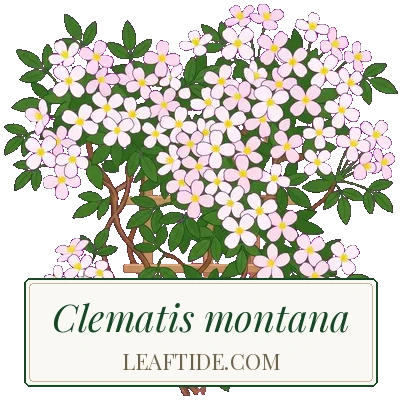
Clematis montana is a vigorous species clematis that can cover entire walls, fences, or trees in 3-4 years. Produces masses of small (5-6cm, 2-2.5 in) white or pink flowers in late spring and early summer on old wood. Pruning Group 1: no regular pruning needed, only cut to control size after flowering if necessary. Plant deeply (5-8cm, 2-3 in, below pot level) in fertile, moist but well-drained soil. Hardy to -20C. Provide a strong support structure as the plant becomes very heavy with age.
 In your Leaftide garden


- Height
- 10 m (33 ft)
- Spread
- 4 m (13 ft)
- Flowers
- May - June
- Light
- Full sun to part shade
- Water
- Moderate
- Feed
- Light spring feed
- Prune
- Pruning Group 1
Yearly Lifecycle
Care Requirements
Light
Sun or partial shade; tolerates more shade than most clematis
Clematis montana is one of the most shade-tolerant clematis species. It flowers well in partial shade and can cope with a shady wall that gets little direct sun, though flowering is best in sun or light shade.
Watering
Keep moist when establishing; drought-tolerant once mature
Water regularly during the first two years. Once established, this vigorous species is fairly drought-tolerant but benefits from watering during prolonged dry spells.
Fertilizing
Light spring feed; not a hungry plant
Apply a balanced fertiliser in spring. Montana types are less demanding than large-flowered hybrids and grow vigorously even on poor soil.
Pruning
Pruning Group 1; only prune after flowering to control size
No regular pruning needed. If the plant outgrows its space, cut back immediately after flowering in early summer. Never prune in winter or early spring as flowers form on the previous year's wood.
Support
Strong support needed; becomes very heavy
Provide sturdy wires, trellis, or allow to scramble through large trees. Montana becomes extremely heavy with age and can pull down weak structures. Check supports annually.
Growing Tips
No regular pruning needed
Pruning Group 1 means you only prune to control size or remove dead wood, and only after flowering finishes in early summer. Never prune in winter or spring as flowers form on old wood.
Give it space to roam
This clematis grows 8-12m (26-39 ft) and spreads rapidly. It is ideal for covering large walls, sheds, fences, or growing through established trees. Not suitable for small spaces.
Plant deeply for insurance
Set the crown 5-8cm (2-3 in) below soil level. If clematis wilt strikes, the plant can regrow from underground buds.
Pests & Diseases
Pest Slugs and Snails
Identification: Ragged holes in young leaves and shoots in spring, silvery slime trails, and new shoots eaten off at the base on young plants.
- Collect them by torch at dusk, or set beer traps near the base.
- Water slug nematodes (Phasmarhabditis hermaphrodita) onto moist, warm soil around young plants.
- Keep the base of the plant clear of debris where they hide, and protect new shoots of young plants with a collar or a ring of grit or wool pellets.
Disease Clematis Wilt Calophoma clematidina
Symptoms: Whole shoots or stems suddenly wilt and blacken, with dark patches on leaves and stems. Montanas and other species clematis are affected far less often than large-flowered hybrids.
Treatment: Cut out wilted stems right down to healthy growth, if need be to ground level, and bin the cuttings rather than composting them. The plant normally regrows from buried buds.
Prevention: Plant with the crown 5-8 cm (2-3 in) below soil level, and protect stems from damage by strimmers, ties and tools, because the fungus enters through wounds.