How to Grow Cerastium
Cerastium tomentosum
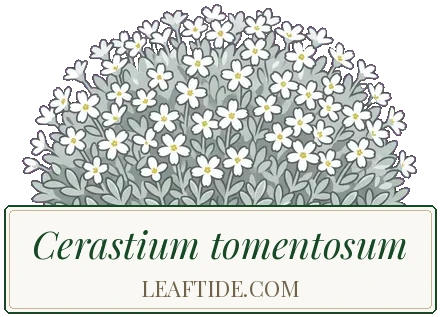
Cerastium is a tough, low-growing evergreen groundcover forming dense silver-grey mats smothered in white starry flowers in early summer. It demands full sun and sharp drainage, thriving in poor, dry, stony soil where little else grows. Plant 30 cm (12 in) apart in spring or autumn. Shear back hard after flowering to keep the mat dense and prevent bare centres. Extremely drought-tolerant and hardy once established, it needs almost no care but can spread aggressively in rich soil.
 In your Leaftide garden


- Height
- 15 cm (6 in)
- Spread
- 60 cm (24 in)
- Flowers
- May - July
- Light
- Full sun
- Water
- Low
- Feed
- Never feed
Yearly Lifecycle
Care Essentials
Rarely needed. Cerastium thrives in poor, lean soil. Excessive feeding causes leggy growth and reduces flowering.
Watch For
- Root rot in waterlogged soil
- Aphids on young growth
- Excessive spread into borders
Companions
Aubrieta, Sedum, Thyme, Dianthus
Care Requirements
Light
Full sun essential
Demands full sun and sharp drainage for best silver foliage and prolific flowering. In shade or rich moist soil it becomes leggy and invasive.
Watering
Extremely drought-tolerant
Needs no supplementary watering once established. Thrives in dry, stony, poor soil. Overwatering or waterlogging causes root rot and death.
Fertilizing
Never feed
Thrives in poor, lean soil. Excessive feeding causes leggy growth, reduces flowering, and makes the mat loose and floppy rather than compact.
Pruning
Shear hard after flowering
Shear the entire mat back by half after flowering finishes. This prevents bare centres, maintains the compact silver effect, and keeps the plant vigorous.
Growing Tips
Let small bulbs grow through it
Crocus, species tulips and dwarf daffodils push up through the thin mat and flower above the silver foliage. The mat then hides their fading leaves.
Remove every piece when clearing it
Cerastium regrows from any stem or root left in the soil. To clear a patch, lift the whole mat, sift out the fragments and check the spot again the following season.
Pests & Diseases
Disease Mat Rot in Wet Weather
Symptoms: Patches of the silver mat turn brown and mushy and then collapse, often at the centre of an older plant. It follows long wet spells, humid summers or soil that holds water.
Treatment: Cut out the dead patches back to firm growth and rake the debris away so air reaches the mat. Fork grit into the bare soil and let healthy runners root back into the gap.
Prevention: Grow it in lean, sharply drained soil in full sun, ideally on a slope or wall top. Do not mulch over the mat with compost or bark, and shear it hard after flowering so air moves through it.