How to Grow Tree Anemone
Carpenteria californica
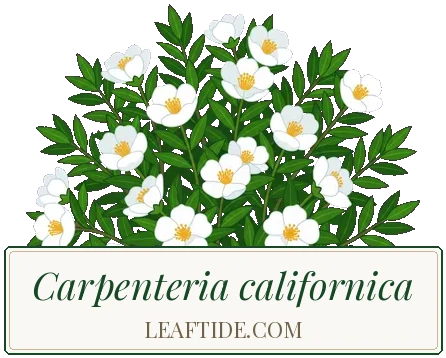
Carpenteria californica is a beautiful evergreen wall shrub from California, bearing large fragrant white flowers with golden stamens in summer. In the UK it must have a sheltered south- or west-facing wall; it will not thrive in open, exposed positions. Plant in well-drained soil, feed lightly in spring, and prune only lightly after flowering to remove dead or crossing stems. Given the right warm wall, it is a long-lived, low-maintenance shrub.
 In your Leaftide garden


- Height
- 2.5 m (8 ft)
- Spread
- 2 m (6.5 ft)
- Flowers
- June - August
- Light
- Full sun
- Water
- Moderate
Yearly Lifecycle
Care Essentials
Light balanced feed in spring. Avoid high-nitrogen fertilisers which promote leafy growth over flowers.
Watch For
- Scale insects on stems
- Powdery mildew in dry summers
Care Requirements
Light
Full sun, sheltered wall
Requires a warm, sheltered south- or west-facing wall in the UK. Full sun is essential for flowering and to ripen wood sufficiently to withstand winter.
Watering
Moderate, well-drained
Water regularly to establish. Once settled, water during prolonged dry spells but do not allow to sit in wet soil; good drainage is essential.
Pruning
Light tidy after flowering
Remove dead, damaged or crossing stems after flowering. Avoid hard pruning which can set the plant back badly.
Mulching
Annual mulch at base
Mulch around the base annually with compost to conserve moisture and protect roots.
Growing Tips
A warm wall and no cold wind
Where winters are cold, Carpenteria needs a sunny, sheltered wall and a spot out of freezing, drying winds. Cold and wet together hurt it more than frost alone, so choose well-drained soil too.
Wait before cutting out frost damage
Shoots that look dead after a hard winter often reshoot from lower down. Wait until growth restarts in spring, then cut back only to where you see healthy green tissue.
Prune straight after flowering
Prune lightly right after the flowers finish, taking out dead, damaged or crossing stems, and avoid hard cutting back into old wood, which can weaken the plant.
Pests & Diseases
Disease Frost and Cold Wind Damage
Symptoms: Leaves turn brown and crisp at the edges or all over, and in a hard winter whole shoots can die back.
Treatment: Wait until growth restarts, then cut dead shoots back to healthy green wood. Protect the plant with horticultural fleece in hard frosts.
Prevention: Plant against a sunny, sheltered wall, out of the coldest winds, in well-drained soil, and protect young plants with fleece in their first winters.