How to Grow Broom
Cytisus scoparius
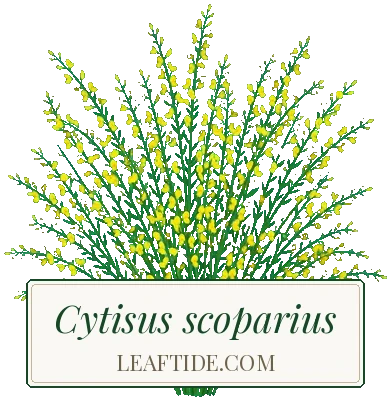
Broom is a fast-growing, drought-tolerant shrub that thrives on poor, well-drained soils in full sun. Plant in autumn or spring, water until established, then leave alone. Prune lightly after flowering by cutting new growth back by two-thirds, but never cut into old bare wood. As a nitrogen-fixer, it needs no feeding. Expect a lifespan of 10-15 years. Remove spent seed pods to prevent excessive self-seeding.
 In your Leaftide garden


- Height
- 2 m (6.5 ft)
- Spread
- 1.5 m (5 ft)
- Flowers
- May - July
- Light
- Full sun
- Water
- Low
- Feed
- None needed
Yearly Lifecycle
Care Essentials
Rarely needed. A light feed in spring on very poor soils only. Broom fixes its own nitrogen.
Watch For
- Gall mites
- Broom moth caterpillars
- Dieback after hard pruning into old wood
Care Requirements
Light
Full sun
Needs full sun for best flowering. Tolerates light shade but becomes leggy and flowers poorly. Ideal for hot, sunny banks and slopes.
Watering
Minimal once established
Water newly planted broom until established (first year). Once settled, it is extremely drought-tolerant and needs no supplemental watering except in prolonged drought.
Fertilizing
None needed
Broom is a legume that fixes atmospheric nitrogen via root nodules. Feeding is unnecessary and counterproductive, encouraging weak, leggy growth. Thrives on poor soils.
Pruning
Light trim after flowering; never into old wood
After flowering in early summer, cut back the current season's growth by two-thirds. Never cut into old bare wood as it will not reshoot. Without annual trimming, plants become leggy and top-heavy.
Spacing
120-150 cm (4-5 ft) apart
Space plants 120-150 cm (4-5 ft) apart to allow their arching habit room to develop. They grow quickly and fill gaps within 2-3 years.
Support
None needed
Broom has a naturally sturdy, upright to arching habit and does not need staking or support. Exposed sites may cause lean but this is part of its natural character.
Growing Tips
Never cut into old wood
Broom does not regenerate from bare old wood. Always prune into green, leafy growth only. Hard pruning kills branches.
Thrives on neglect
Broom fixes nitrogen and prefers poor soil. Feeding encourages leggy growth and shortens lifespan. Leave it alone once established.
Short-lived but fast
Expect 10-15 years. Plan a replacement rather than trying to rejuvenate an old plant. Take semi-ripe cuttings in summer.
Pests & Diseases
Pest Broom Gall Mite
Identification: Tiny mites that make swollen, knobbly or woolly galls on shoot tips and buds, so the growth looks lumpy and distorted and flowering is reduced.
- Cut out and bin galled shoots as soon as you see them; there is no effective spray.
- Prune lightly after flowering into green growth only, and keep the plant growing steadily rather than stressed.
Pest Broom Moth Caterpillars
Identification: Plump green to brown caterpillars with a yellow side stripe, feeding on the leaves in summer. A healthy plant easily tolerates the damage.
- Pick off the caterpillars by hand if only a few plants are affected.
- Otherwise leave them alone; birds feed on them and the shrub regrows.
Disease Dieback After Hard Pruning
Symptoms: Branches that were cut back into bare, leafless old wood stay dead and do not reshoot, leaving gaps or killing the whole stem.
Treatment: Cut dead stems back to the base or to the nearest healthy green shoot. Old wood will not regrow, so do not cut back further hoping it will.
Prevention: Prune only the green, leafy growth, straight after flowering, and never cut into bare old wood. Replace very old, leggy plants rather than trying to rejuvenate them.