How to Grow Breath of Heaven
Coleonema pulchellum
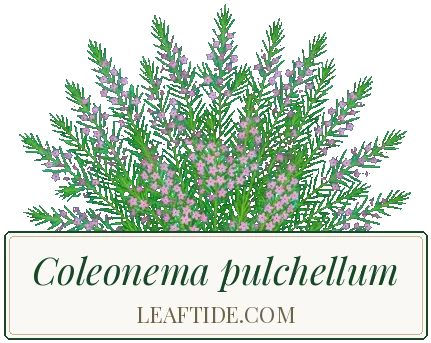
Breath of Heaven thrives in full sun with excellent drainage: it will not tolerate waterlogged roots. Plant in free-draining, slightly acidic to neutral soil and water moderately; once established it is drought-tolerant. Trim lightly after the main spring flush, never cutting into old wood. Feed sparingly in spring only. In colder gardens (below -5 °C, 23 °F), shelter from frost or grow in a container you can bring indoors.
 In your Leaftide garden


- Height
- 1 m (3.5 ft)
- Spread
- 1.2 m (4 ft)
- Flowers
- March - May
- Light
- Full sun
- Water
- Moderate
Yearly Lifecycle
Care Essentials
Lightly in spring with a balanced slow-release fertiliser. Avoid rich feeds: excess nitrogen promotes leafy growth at the expense of flowers. No feeding in winter.
Watch For
- Root rot in waterlogged soil
- Scale insects on stems
- Spider mites in hot dry conditions
- Frost damage to shoot tips
Companions
Lavender, Rosemary, Cistus, Agapanthus
Care Requirements
Light
Full sun, at least 6 hours daily
Requires full sun for best flowering. Partial shade reduces bloom density significantly. A south or west-facing position is ideal in temperate climates.
Watering
Moderate; drought-tolerant once established
Water regularly when young. Once established, water moderately and allow the top few centimetres of soil to dry between waterings. Avoid overwatering: root rot in wet soil is the main killer. Reduce watering in winter.
Fertilizing
Light spring feed only
A light application of balanced slow-release fertiliser in spring is sufficient. Avoid high-nitrogen feeds which promote foliage over flowers. Do not feed in summer, autumn, or winter.
Pruning
Light trim after flowering; never cut old wood
Trim lightly immediately after the main spring flowering. Remove spent shoots and shape to keep compact. Never cut back hard into old, leafless wood: Coleonema does not regenerate from bare stems.
Growing Tips
Lime-free compost in pots
Breath of Heaven wants neutral to acid conditions. In a container, or where your soil is chalky, grow it in ericaceous (lime-free) compost rather than ordinary potting compost.
Keep cuttings as replacements
Old plants turn woody and bare at the base, and because they will not regrow from old wood, hard pruning cannot rejuvenate them. Root a few semi-ripe cuttings in summer, with gentle bottom heat, so young plants are ready when an old one tires.
Plant it where you brush past
The needle-like leaves release a strong scent when brushed or crushed, so a spot beside a path, step or gate gets the most from it.
Pests & Diseases
Disease Phytophthora Root Rot Phytophthora spp.
Symptoms: The foliage dulls, yellows or browns and the plant wilts even though the soil is moist, often one side first, then branches or the whole shrub die back. Roots are dark and soft instead of pale and firm, and scraping the bark at the stem base may show reddish-brown staining underneath.
Treatment: There is no cure. Dig up the plant with its root ball and the soil around it and bin or burn it rather than composting it, and do not plant another susceptible shrub in the same spot.
Prevention: Plant in very free-draining soil or a raised bed, no deeper than it sat in its pot, and do not overwater, especially in winter. Use pots with drainage holes and never leave them standing in a saucer of water. The fungus is most active in warm summer soil, so a mulch that keeps the roots cool also helps.