How to Grow Boronia
Boronia megastigma
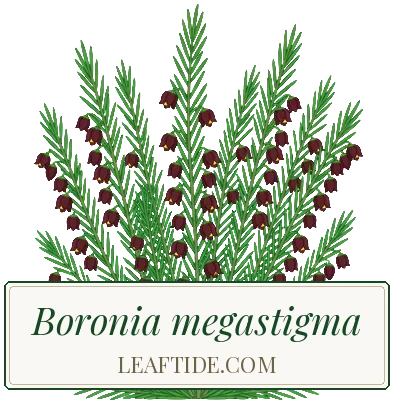
Brown boronia (Boronia megastigma) is a small evergreen shrub from Western Australia, about 1 m (3.5 ft) tall, with fine needle-like aromatic leaves and, from late winter into spring, masses of nodding cup-shaped flowers, brown-maroon outside and yellow inside, with an intense sweet scent. It is fussy. Plant it in cool, moist but perfectly drained acid soil in dappled shade or morning sun, and keep the roots cool under a mulch. Never let it dry out, never let it sit wet, and keep lime and phosphorus-rich fertilisers away. It takes only light frosts, so in colder gardens grow it in a pot of lime-free compost and bring it under cover for winter. Trim the flowered stems by about a third straight after flowering. Even well grown it often lives only two to five years, so take cuttings to replace it.
 In your Leaftide garden


- Height
- 1 m (3.5 ft)
- Spread
- 70 cm (28 in)
- Flowers
- February - April
- Light
- Part shade
- Water
- Moderate
Yearly Lifecycle
Care Essentials
Lightly, straight after flowering, with a slow-release fertiliser for native plants that is low in phosphorus. Boronias are sensitive to phosphorus, and rich feeding gives soft growth that collapses in hot weather. In a pot, a weak liquid feed for acid-loving plants about once a month through spring is enough.
Watch For
- Sudden wilting and death from root rot (Phytophthora) in wet or poorly drained soil
- Yellowing leaves in limy soil or with hard tap water
- Collapse after the roots dry out or overheat in a hot spell
- Scale insects on the stems
Companions
Correa, Westringia, Grevillea, Flannel Flower
Care Requirements
Light
Dappled shade or morning sun
Grows best in dappled shade or with morning sun and afternoon shade. Hot afternoon sun scorches the leaves and heats the roots; in cool, cloudy climates it takes more sun. Keep it out of strong wind.
Watering
Keep evenly moist, never waterlogged
Water regularly so the soil never dries out, especially in warm, dry weather and in pots, which dry fast. The soil must still drain freely, because roots left sitting in water rot. Use rainwater where tap water is hard.
Fertilizing
Light low-phosphorus feed after flowering
Give a little slow-release fertiliser for native plants, low in phosphorus, straight after flowering. Avoid ordinary garden fertilisers, manure and lime. Too much feed gives soft growth that collapses in heat.
Pruning
Trim by a third after flowering
Straight after flowering, cut the flowered stems back by about a third to keep the plant compact and bushy. Picking stems for the vase counts as pruning. Do not cut into old bare wood.
Spacing
60-80 cm (24-31 in) apart
It grows about 1 m (3.5 ft) tall and 60-80 cm (24-31 in) wide, so space plants 60-80 cm (24-31 in) apart with room for air to move around them. In a pot, start with one about 25-30 cm (10-12 in) across.
Support
No support needed
It forms a small self-supporting shrub. In a windy spot a short stake for the first year stops the roots rocking loose, but shelter from strong wind helps it more than any tie.
Growing Tips
Keep the roots cool
Boronia roots die quickly in hot soil. Mulch with leaf litter or fine bark, plant where rocks or neighbouring plants shade the base, and stand pots out of afternoon sun, ideally inside a slightly larger outer pot.
Pick flowers for the vase
Cutting flowering stems for the house is a form of pruning. It keeps the plant compact and fills a room with scent. Cut them as the flowers open, then trim the rest of the flowered stems once flowering ends.
Take cuttings as insurance
Even a healthy boronia often dies after a few years. Take short semi-ripe cuttings from the new growth in summer, root them in a gritty, lime-free mix in a shaded spot, and you will have young plants ready when the old one fades.
Pests & Diseases
Pest Scale Insects
Identification: Small brown or white bumps stuck along the stems, often with sticky honeydew and black sooty mould on the leaves below
- Scrape them off with a fingernail or a soft brush
- Wipe the stems with a cloth dipped in soapy water
- Spray with a horticultural oil, following the label
Disease Root Rot (Phytophthora)
Symptoms: The whole plant wilts suddenly and the leaves turn grey-brown even though the soil is moist; the roots are dark and soft
Treatment: There is no cure once the plant has collapsed. Remove it with its soil and do not replant a boronia in the same spot
Prevention: Plant in perfectly drained soil or a gritty potting mix, never let pots stand in a saucer of water, and water less in cool weather
Disease Lime-Induced Chlorosis
Symptoms: Leaves turn pale yellow between green veins, starting with the new growth, and the plant grows weakly
Treatment: Repot into lime-free compost, water with rainwater and give a dose of iron chelate
Prevention: Grow it only in acid soil or lime-free compost and use rainwater where the tap water is hard