How to Grow Bedding Salvia
Salvia splendens
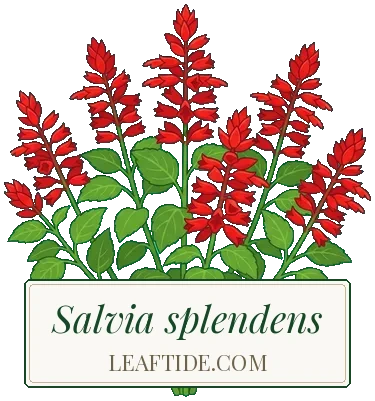
Bedding salvia is a tender annual for full sun and fertile, well-drained soil. Sow on the surface indoors at 21-24 °C (70-75 °F) in late winter as seeds need light to germinate. Prick out into modules, harden off thoroughly after the last frost, and plant out 30cm (12 in) apart. Deadhead spent spikes back to the next side shoot to keep the vivid flower display going all summer until the first frost.
 In your Leaftide garden
- Hardiness
- Tender
- Season
- Warm Season
- Spacing
- 30 cm (12 in)
- Height
- 35 cm (14 in)
- Min. soil temperature
- 18 °C+ (64 °F+)
- Start from
- Seed
- Light
- Full sun
- Water
- Moderate
When to Start
Start seeds indoors 10 weeks before your last frost date. Transplant outdoors once night temperatures stay above 10 °C (50 °F) and soil has warmed to at least 18 °C (64 °F).
Don't know your frost date? Find it here →
Growth Stages
Approximate days from start
Care Essentials
- Liquid feed every two weeks with a balanced or high-potash fertilizer once flowering begins.
- One of the most reliable summer bedding plants. Keep it fed and deadheaded for colour from planting until the first frosts.
Growing Conditions
- Min. soil temperature
- 18 °C+ (64 °F+)
- Germination temperature
- 21–24 °C (70–75 °F)
Pet Safety
- Sow indoors
- —
- Transplant out
- —
- First harvest
- —
Want your full season plan with reminders? Set up your garden free


Spacing & Planting
| Plant spacing | 30 cm (12 in) |
| Row spacing | 30 cm (12 in) |
| Sow depth | On the surface |
| Mature height | 35 cm (14 in) |
| Mature spread | 30 cm (12 in) |
Pests & Diseases
Pest Aphids
Identification: Clusters of small green or black insects on shoot tips and flower spikes, with sticky honeydew and distorted growth.
- Squash small colonies by hand or wash them off with a jet of water.
- Spray persistent colonies with a fatty acid or plant oil insecticide, repeating as the label directs.
- Encourage ladybirds and hoverflies by growing flowers nearby.
Pest Whitefly
Identification: Tiny white moth-like insects that fly up in a cloud when the plants are shaken, mostly on plants under glass or in sheltered spots. Leaves turn sticky and may show black sooty mould.
- Hang yellow sticky traps to catch adults and show how many there are.
- Spray the undersides of the leaves with a fatty acid insecticide or soft soap solution, repeating every few days as the label directs.
- Under glass, the parasitic wasp Encarsia formosa gives good control in warm weather.
Pest Slugs and Snails
Identification: Ragged holes in the leaves and stems of young plants, with silvery slime trails. Plants just set out are often eaten down to the stump.
- Search for them with a torch after dark and remove them by hand.
- Keep young plants protected with copper tape or a gritty barrier until they are well grown.
- Use nematode biological control (Phasmarhabditis hermaphrodita) on damp soil in warm weather.
Disease Grey Mould (Botrytis) Botrytis cinerea
Symptoms: Soft, brown patches on leaves, stems and old flowers, covered in fuzzy grey mould. It spreads quickly in cool, damp, crowded conditions.
Treatment: Remove and bin affected parts straight away, and take off spent flower spikes before they rot.
Prevention: Give plants their full spacing for good airflow, water at the base in the morning and deadhead regularly.
Disease Damping-Off
Symptoms: Seedlings collapse at soil level, with a thin, dark, water-soaked stem, soon after they come up.
Treatment: Remove affected seedlings and the compost around them, and let the surface dry before watering again.
Prevention: Sow in clean, fresh seed compost in clean trays, water with tap water, and give seedlings good light and ventilation.
Growing Conditions
| Min. soil temperature | 18 °C (64 °F) |
| Germination temperature | 21–24 °C (70–75 °F) |
| Base growth temperature | 10 °C (50 °F) |
| Min. daylength to start | 12 h |
| Photoperiod sensitivity | day neutral |
Frequently Asked Questions
- How far apart should I plant bedding salvia?
- Plant bedding salvia 30 cm (12 in) apart, with 30 cm (12 in) between rows.
- When does bedding salvia flower?
- Bedding salvia typically flowers approximately 35 days after transplanting.
- Is bedding salvia frost hardy?
- No, bedding salvia is tender.