How to Grow Bael
Aegle marmelos
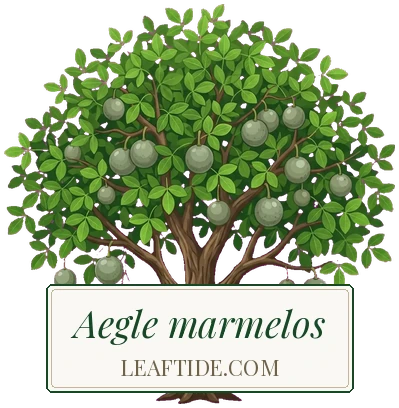
Bael is a slow-growing, sacred tropical tree valued for its medicinal hard-shelled fruit. It is highly drought-tolerant and thrives in full sun on well-drained, even poor soils. In cooler climates, grow in a large container and overwinter frost-free. Trees fruit 5–7 years from seed or sooner from grafted stock. Fruit takes 9–12 months to ripen; harvest when the shell turns pale yellow-grey. The aromatic pulp is eaten fresh or dried for traditional beverages.
 In your Leaftide garden


Yearly Lifecycle
Care Essentials
Apply a balanced fertiliser in early spring as new growth emerges, and a phosphorus-rich feed before flowering to support fruit set.
Watch For
- Scale insects
- Fruit fly
- Leaf blight
- Root rot in waterlogged soils
Companions
Neem, Tulsi (Holy Basil), Moringa
Care Requirements
Light
Full sun
Requires full sun for good growth and fruit production. Tolerates intense heat. Not suitable for shady positions.
Watering
Low; very drought-tolerant once established
Water young trees regularly for the first 2-3 years. Mature trees are very drought-tolerant and rarely need supplemental irrigation.
Fertilizing
Light balanced feed in spring; phosphorus before flowering
Apply a balanced fertiliser lightly in early spring. A phosphorus-rich top-dressing before flowering improves fruit set. Avoid heavy nitrogen feeding which delays fruiting.
Pruning
Light pruning after harvest only
Remove dead wood and crossing branches after the harvest period. Bael forms a naturally dense canopy and does not require heavy annual pruning.
Spacing
8-10 m (26-33 ft) between trees
Allow 8-10 m (26-33 ft) between trees for full canopy development. In smaller spaces, grafted dwarf forms can be grown closer together.
Support
Stake young trees for 2-3 years
Stake newly planted trees until the root system is established. Remove stakes once the tree is self-supporting.
Growing Tips
Patience pays off
Bael trees are slow to fruit: allow 5–7 years from seed, or choose grafted stock for earlier cropping.
Drought is fine; waterlogging is not
Once established, bael copes well with dry spells but is very sensitive to waterlogged soil. Ensure excellent drainage at planting.
Long fruit development
Fruits take 9–12 months from flower to harvest. Do not pick early: immature bael has a harsh, astringent taste.
Pests & Diseases
Pest Scale Insects
Identification: Small brown or reddish, flat or domed bumps on stems, leaves and fruit, with yellowing and weak shoots beneath them. Soft scales also leave sticky honeydew, on which black sooty mould grows. Most likely on trees kept under glass.
- Wipe or scrape off small colonies with a soft cloth or cotton bud.
- Spray with a plant oil or fatty acid insecticide, repeating as the label directs, to catch the mobile young.
Disease Bacterial Shot Hole and Fruit Canker
Symptoms: Small, round, brown, water-soaked spots on the leaves that dry out and drop away, leaving shot holes. Similar spots and raised, corky cankers appear on twigs, thorns and fruit. It spreads in warm, wet weather.
Treatment: Cut out and bin affected twigs, pick up fallen leaves and fruit, and wipe your pruners clean between cuts.
Prevention: Water at the base rather than over the canopy, keep pot-grown trees in an airy spot, and buy grafted plants from a reliable nursery.