How to Grow Azarole
Crataegus azarolus
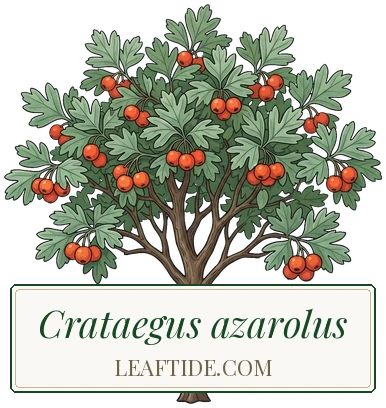
Plant azarole in full sun in any well-drained soil, including chalky and stony ground; it hates waterlogging. Water young trees through their first two or three summers, after which it copes well with dry spells. Prune lightly in late winter, thinning rather than shortening shoots, since the fruit forms at the tips of new growth. Grafted trees start cropping after three to four years. Pick the small red, orange or yellow fruit in early autumn, eat it fresh or make jam and liqueur, and discard the hard stones.
 In your Leaftide garden


- Height
- 5 m (16 ft)
- Spread
- 4.5 m (15 ft)
- Spacing
- 5 m (16 ft)
- Harvest
- September - November
- Light
- Full sun
- Water
- Moderate
Yearly Lifecycle
Care Essentials
Mulch with compost or well-rotted manure in early spring. Azarole is undemanding; extra feeding is rarely needed and too much nitrogen gives soft growth that fireblight attacks.
Watch For
- Fireblight
- Aphids on new growth
- Caterpillars
- Powdery mildew
- Leaf spot
- Suckers from a hawthorn rootstock
Pet Safety
Care Requirements
Light
Full sun, tolerates light shade
Grow in full sun for the best flowering and ripest fruit. It tolerates light shade but crops less there. In cooler climates a warm spot against a sunny wall helps the fruit ripen.
Watering
Moderate; water young trees, drought-tolerant once established
Water regularly through the first two or three summers after planting. Established trees cope well with dry spells but crop better with a deep soak in a long drought. Never let the roots sit in water.
Fertilizing
Light: compost mulch in spring
Mulch with compost or well-rotted manure in early spring. Azarole is undemanding and rarely needs more. Avoid high-nitrogen feeds, which encourage soft growth prone to fireblight.
Pruning
Light thinning in late winter
Prune lightly while dormant, removing dead, crossing and crowded wood. Do not shorten every shoot, as flowers and fruit form at the tips of new growth. Remove suckers from the hawthorn rootstock whenever they appear.
Spacing
About 5 m (16 ft) apart
Allow about 5 m (16 ft) between trees, or 3-4 m (10-13 ft) if kept small by pruning. It can also be grown in a large container for some years.
Support
Stake young trees only
Stake a newly planted tree for its first two years. Established trees need no support.
Growing Tips
Thin, don't shorten
Flowers and fruit form at the tips of the current season's shoots, so cutting every shoot back removes the crop. Thin out crowded, crossing or dead wood in late winter and leave the rest.
Remove rootstock suckers
Azarole is usually grafted onto common hawthorn. Rub out or cut off any shoots that come from below the graft or from the roots, or the thorny rootstock takes over.
Pick gently, use quickly
Ripe azaroles bruise easily and keep only a few weeks in the fridge. Pick by hand into a shallow tray, and pick about two weeks early for jam, jelly or fruit in spirits.
Help pollination
Crops can be poor on a lone tree. Another azarole or a hawthorn hedge flowering nearby at the same time improves fruit set.
Pests & Diseases
Pest Aphids
Identification: Clusters of small green or black insects on young shoot tips, curled leaves, sticky honeydew
- Squash by hand or blast off with a jet of water
- Encourage ladybirds, lacewings and hoverflies
- Spray with fatty acid or plant oil-based insecticide
Pest Caterpillars
Identification: Irregular holes in leaves, rolled or webbed shoot tips, visible caterpillars or droppings
- Pick off caterpillars and prune out webbed tips
- Encourage birds by leaving the tree unsprayed
- Spray with pyrethrin-based insecticide for heavy infestations, never in flower
Disease Fireblight Erwinia amylovora
Symptoms: Flowers and shoots wilt and turn brown-black as if scorched, often with a shepherd's crook bend at the tip
Treatment: Cut out affected growth at least 30 cm (12 in) below visible symptoms. Disinfect tools between cuts
Prevention: Avoid excessive nitrogen feeding. Prune in winter when the disease is inactive
Disease Powdery Mildew
Symptoms: White powdery coating on young leaves and shoot tips, which may distort
Treatment: Prune out badly affected shoot tips. Water in dry spells, as stressed trees suffer most
Prevention: Grow in an open, sunny spot with good air flow
Disease Leaf Spot
Symptoms: Brown spots on leaves, sometimes merging, with early leaf drop in wet years
Treatment: Rake up and dispose of fallen leaves
Prevention: Clear fallen leaves in autumn and avoid overhead watering
Spacing & Planting
| Plant spacing | 5 m (16 ft) |
| Row spacing | 6 m (20 ft) |
| Mature height | 5 m (16 ft) |
| Mature spread | 4.5 m (15 ft) |
Slow-growing small tree or large shrub, 4-8 m (13-26 ft) in the wild but usually 4-5 m (13-16 ft) in gardens. Allow about 5 m (16 ft) between trees. Often sold grafted onto common hawthorn.