How to Grow Zebra Plant
Aphelandra squarrosa
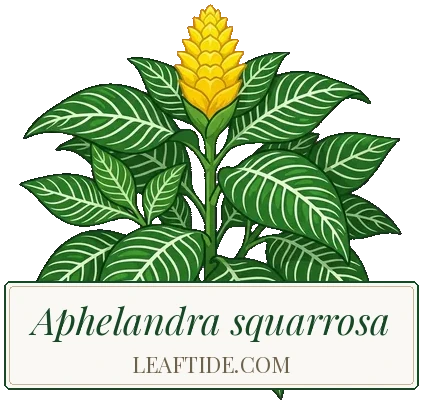
Zebra plant is a striking tropical houseplant with bold white-veined dark green leaves and bright yellow flower bracts in late summer. It demands consistent warmth above 15C, high humidity, and evenly moist but never waterlogged soil. Keep in bright indirect light and mist regularly or use a pebble tray. After the flower spike fades, cut back hard to maintain compact shape. It is fussier than most houseplants but rewards with spectacular foliage year-round.
 In your Leaftide garden


- Height
- 50 cm (20 in)
- Spread
- 40 cm (16 in)
- Flowers
- August - September
- Light
- Bright indirect light
- Water
- High
Yearly Lifecycle
Care Essentials
Feed every two weeks with a balanced liquid fertiliser from spring through summer. Reduce to monthly in autumn and stop in winter. Resume feeding when new growth appears in spring.
Watch For
- Leaf drop from draughts, dry air, or irregular watering
- Aphids on new growth and flower bracts
- Scale insects on stems
- Brown leaf tips from low humidity
- Leggy growth after flowering if not pruned back
Pet Safety
Care Requirements
Light
Bright indirect light, no direct sun
Needs bright indirect light year-round. Direct sun scorches the leaves. Too little light causes leggy growth and poor flowering.
Watering
Evenly moist, never waterlogged
Keep soil consistently moist during the growing season. Use tepid water. Reduce in winter but never let the soil dry out completely.
Fertilizing
Fortnightly in spring and summer
Feed every two weeks with a balanced liquid fertiliser from spring through summer. Reduce to monthly in autumn and stop in winter.
Pruning
Cut back hard after flowering
Once the yellow bract fades, cut the stem back to a pair of healthy lower leaves. This prevents leggy growth and encourages compact bushy regrowth.
Pests & Diseases
Pest Red spider mites
Identification: Fine pale stippling on the leaves and fine webbing on the undersides in warm, dry, centrally heated rooms. The white-striped leaves look dull and faded.
- Shower the plant and wipe both sides of every leaf with a damp cloth, then raise humidity with a pebble tray.
- Repeat a soft soap wash weekly until no mites are left, and isolate the plant meanwhile.
Pest Mealybugs
Identification: White, cottony clusters in the leaf axils and along the stems, with sticky honeydew.
- Dab each insect with cotton wool dipped in diluted soft soap or rubbing alcohol, then wash off.
- Check the leaf axils and the undersides of leaves regularly, as mealybugs hide there.
Pest Scale insects
Identification: Small, brown or tan flat bumps on the stems and the veins on the undersides of the leaves, with sticky honeydew and sooty mould.
- Scrape the scales off with a soft brush or fingernail and wipe the leaves with soapy water.
- Repeat weekly for several weeks to catch newly hatched young.