How to Grow Annual Vinca
Catharanthus roseus
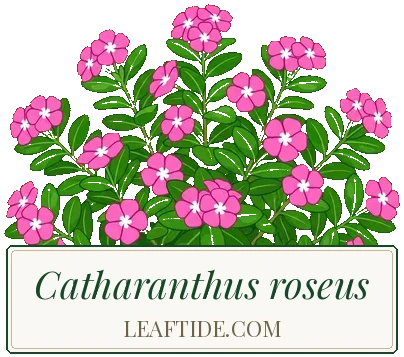
Annual vinca thrives in full sun and well-drained soil. Sow indoors 10-12 weeks before the last frost at 21-27 °C (70-81 °F), covering seeds as they need darkness to germinate. Prick out into modules once true leaves appear, keep warm throughout, harden off carefully, and plant out 30cm (12 in) apart only when all frost risk has passed and nights are warm. Water at the base to avoid root rot and deadhead to keep blooms coming all summer.
 In your Leaftide garden
- Hardiness
- Tender
- Season
- Warm Season
- Spacing
- 30 cm (12 in)
- Height
- 40 cm (16 in)
- Sow depth
- 0.5 cm (¼ in)
- Min. soil temperature
- 20 °C+ (68 °F+)
- Start from
- Seed
- Light
- Full sun
- Water
- Low
When to Start
Start seeds indoors 12 weeks before your last frost date. Transplant outdoors once night temperatures stay above 12 °C (54 °F) and soil has warmed to at least 20 °C (68 °F).
Don't know your frost date? Find it here →
Growth Stages
Approximate days from start
Care Essentials
- Feed every two weeks with a balanced or high-potash liquid fertilizer once flowering begins.
- Thrives in heat and tolerates drought once established: ideal for hot sunny borders, containers, and hanging baskets. Avoid overwatering which causes root rot.
Growing Conditions
- Min. soil temperature
- 20 °C+ (68 °F+)
- Germination temperature
- 21–27 °C (70–81 °F)
Pet Safety
- Sow indoors
- —
- Transplant out
- —
- First harvest
- —
Want your full season plan with reminders? Set up your garden free


Spacing & Planting
| Plant spacing | 30 cm (12 in) |
| Row spacing | 30 cm (12 in) |
| Sow depth | 0.5 cm (¼ in) |
| Mature height | 40 cm (16 in) |
| Mature spread | 30 cm (12 in) |
Pests & Diseases
Pest Spider Mites
Identification: Pale speckling and bronzing on the leaves, with fine webbing under them, in hot, dry weather, especially on plants in pots that dry out.
- Spray the plant with water, including leaf undersides, every few days in hot, dry weather.
- Do not let pots dry out completely: stressed plants are attacked first.
Disease Root and Stem Rot Phytophthora
Symptoms: Plants wilt and yellow although the soil is wet, the stem blackens at soil level and the roots are brown and mushy. Common in cold, wet soil and soggy compost.
Treatment: Pull out and bin affected plants and do not reuse the compost. Healthy plants nearby can be moved to fresh, drier compost.
Prevention: Use a free-draining mix, let the top of the compost dry between waterings and never leave pots standing in water. Plant out only into warm soil.
Disease Grey Mould Botrytis cinerea
Symptoms: Grey, fuzzy mould on dead flowers, soft stems and leaves in cool, damp weather.
Treatment: Remove affected parts and fallen petals and bin them. Thin crowded growth to let air through.
Prevention: Space plants, water at the base and clear dead flowers and leaves regularly.
Disease Cold Damage
Symptoms: Leaves turn yellow or reddish and growth stalls after cold, wet spells, even with no disease present.
Treatment: Nothing reverses it. Keep plants dry and sheltered and growth resumes when the weather warms; replace plants that stay stunted.
Prevention: Wait until nights stay mild before planting out, and harden plants off well first.
Growing Conditions
| Min. soil temperature | 20 °C (68 °F) |
| Germination temperature | 21–27 °C (70–81 °F) |
| Base growth temperature | 12 °C (54 °F) |
| Min. daylength to start | 12 h |
| Photoperiod sensitivity | day neutral |
Frequently Asked Questions
- How far apart should I plant annual vinca?
- Plant annual vinca 30 cm (12 in) apart, with 30 cm (12 in) between rows.
- When does annual vinca flower?
- Annual vinca typically flowers approximately 42 days after transplanting.
- Is annual vinca frost hardy?
- No, annual vinca is tender.