How to Grow Korean Angelica
Angelica gigas
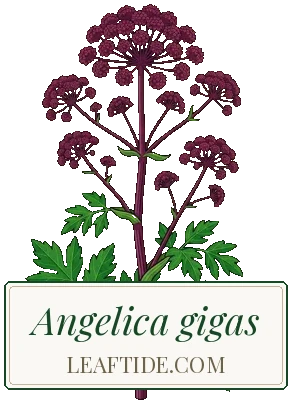
Korean Angelica is a dramatic biennial ornamental reaching 1.2-1.8m (4-6 ft) with deep purple stems and striking dark burgundy flower umbels in late summer. It forms a rosette of bold divided leaves in year one, then sends up dark purple-red stems topped with dome-shaped flower heads in year two before dying. Self-seeds freely in moist, partially shaded positions. Sow fresh seed in autumn as viability drops rapidly. An architectural statement plant for woodland edges and shaded borders.
 In your Leaftide garden


- Hardiness
- Hardy
- Season
- Cool Season
- Harvest
- Single Harvest
- Spacing
- 75 cm (30 in)
- Height
- 1.8 m (6 ft)
- Min. soil temperature
- 5 °C+ (41 °F+)
- Start from
- Seed
- Light
- Part shade
- Water
- High
When to Start
Direct sow outdoors as soon as soil reaches 5 °C (41 °F) — typically early to mid spring. Hardy enough to tolerate light frosts.
Don't know your frost date? Find it here →
Growth Stages
Approximate days from start
Care Essentials
- A striking biennial ornamental grown for its deep purple stems and dark burgundy flower umbels. Unlike its culinary cousin A. archangelica, Korean Angelica is purely ornamental. It thrives in the same conditions, partial shade and moist rich soil, but brings dramatic colour to shaded borders. Let it self-seed to maintain a permanent colony despite its biennial lifecycle.
Growing Conditions
- Min. soil temperature
- 5 °C+ (41 °F+)
Spacing & Planting
| Plant spacing | 75 cm (30 in) |
| Row spacing | 90 cm (35 in) |
| Sow depth | On the surface |
| Mature height | 1.8 m (6 ft) |
| Mature spread | 75 cm (30 in) |
Pests & Diseases
Pest Aphids
Identification: Clusters of small green, black or grey insects on shoot tips, flower stems and under leaves, with sticky honeydew, curled new growth and sooty mould.
- Squash small colonies by hand or wash them off with a strong jet of water.
- Encourage ladybirds, hoverflies and lacewings, and avoid broad-spectrum sprays that kill them.
- Spray a fatty acid or plant-oil product on heavy infestations, repeating as the label directs.
Pest Slugs and Snails
Identification: Ragged holes in young leaves and shoots, with silvery slime trails, mostly at night and in damp weather. New growth and seedlings are hit hardest.
- Search after dark or after rain with a torch and collect them.
- Scatter ferric phosphate pellets thinly around vulnerable plants, as the label directs.
- Keep a strip of bare, gritty ground around young plants and clear hiding places such as leaf litter and stones.
Disease Crown Rot
Symptoms: Leaf stalks yellow and collapse at the base, and the rosette wilts despite damp soil. The crown is soft and brown and the plant lifts out easily.
Treatment: Remove and bin affected plants, and do not replant angelica in the same spot.
Prevention: Keep the crown at soil level, not buried, and add organic matter that holds moisture without staying waterlogged.
Growing Conditions
| Min. soil temperature | 5 °C (41 °F) |
Frequently Asked Questions
- How far apart should I plant Korean angelica?
- Plant Korean angelica 75 cm (30 in) apart, with 90 cm (35 in) between rows.
- Is Korean angelica frost hardy?
- Yes, Korean angelica is hardy.