How to Grow Amarine
x Amarine tubergenii
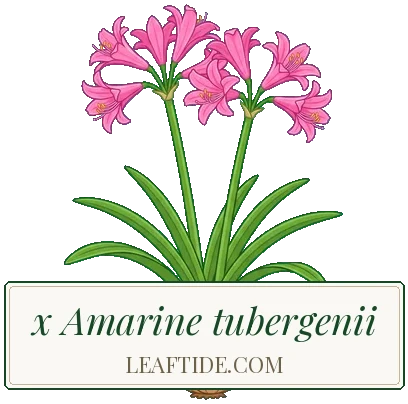
Amarine is a hybrid bulb (Nerine x Amaryllis belladonna) producing clusters of pink trumpet flowers on bare stems in autumn. Plant bulbs shallowly with the neck exposed at the base of a warm, sunny wall. Needs free-draining soil and full sun. Summer dormancy is normal. Leave undisturbed for years for best flowering. Hardy to -10C but mulch in harsh winters.
 In your Leaftide garden


- Height
- 60 cm (24 in)
- Spread
- 20 cm (8 in)
- Spacing
- 15 cm (6 in)
- Flowers
- September - November
- Light
- Full sun
- Water
- Low
Yearly Lifecycle
Care Essentials
Feed with a high-potash liquid fertiliser in spring and again as flower buds emerge in late summer.
Watch For
- Slugs on emerging foliage
- Narcissus bulb fly
- Waterlogging causing bulb rot
Care Requirements
Light
Full sun, warm, sunny wall
Requires a hot, sunny position at the base of the sunniest wall. Maximum warmth is essential for autumn flowering.
Watering
Sparingly, dry in summer dormancy
Water sparingly during active growth. Do not water during summer dormancy. Excellent drainage is essential to prevent bulb rot.
Fertilizing
High-potash feed in spring and late summer
Feed with high-potash liquid fertiliser as foliage emerges in spring and again when flower buds appear in late summer.
Growing Tips
Plant in spring, then give it time
The RHS advises planting amarine bulbs in spring, so they settle in before their first autumn flowering. A clump takes two to five years to reach full size, so a thin first display is no reason to move it.
Divide crowded clumps after flowering
When a clump becomes congested, lift and split it straight after flowering, the time the RHS gives for division. Replant the pieces at once, with the bulb tips just above the soil as before.
Grow some in a pot or for cutting
The RHS lists amarine as a cut flower and as a patio container plant, and the award-winning 'Emanuelle' does well in a pot. A pot lets you give it a hot, sheltered spot even if your borders are cold or wet.
Wear gloves when handling the bulbs
The RHS lists amarine as potentially harmful: eating it may cause a mild stomach upset. Wear gloves when planting or dividing, wash your hands afterwards and keep the bulbs away from children and pets.
Pests & Diseases
Pest Slugs and Snails
Identification: Holes and ragged edges in the young strap-shaped leaves and in the flower stems as they push through, with slime trails nearby. Damage is worst in mild, damp weather.
- Check the clump with a torch on damp evenings and pick them off.
- Water slug nematodes into moist soil around the clump while the soil is above 5 °C (41 °F).
- Scatter a few ferric phosphate slug pellets thinly around the clump.
Pest Large Narcissus Bulb Fly
Identification: A bulb that rots, or sends up a few thin leaves and no flowers, may have one plump, creamy white maggot up to 18 mm long eating out its centre. The RHS lists Nerine, one parent of amarine, among its hosts, and the adult flies look for warm, sheltered spots like the sunny walls where amarine grows best.
- Dig up and destroy any bulbs that show signs of attack, before the maggots leave them to pupate in the soil.
- Buy firm, good quality bulbs from a reputable supplier.
- Cover newly planted bulbs with insect-proof mesh from late spring to early summer, when the female flies lay their eggs.
Spacing & Planting
| Plant spacing | 15 cm (6 in) |
| Row spacing | 20 cm (8 in) |
| Mature height | 60 cm (24 in) |
| Mature spread | 20 cm (8 in) |