How to Grow Golden Trumpet Vine
Allamanda cathartica
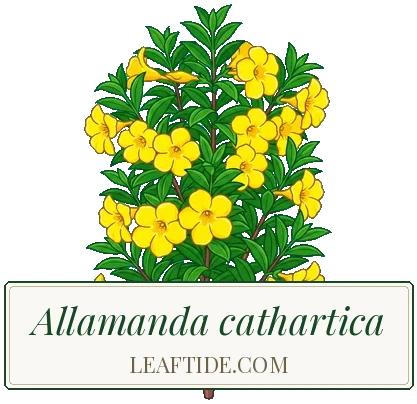
Golden Trumpet Vine is a vigorous tropical shrub producing brilliant yellow trumpet-shaped flowers nearly year-round in warm climates. It thrives in full sun with moderate watering and monthly feeding during growth. In frost-prone areas, grow under glass and keep above 10 °C (50 °F) in winter. All parts are toxic: wear gloves when handling and keep away from children and pets.
 In your Leaftide garden


- Height
- 4 m (13 ft)
- Spread
- 3 m (10 ft)
- Flowers
- March - May
- Light
- Full sun
- Water
- Moderate
Yearly Lifecycle
Care Essentials
Feed with a balanced fertiliser monthly during active growth (spring through autumn). Reduce or stop feeding in winter.
Watch For
- Spider mites (especially in dry conditions)
- Mealybugs
- Whitefly
- Root rot in waterlogged soil
Companions
Bougainvillea, Plumbago, Ixora, Lantana
Pet Safety
Care Requirements
Light
Full sun, at least 6 hours daily
Needs full sun for best flowering. In partial shade it grows but produces fewer blooms. In hot climates some afternoon shade can prevent leaf scorch.
Watering
Moderate; keep moist but well-drained
Water regularly during active growth, allowing the top few centimetres of soil to dry between waterings. Reduce in winter. Avoid waterlogged conditions which cause root rot.
Fertilizing
Monthly balanced feed during growing season
Apply a balanced liquid fertiliser monthly from spring through autumn. A feed with a higher phosphorus content encourages more blooms. Stop feeding in winter.
Pruning
Light trim after flowering; hard prune in early spring
Deadhead spent flowers and trim lightly after each flush to encourage reblooming. Hard prune in early spring to control size and stimulate vigorous new growth. Always wear gloves: sap irritates skin.
Support
Needs tying to trellis, fence or pergola
Scrambling shrub that needs regular tying in to support. Train stems horizontally to encourage more flowering laterals. Suitable for fences, walls, and pergolas in tropical gardens.
Pests & Diseases
Pest Red spider mites
Identification: Fine pale stippling on the leaves and fine webbing on the undersides in hot, dry air, especially under glass.
- Spray the undersides of the leaves with water to raise humidity, as mites dislike damp conditions.
- Wipe or spray with a soft soap solution and repeat weekly.
Pest Mealybugs
Identification: White, cottony clusters in the leaf axils and on the stems, with sticky honeydew and sooty mould on the leaves.
- Dab each insect with cotton wool dipped in diluted soft soap or rubbing alcohol, then wash off. Wear gloves, as the sap is a skin irritant.
- Check leaf axils and the growing tips regularly, since new colonies start there.
Pest Allamanda hornworm
Identification: Occurs in the Caribbean, Central and South America and Florida. Large black caterpillars with yellow-white bands and a red head strip leaves quickly, sometimes leaving bare stems.
- Pick the caterpillars off by hand, wearing gloves, as soon as you see them.
- The plant usually regrows once the caterpillars are gone, so keep it watered and fed.