How to Grow African Blue Basil
Ocimum kilimandscharicum x basilicum
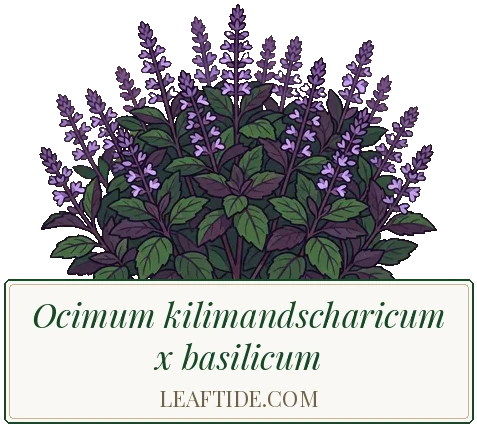
African Blue Basil is a sterile perennial hybrid, unlike all other basils which are annuals in the UK. Large shrubby plant (60-90cm, 24-35 in) with purple-veined leaves, purple-blue flower spikes, and a camphor-clove scent. Excellent pollinator plant that flowers continuously from summer to frost. Cannot set seed so propagate only by cuttings. In the UK, grow in a large container and bring indoors before first frost. Overwinter in a bright, frost-free space. Cut back hard in spring for fresh vigorous growth.
 In your Leaftide garden


- Height
- 90 cm (35 in)
- Spread
- 60 cm (24 in)
- Spacing
- 60 cm (24 in)
- Flowers
- May - October
- Light
- Full sun to part shade
- Water
- Moderate
Yearly Lifecycle
Care Essentials
Feed monthly with a balanced liquid fertiliser during the growing season. More vigorous than annual basils and benefits from regular feeding.
Watch For
- Aphids
- Whitefly
- Spider mites indoors
- Cold damage
Companions
Tomatoes, Peppers, Roses
Pet Safety
Care Requirements
Light
Full sun, warm and sheltered
Needs full sun for best growth and flowering. A sunny, sheltered spot is ideal. Will tolerate light shade but flowers less.
Watering
Regular watering, allow surface to dry
Water regularly during the growing season but allow the surface to dry between waterings. Reduce watering significantly in winter when overwintering indoors.
Fertilizing
Monthly balanced feed during growth
Feed monthly with a balanced liquid fertiliser from spring to autumn. More vigorous than annual basils so needs more regular feeding to sustain growth.
Pruning
Hard prune in spring, trim throughout summer
Cut back hard in spring as new growth appears. Trim regularly through summer to maintain shape. Leave flower spikes for pollinators.
Winter protection
Bring indoors before frost, minimum 10 °C (50 °F)
Not frost-hardy. Move indoors to a bright, frost-free location before first frost. Reduce watering over winter. Resume normal care in spring.
Growing Tips
Sterile hybrid: cuttings only
This is the only perennial basil for UK gardens. Cannot set seed: propagate exclusively by cuttings which root easily in water or compost.
Outstanding pollinator plant
Flowers continuously and is one of the best bee plants available. Leave flower spikes for pollinators rather than removing them.
Container for easy overwintering
Grow in a large container (minimum 30cm, 12 in) so you can move it indoors before first frost. Cut back by half before overwintering.
Hard spring prune
Hard prune in spring as new growth appears. Responds well to cutting back and quickly fills out again.
Pests & Diseases
Pest Aphids
Identification: Clusters of small green or black insects on soft shoot tips and under young leaves, with sticky honeydew and curled, stunted growth.
- Squash small colonies by hand or wash them off with a jet of water.
- Spray persistent colonies with a fatty acid or plant oil insecticide, checking the label for edible herbs, and wash the leaves before you eat them.
- Encourage ladybirds and hoverflies; the long flowering season of this plant helps.
Pest Whitefly
Identification: Tiny white moth-like insects that fly up in a cloud when you shake the plant, mostly on cuttings and plants overwintered indoors or in a greenhouse. Leaves turn sticky and may show black sooty mould.
- Hang yellow sticky traps near the plants to catch adults and show how bad the problem is.
- Spray the undersides of the leaves with a fatty acid insecticide or soft soap solution, repeating every few days as the label directs.
- Under glass, the parasitic wasp Encarsia formosa gives good control in warm weather.
Pest Spider Mites
Identification: Fine pale speckling on the leaves, then a bronzed look and fine webbing on the undersides. Mostly a problem on plants kept indoors over winter, where the air is warm and dry.
- Mist the plant and stand it in a more humid spot; mites dislike damp air.
- Spray the undersides of the leaves with a fatty acid or plant oil insecticide, repeating as the label directs.
- In a conservatory or greenhouse, release the predatory mite Phytoseiulus persimilis.
Disease Cold Damage
Symptoms: Leaves turn dark, limp or blackened after a frost or a spell of cold, wet weather. This plant is a tender perennial and does not tolerate frost.
Treatment: Move the plant under cover and cut back blackened growth to healthy green wood. It often reshoots from the base if the stems are still alive.
Prevention: Take cuttings in late summer as insurance and bring pots indoors before the first frost. Keep overwintering plants in a bright, frost-free place.
Disease Root Rot
Symptoms: Leaves yellow and droop even though the compost is wet, and the base of the stems turns dark and soft. Most common in pots overwintered in cold, wet compost.
Treatment: Tip the plant out, cut away soft brown roots and repot into fresh, free-draining compost. Water sparingly until it grows again.
Prevention: Use a gritty, free-draining mix and let the top of the compost dry out between waterings, especially in winter.
Spacing & Planting
| Plant spacing | 60 cm (24 in) |
| Row spacing | 60 cm (24 in) |
| Mature height | 90 cm (35 in) |
| Mature spread | 60 cm (24 in) |
Large shrubby plant that spreads considerably. Give plenty of room for air circulation. In the UK, grow in a large container for easy overwintering indoors.