How to Grow Sneezewort
Achillea ptarmica
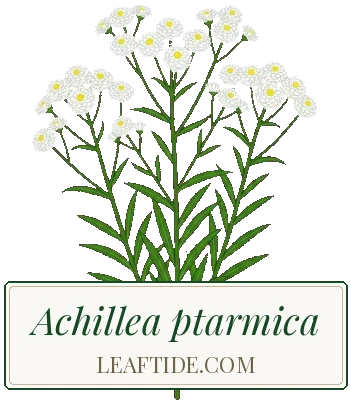
Achillea ptarmica is a fully hardy European perennial with white button-like double flowers on upright stems throughout summer. Unlike common yarrow, it has lance-shaped leaves and prefers slightly moister soil. Plant in full sun to light shade, space 40 cm (16 in) apart, and divide every 3-4 years to control its rhizomatous spread. Deadhead for extended flowering. No winter protection needed.
 In your Leaftide garden


- Height
- 60 cm (24 in)
- Spread
- 45 cm (18 in)
- Flowers
- June - August
- Light
- Full sun to part shade
- Water
- Moderate
- Prune
- Deadhead in summer
Yearly Lifecycle
Care Essentials
Rarely needed: thrives in average to moist soil without supplemental feeding. A light compost mulch in spring is sufficient.
Watch For
- Powdery mildew
- Aphids
Companions
Astilbe, Helenium, Echinacea, Grasses
Pet Safety
Care Requirements
Light
Full sun to light shade
Performs best in full sun but tolerates light shade, especially in warmer climates. More shade means fewer flowers.
Spacing
40 cm (16 in) apart; contain spreading rhizomes
Space 40 cm (16 in) apart for border plantings. Rhizomes spread freely: use root barriers or divide regularly to control.
Watering
Moderate; tolerates moist soil
Prefers evenly moist soil, unlike most yarrows. Water during dry spells, especially in the first season. Tolerates damp clay but not waterlogging.
Pruning
Deadhead in summer; cut back in autumn
Remove spent flower heads to prolong flowering. Cut all stems to ground level in late autumn or early spring before new growth appears.
Growing Tips
Moister than most yarrows
Unlike common yarrow, sneezewort tolerates and even prefers slightly moist soil. Good for borders near ponds or in heavier clay.
Deadhead for extended bloom
Remove spent flower clusters regularly to encourage continuous white blooms throughout summer.
Control the spread
Spreads vigorously by rhizomes. Divide clumps every 3 years or install root barriers to prevent it overtaking neighbours.
Winter seed heads
Leave some dried flower heads standing through winter for architectural interest and to feed birds.
Pests & Diseases
Pest Aphids
Identification: Clusters of small green or black insects on shoot tips and flower buds in early summer, with sticky honeydew on the leaves below.
- Squash small colonies or wash them off with a jet of water
- Leave light infestations for ladybirds, lacewings and hoverfly larvae, which usually bring numbers down within a few weeks
Disease Powdery Mildew
Symptoms: A white, powdery coating on the leaves, usually from midsummer. It is worse when the roots are dry and the air around the clump is still. Mostly cosmetic.
Treatment: Cut the worst-affected stems back after flowering; clean new growth follows.
Prevention: Water in dry spells, since sneezewort dislikes drying out and dry roots make mildew worse, and divide congested clumps so air can move through them.
Popular Varieties
The Pearl
Popular double-flowered cultivar with white pompom-like blooms on 60 cm (24 in) stems. Excellent for cutting.