How to Grow Abutilon
Abutilon × hybridum
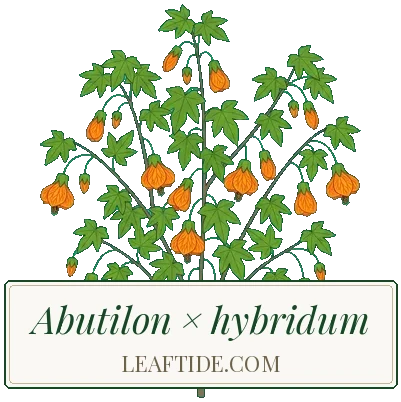
Abutilon is a fast-growing, half-hardy shrub prized for its pendulous bell-shaped flowers in shades of orange, red, yellow, and white. In mild gardens it can flower almost year-round. In the UK, treat it as half-hardy: grow outdoors in a sheltered, sunny spot in summer and bring under glass before the first frost. Plant in well-drained, fertile soil and water moderately. Prune in spring to shape and remove frost-damaged wood. Maple-like leaves and a tropical-looking habit make it an excellent conservatory or patio specimen.
 In your Leaftide garden


- Height
- 2 m (6.5 ft)
- Spread
- 1.5 m (5 ft)
- Flowers
- April - November
- Light
- Full sun to part shade
- Water
- Moderate
Yearly Lifecycle
Care Essentials
Feed monthly with a balanced liquid fertiliser from spring through summer. Reduce to every six weeks in autumn and stop feeding over winter.
Watch For
- Whitefly (especially under glass)
- Aphids on new shoot tips
- Red spider mite in warm, dry conditions
- Frost damage to soft growth
Care Requirements
Light
Full sun to light shade
Thrives in a warm, sheltered spot with full sun or very light shade. A south- or west-facing wall or fence dramatically improves performance and frost protection in the UK.
Watering
Moderate: keep moist but not waterlogged
Water regularly during the growing season, allowing the top centimetre of soil to dry between waterings. Reduce watering significantly in autumn and winter. Container-grown plants dry out faster and need more frequent checking.
Fertilizing
Monthly balanced feed in spring and summer
Apply a balanced liquid fertiliser monthly from early spring to late summer. Reduce to every six weeks in autumn and stop entirely over winter when growth slows.
Pruning
Spring cut-back by one-third to one-half
Prune in early or mid-spring before new growth hardens. Remove frost-damaged or weak stems entirely and shorten remaining stems by one-third to one-half to keep the plant compact and free-flowering.
Spacing
100 cm (3.5 ft) between plants
Allow 100 cm (3.5 ft) between plants in border settings. In containers, use a pot at least 40 cm (16 in) in diameter and pot on each spring as the plant fills its current container.
Growing Tips
Avoid sudden changes
Moving a plant abruptly between very different light, warmth or dryness often makes it drop buds and leaves. Acclimatise it gradually when it goes outside or comes back under glass.
Cut back plain green shoots
Variegated forms sometimes throw plain green shoots, which are more vigorous. Cut them out at the base so they do not take over.
Pests & Diseases
Pest Whiteflies
Identification: Tiny white winged insects that fly up when the plant is brushed, with sticky honeydew and sooty mould on the leaves. The scale-like young sit on the undersides of the leaves. Worst under glass.
- Hang yellow sticky traps beside the plant and ventilate the greenhouse or conservatory well.
- Wash the undersides of the leaves with a soft soap solution and repeat every few days, removing badly infested leaves.
- Check plants before bringing them under glass for winter so you do not carry whiteflies in.
Pest Red spider mites
Identification: Fine pale stippling on the leaves, which can turn bronze and drop, with fine webbing on the undersides in warm, dry conditions.
- Raise humidity by spraying the undersides of the leaves with water.
- Wipe or spray with a soft soap solution and repeat weekly.
Disease Abutilon mosaic virus Abutilon mosaic virus
Symptoms: Bright yellow mottling or veining on the leaves, usually spread unevenly. Plants otherwise grow and flower normally. Some forms, such as 'Thompsonii', are grown for this effect.
Treatment: There is no cure. If you do not want the effect, discard the plant. Plants that are affected remain a source of infection, so keep them away from healthy ones.
Prevention: The virus is spread by whiteflies and by cuttings, so control whiteflies and take cuttings only from plants you know are healthy.